Hyundai Motor and Kia Achieve Record Sales in the US for October
Hybrid Sales Increase Drives Success
October Hybrid Sales Up 74% for Hyundai, 52% for Kia
Popular Models Include Tucson HEV and Carnival HEV
Hyundai Motor Company and Kia set an all-time sales record in the U.S. market as of October. This was thanks to rapidly increasing market share in the U.S. hybrid market, achieving double-digit growth rates. Meanwhile, Toyota's sales declined by about 5% during the same period due to a halt in shipments of popular models caused by parts defects.
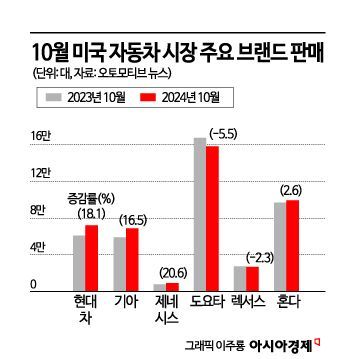
Hyundai Motor America announced on the 1st (local time) that it sold 71,802 units in the U.S. market in October this year, an 18% increase compared to the same period last year. Following the record-high quarterly sales achieved in September, it set another monthly record just one month later. Randy Parker, CEO of Hyundai Motor America, said, "Hyundai has set new records for three consecutive years as of October."
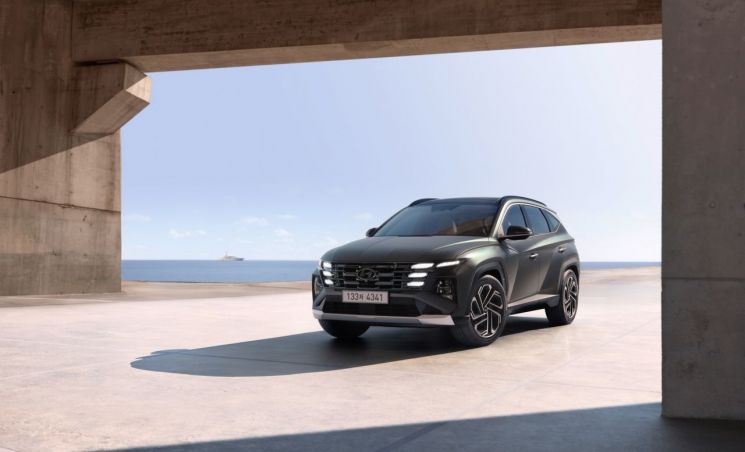
The models driving the sales expansion were hybrids (HEV). Last month, Hyundai's HEV sales increased by 74% year-over-year to 12,979 units. The Santa Fe HEV (93%) and Tucson HEV (110%) led the way. In particular, the Tucson HEV set an all-time monthly sales record, selling 6,709 units. Premium brand Genesis also saw U.S. sales rise 21% year-over-year to 6,903 units. Especially, the GV70 and GV80 crossovers set new all-time sales records.
During the same period, Kia also posted its highest-ever sales as of October. Kia's U.S. sales reached 68,908 units, a 16% increase compared to the previous year. The share of electrified lineup sales reached 18%. This means that one out of every five Kia vehicles sold in the U.S. in October was an eco-friendly car. Sales of battery electric vehicles (EV), plug-in hybrid electric vehicles (PHEV), and HEVs each showed double-digit growth of 70%, 65%, and 49% respectively compared to the previous year. The large electric sport utility vehicle (SUV) EV9 and Carnival HEV, which began sales this year, each sold nearly 2,000 units, leading the expansion of eco-friendly vehicles.
On the other hand, Toyota's sales in the U.S. market declined. Toyota's U.S. sales in October were 159,370 units, down 5.5% year-over-year. During the same period, premium brand Lexus sales also decreased by about 2.3% to 26,559 units.
This was due to the suspension of sales in the U.S. of two popular models, the Toyota Grand Highlander and Lexus TX, because of airbag defects. In June, Toyota and Lexus announced voluntary recall plans for these two models and subsequently halted production and deliveries. Although production resumed in October, the overall sales performance continues to be impacted.
Notably, Hyundai and Kia are showing a strong upward trend in the U.S. HEV market, which is Toyota's core market. According to Samsung Securities, total U.S. HEV market sales from January to October this year reached 1,271,000 units, a 34% increase year-over-year. Toyota holds a market share of 58%, maintaining its lead, but Hyundai and Kia's share has rapidly risen to 11.5%. Until the end of last year, Hyundai and Kia's share was in the single digits. In October alone, Hyundai and Kia's HEV sales reached 21,679 units, setting a new monthly sales record. The share of HEV sales in total sales also rose to a record high of 14.7%.
According to Cox Automotive, the seasonally adjusted annual rate (SAAR) of new car sales in the U.S. in October this year is expected to be 15.8 million units, an increase of about 8% compared to the previous year. Uncertainty ahead of the U.S. presidential election caused consumers to hesitate in purchasing vehicles, which represent a significant household expense, leading to somewhat stagnant sales growth. On the other hand, recent interest rate cuts and stock market gains supported demand in the new car market. Experts diagnose that HEV vehicles in the U.S. new car market are still in short supply.
Not only this year but also next year, competition between Japanese brands (Toyota, Lexus, Honda), the absolute leaders in the U.S. HEV market, and Hyundai and Kia is expected to intensify. In an interview with Automotive News, CEO Parker said, "Although we have confirmed a temporary market weakness due to uncertainty from the U.S. presidential election, the Hyundai brand still shows strength in the market," adding, "We will overcome variables such as the election and continue the positive trend."
© The Asia Business Daily(www.asiae.co.kr). All rights reserved.
![Clutching a Stolen Dior Bag, Saying "I Hate Being Poor but Real"... The Grotesque Con of a "Human Knockoff" [Slate]](https://cwcontent.asiae.co.kr/asiaresize/183/2026021902243444107_1771435474.jpg)

















