Kim Young-seop, KT CEO, Announces Large-Scale Restructuring After 1 Year 2 Months
Harsh Cuts Expected Due to Financial Improvement Track Record
Collaboration with MS Spurs Faster AICT Corporate Transformation
Internal Challenges Include Managing Some Union Opposition
Kim Young-seop, CEO of KT, carried out a workforce restructuring affecting over 5,700 employees, which is more than a quarter of the entire staff. Inside KT, many reacted with "what was bound to happen has come." As of June, KT is a giant company with 19,370 employees including temporary workers, and this move marks a harsh slimming down.
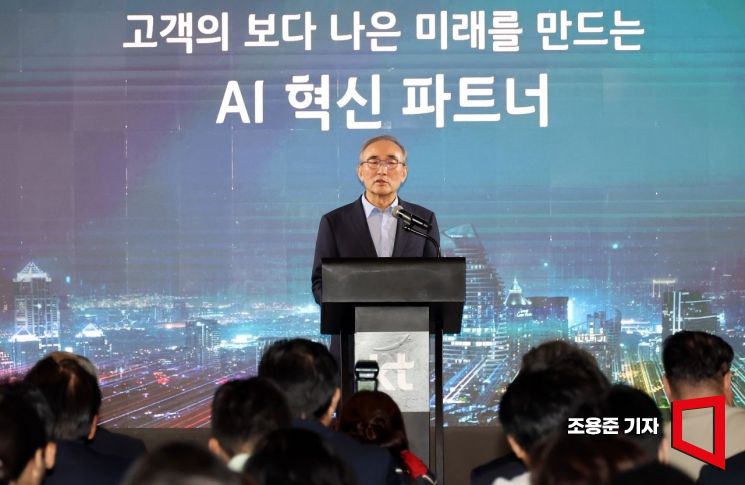 Kim Young-seop, CEO of KT, attended the 'AICT Business Strategy Press Conference' held on the 10th at Novotel Ambassador Dongdaemun in Jung-gu, Seoul, where he spoke about the background of cooperation with Microsoft, future plans, and business strategies toward becoming an 'AICT Company.' Photo by Jo Yong-jun jun21@
Recently, KT established two new subsidiaries, KT OSP and KT P&M (tentative name), and the board approved a plan to employ 3,400 and 380 of the 5,700 field workers targeted for restructuring, respectively. However, the final labor-management agreement with KT’s primary union, the KT Labor Union, reportedly did not include specific transfer target numbers. The field workers refer to those responsible for tasks such as AS (after-sales service), telecommunications line installation, and maintenance. Employees with over 10 years of service who are transferred will receive 70% of their basic salary from KT plus a job transition support fund (a lump sum of 30% of the basic salary), while those with less than 10 years of service will maintain 100% of their basic salary. All transferred employees will retain headquarters welfare benefits. Those who do not wish to be transferred can opt for special voluntary retirement, which offers a lump sum of up to 430 million KRW. If neither option is chosen, employees can be reassigned to the headquarters sales division.
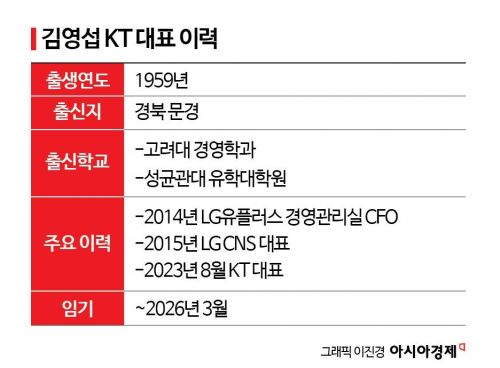
The KT workforce restructuring came 1 year and 2 months after Kim took office, clearly reflecting his management style. This is attributed to his background as a financial and restructuring expert, and it was already anticipated internally and externally that a major organizational restructuring could occur after his appointment as KT CEO. He joined Lucky-Goldstar Trading (the predecessor of LG Trading) in 1984 and served as executive director of the LG Restructuring Headquarters’ Financial Improvement Team. In 2014, he was the Chief Financial Officer (CFO) of LG Uplus’s Management Control Office, and in 2015, as president of LG CNS, he emphasized pragmatic management and sought profitability improvements through restructuring. Three months after assuming the KT presidency in November last year, Kim implemented organizational restructuring and executive personnel changes, and also downsized unprofitable businesses such as the Rwanda subsidiary established during the previous CEO’s tenure.
This restructuring is also seen as a strategic move to enhance profitability by changing KT’s business structure. When he took office as KT’s new president in August last year, his vision for KT was an ‘AICT (Artificial Intelligence + Information and Communication Technology) Company.’ The core idea is to provide services by integrating AI and other IT technologies with KT’s existing telecommunications capabilities. Upon his inauguration, he emphasized values such as customer focus, capability, substance, and harmony, urging the company to “leap forward as the top ICT expert group.”
Shinhan Investment Corp. projected KT’s operating profit for this year (January to December) at 1.7594 trillion KRW and 2.2522 trillion KRW for next year in a ‘scenario analysis report’ following the announcement of KT’s workforce restructuring plan. Last year’s operating profit was 1.6498 trillion KRW.
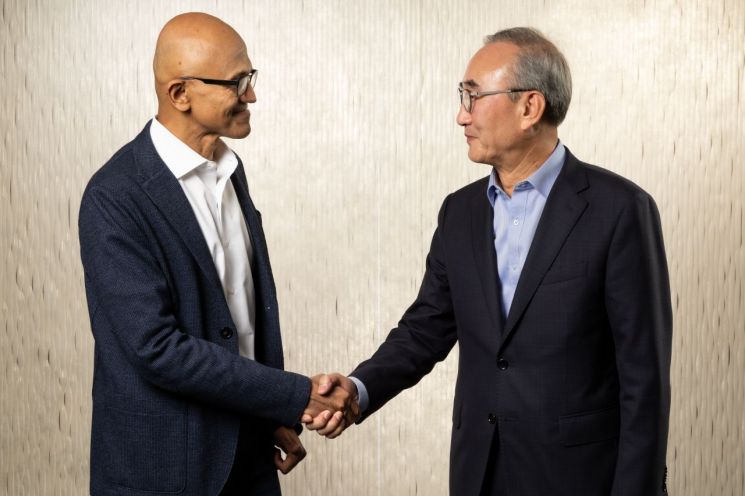
Inside KT, there is speculation that while reducing telecommunications personnel, the company will recruit talent to strengthen AI capabilities. KT recently partnered with Microsoft (MS) in the U.S., setting a goal of “speedy delivery of products and services.” They agreed to jointly invest 2.4 trillion KRW for this purpose. At a briefing earlier this month, CEO Kim said, “The differentiator of KT’s AI strategy is level and speed,” adding, “Providing services at a speed recognized by customers will be the measure of superiority in the AI field.” This implies a focus on hiring personnel in related fields to accelerate business speed.
However, KT also faces the challenge of managing internal sentiment following these bold changes. KT’s minority union, KT Saenojoh, has begun a hunger strike, and employees who must decide their future are in a state of confusion. A KT Saenojoh representative said, “KT announced plans to cut about 5,700 employees in the telecommunications infrastructure sector. This decision ignores KT’s core telecommunications infrastructure and threatens public safety and national stability.” A KT official stated, “This was done to reduce labor costs,” while another official argued, “Some of the affected employees have only recently joined, so at least relief measures for them should have been prepared.”
© The Asia Business Daily(www.asiae.co.kr). All rights reserved.
![Clutching a Stolen Dior Bag, Saying "I Hate Being Poor but Real"... The Grotesque Con of a "Human Knockoff" [Slate]](https://cwcontent.asiae.co.kr/asiaresize/183/2026021902243444107_1771435474.jpg)

















