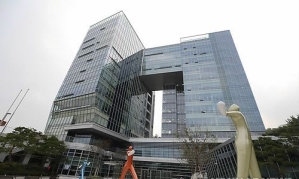
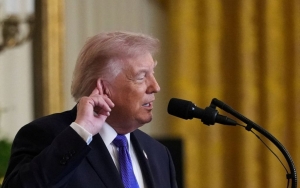
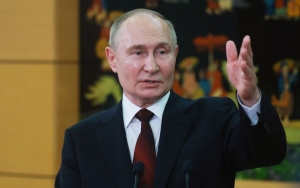
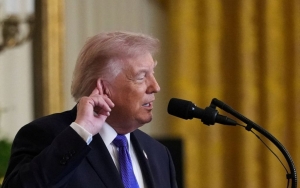
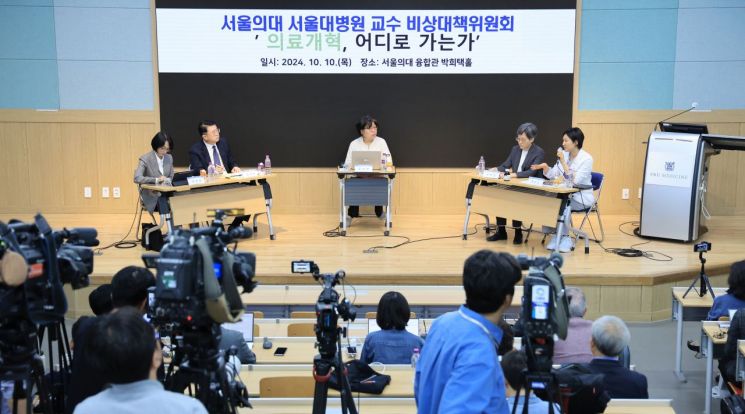
 On the afternoon of the 10th, at Park Hee-taek Hall in the Convergence Building of Seoul National University College of Medicine in Jongno-gu, Seoul, Ha Eun-jin, a non-standing committee member and professor at Seoul National University College of Medicine and Hospital, is speaking at the debate titled "Medical Reform, Where Is It Going?" From the left: Jang Sang-yoon, Senior Secretary for Social Affairs at the Presidential Office; Jeong Gyeong-sil, Head of the Medical Reform Promotion Team at the Ministry of Health and Welfare; the moderator Yoo Mi-hwa, Executive Director of the Green Consumer Network; Kang Hee-kyung, Chair of the Non-standing Committee and professor at Seoul National University College of Medicine and Hospital; and Ha, the non-standing committee member. [Image source=Yonhap News]
Jang Sang-yoon, the Senior Secretary for Social Affairs at the Presidential Office, said on the 10th that the increase of 2,000 medical students, which has faced strong opposition from the medical community, is a "number presented with sufficient scientific evidence," and that originally, an increase of at least 4,000 students was necessary.
On the same day, Jang attended a medical reform policy forum held at Seoul National University College of Medicine and said, "Our country can very precisely predict the supply and demand of doctors based on basic data such as future population projections."
Jang emphasized, "Since all citizens are enrolled in health insurance, individual medical demand is measured very accurately, and the state directly manages the system from issuing medical licenses to doctor activities," adding, "Compared to any other field, projections can be made with minimal error."
He continued, "Even in the three expert studies referenced by the government, despite slight differences in assumptions, the same result was reached that about 10,000 doctors will be lacking by 2035," and said, "The government did not simply accept these three studies but examined them more deeply, and after adjusting several unrealistic assumptions to fit reality, the shortage of doctors more than doubled."
Jang stated, "In other words, the conclusion is that an increase of at least 4,000 doctors is necessary, not just 2,000," and pointed out, "That is why the government has consistently said that 2,000 is the minimum necessary number."
He added, "Beyond scientific evidence, if you observe the medical field a little more, there are many bleak factors that inevitably lead to a greater shortage of specialist doctors responsible for essential medical care," explaining, "Doctors are rapidly aging, and from 2029 onward, the growth rate of active doctors under 70 years old is almost 0%. There is also the phenomenon of excessive specialization narrowing the scope per specialist, and accelerated outflow of personnel to non-essential fields."
Regarding criticism about insufficient consultation with the medical community, he said, "We created a separate consultative body with statutory medical organizations such as the Korean Medical Association and held 37 meetings solely on the issue of increasing the number of doctors," adding, "Just before the announcement, we also sent official letters to various medical organizations asking about the appropriate scale of increase, but no one responded. The only reply was from the General Hospital Association, which said that an increase of 3,000 was appropriate."
During Jang's remarks, loud voices were heard from the audience. A medical school professor shouted, "Have you simulated how many students will be in each department if the number increases by 2,000?" When Jang said, "The medical community did not provide an answer regarding the appropriate scale of increase," the professor also said, "That's a lie." After a brief pause, Jang continued, "Please allow me time to present."
The forum was arranged after the Emergency Committee of Professors from Seoul National University College of Medicine and Hospital proposed it to the Presidential Office. On the government side, Senior Secretary Jang and Jeong Gyeong-sil, head of the Medical Reform Promotion Team at the Ministry of Health and Welfare, attended as discussants, while on the Emergency Committee side, Professors Kang Hee-kyung and Ha Eun-jin from Seoul National University College of Medicine participated as discussants.
© The Asia Business Daily(www.asiae.co.kr). All rights reserved.