'Alpe du Grand Serre' Closed After 85 Years
90% Reliant on Artificial Snow, 10.3 Billion Won Deficit Incurred
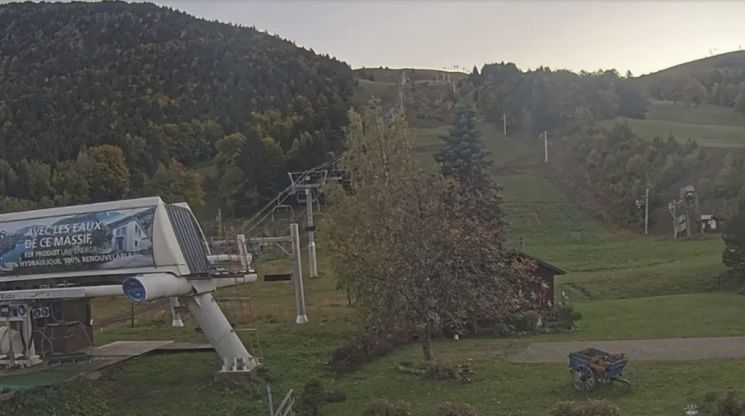 The appearance of France's 'Alpe du Grand Serre' ski resort, which decided to close due to the intensification of global warming. [Image source=Alpe du Grand Serre Resort homepage]
The large French ski resort 'Alpe du Grand Serre' has decided to close due to an inability to bear cumulative deficits, drawing attention to the underlying reasons. The ski resort was struggling with deficits caused by a sharp decline in snowfall due to global warming and a surge in artificial snow production costs. Not only in France but also ski resorts in the Alps region of Switzerland and Italy are suffering from snow shortages, increasing the likelihood that more ski resorts will decide to close in the future.
The largest ski resort in the Northern Alps... Giving up operations due to global warming
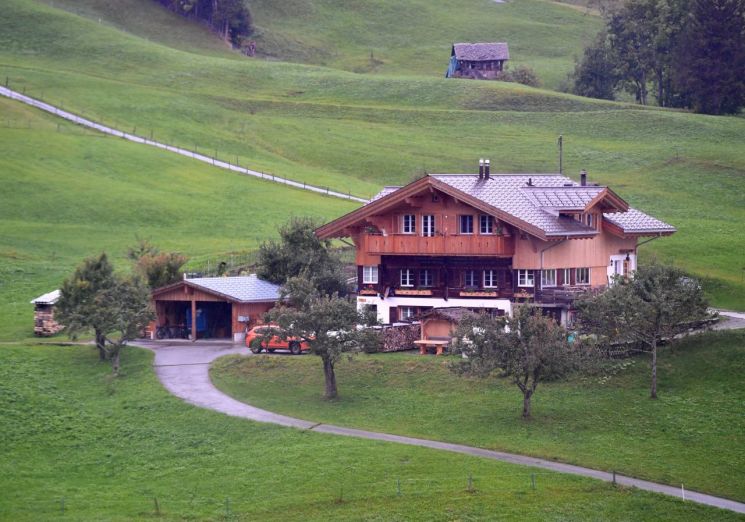 On the 3rd, a view of the village in the Jungfrau region of the Swiss Alps. Due to global warming, snowfall has decreased, resulting in fewer days covered with snow. [Image source= Xinhua·Yonhap News]
According to CNN, the regional council of Matheysin in Is?re, eastern France, where Alpe du Grand Serre is located, decided to suspend the resort's operations starting this winter season. The decision was approved with 35 out of 47 council members voting in favor of the suspension. Despite the regional council injecting financial subsidies to revive the resort, the effort failed, leading to the decision to cease operations.
The resort, located at an altitude of 1,368 meters, is the largest ski resort in the Northern Alps region, boasting a massive slope spanning 55 km. It had been operating for 85 years since 1939 but ultimately could not overcome financial difficulties. Although concerns were raised about the potential job losses for approximately 200 residents from six surrounding villages who worked at the resort, the regional council ultimately decided to close it.
The main reason for Alpe du Grand Serre's bankruptcy is the lack of snow caused by global warming. Originally, the western Alps region was a cold area where snow began to fall in earnest from late September, allowing ski resorts to open from October. However, recent temperature rises have drastically reduced snowfall. Last year, the ski resort was only operational for four weeks, and even then, it required artificial snow production to keep the slopes open, which led to increasing cumulative deficits. According to CNN, the resort's cumulative deficit for the past year alone reached 7 million euros (approximately 10.3 billion KRW).
Artificial snow dependency nearing 90%... A shared crisis for European Alpine ski resorts
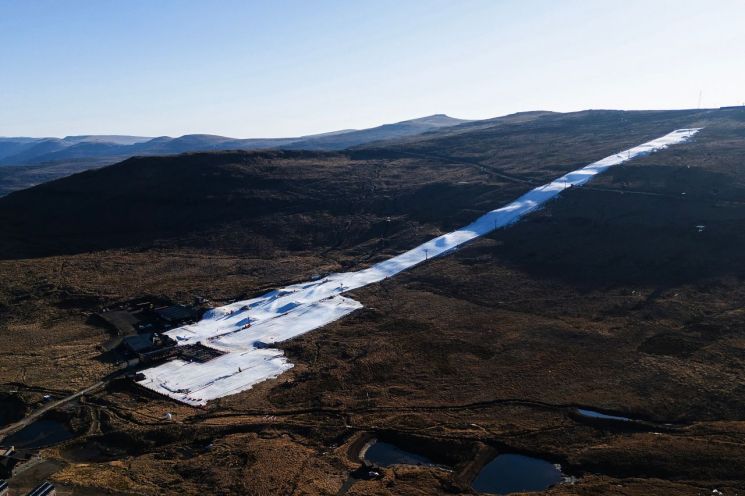 The Afriski Resort in Lesotho, South Africa, located at an altitude of 3000m. Due to a sharp decrease in snowfall, the ski slopes are being operated using artificial snow.
 [Image source=AFP·Yonhap News]
Besides Alpe du Grand Serre, ski resorts throughout the Alps are all suffering from snow shortages. The dependency on artificial snow at ski resorts in the Alps regions of Switzerland, Italy, and France has sharply increased from 40% to 90% over the past decade. Especially since 2021, snowfall has dropped to less than half, making continuous operation of ski resorts difficult.
Experts point out that ski resorts located at mid-altitudes below 1,600 meters in the Alps are more severely affected by global warming. Marie Cavitte, a glaciologist at the Catholic University of Louvain in Belgium, told the BBC, "As temperatures rise, there is more water vapor in the atmosphere, leading to more rainfall. This is happening more frequently at ski resorts below 1,600 meters altitude," adding, "Because more rain falls instead of snow, the snow that had accumulated melts more quickly."
There are also warnings that if global warming accelerates further, the problems caused by ski resort closures could extend beyond economic issues to greater challenges such as floods and water shortages. The BBC analyzed, "If temperatures continue to rise, glaciers will melt faster and snowfall will decrease, increasing the risk of large-scale flooding and erosion in valleys, as well as avalanches. Not only will key infrastructure be destroyed, but if melted snow is not replenished, the drinking water available to local communities will continue to decline."
© The Asia Business Daily(www.asiae.co.kr). All rights reserved.
![Clutching a Stolen Dior Bag, Saying "I Hate Being Poor but Real"... The Grotesque Con of a "Human Knockoff" [Slate]](https://cwcontent.asiae.co.kr/asiaresize/183/2026021902243444107_1771435474.jpg)


















