Hyundai Motor Develops India-Exclusive Hybrid
Equipped with Compact HEV System... Reflecting Cost-Effective Market Preferences
Mid-Size Between Alcazar and Tucson... 6- and 7-Seater Options
Toyota Controls 80% of India HEV Market... Government Tax Incentives Impact
Hyundai vs Toyota, Direct Showdown in India HEV Market
Hyundai Motor Company is introducing its first hybrid (HEV) model to the Indian market. This move is seen as a challenge to Japan's Toyota, which already dominates 80% of the local HEV market. The vehicle is a compact SUV equipped with a third-row seat, specially tailored to suit the large family sizes typical in India. Hyundai, which is set to conduct an initial public offering (IPO) on the Indian stock market later this month, is expected to accelerate its localization efforts.
◆ Compact SUV with Third Row Seating=According to Indian media on the 8th (local time), Hyundai is developing a three-row HEV SUV exclusively for India. Considering the current progress, it is expected to be launched as early as 2026.
In terms of vehicle size and price range, it falls between the India-specific 6- and 7-seater SUVs Alcazar and Tucson. The Alcazar, boasting ample space utilization, surpassed cumulative sales of 100,000 units within three years of its launch. Although smaller than the Tucson, the Alcazar features a third row to reflect the characteristics of Indian households with larger family sizes.
 Hyundai Alcazar, a locally strategic internal combustion engine sports utility vehicle (SUV) in India [Photo by Hyundai]
The HEV 6- and 7-seater SUV introduced to the Indian market may also feature a smaller 1.5ℓ engine in addition to the widely used 1.6ℓ hybrid engine found in Hyundai and Kia's mid- and large-sized vehicles. Yang Heewon, President of Hyundai Motor's Research and Development Headquarters, stated at last month's Korea Automotive Engineering Society forum, "We will establish our Hyderabad research center in India as an R&D hub for small cars targeting emerging markets," adding, "India is a market where price competitiveness must be maximized, so we are developing technology to apply HEV systems to small engines."
The likely production site is the Talegaon plant, which Hyundai acquired from GM. Hyundai Motor India currently sells five internal combustion engine SUVs?Exter (a micro SUV), Venue, Creta, Alcazar, and Tucson?as well as one electric SUV, the Ioniq 5. This enables Hyundai to offer a diverse range of powertrains in the Indian market, including gasoline, diesel, HEV, and electric vehicles (EV).
◆ Competition with Maruti-Suzuki and Toyota=Hyundai's entry into the Indian HEV market is driven by its significant growth potential, unlike other major markets such as the U.S. and China. Currently, the Indian HEV market is about 82,000 units, roughly 2% of last year's passenger car sales in India (4.1 million units). The gap with EV sales is within 10,000 units. The market's growth potential can vary greatly depending on future Indian government policies.
Launching HEVs in India inevitably means competing with Toyota. At the end of last year, Toyota ranked sixth in sales with a 4.9% market share, but by August this year, it increased its share to 7%, overtaking Kia to move up to fifth place. Moreover, Toyota is increasing profits through a rebadging strategy with Maruti-Suzuki, the market leader in India, by selling the same model under different brand logos. According to data from the Federation of Automobile Dealers Associations (FADA) as of August, the top passenger car sellers in India are Maruti-Suzuki (joint venture), Hyundai, Tata Motors, Mahindra, Toyota, and Kia, in that order. Among imported car brands, the competition is essentially between Korean and Japanese manufacturers.
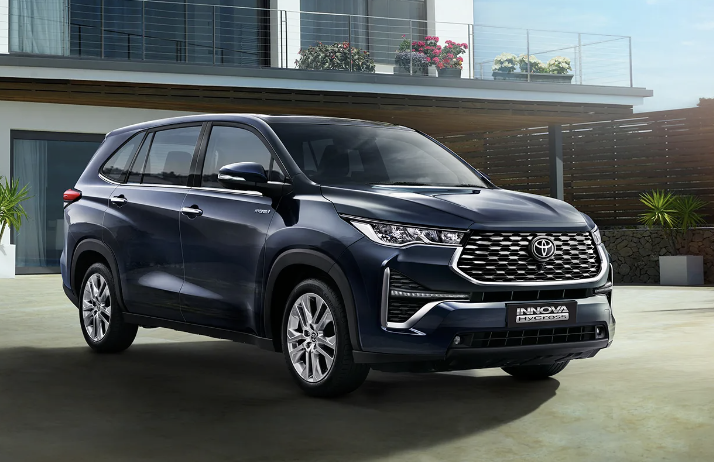
Since last year, Toyota has been consistently requesting the Indian government to reduce taxes on HEVs. Ultimately, in July, the northern Indian state of Uttar Pradesh announced an exemption from HEV registration taxes. Uttar Pradesh, with a population of about 250 million, is the most populous state in India. This tax exemption has lowered Toyota HEV prices by more than 10%, and following Uttar Pradesh, the southern state of Karnataka is also considering reducing HEV taxes. Supported by these government measures, Toyota has recently been aggressively increasing its market share in India.
Hyundai plans to respond with a dual strategy of launching both EVs and HEVs. The company aims to release a locally strategic EV, the Creta, as early as early next year and introduce five EV models in India by 2030. The Creta will be equipped with LFP (lithium iron phosphate) batteries supplied by the Indian battery manufacturer Exide to secure price competitiveness. In 2026, Hyundai will add a cost-effective hybrid lineup to expand consumer choices.
Hyundai also appears confident about securing funds through the IPO of its Indian subsidiary. The IPO is expected to raise approximately $3.3 billion (about 4.5 trillion KRW). An industry insider commented, "India is a market with anti-China sentiment, so Korean and Japanese eco-friendly cars have an advantage over Chinese electric vehicles," adding, "The company that captures the Indian market, the world's most populous country, will claim the title of the world's top global seller."
© The Asia Business Daily(www.asiae.co.kr). All rights reserved.

![User Who Sold Erroneously Deposited Bitcoins to Repay Debt and Fund Entertainment... What Did the Supreme Court Decide in 2021? [Legal Issue Check]](https://cwcontent.asiae.co.kr/asiaresize/183/2026020910431234020_1770601391.png)