Food Companies Show Clear Trends in Label-Free and Lightweight Packaging
Increase in Environmentally Conscious Consumers Since COVID-19
Contributes to Actual Sales Growth...Category Expansion Expected
The food industry is continuing its 'plastic-free' movement. As consumer interest in eco-friendly products rises, companies are practicing value consumption by removing labels or lightening containers. The plastic diet is not merely about 'image management.' It is becoming an effective marketing tool that actually drives sales.
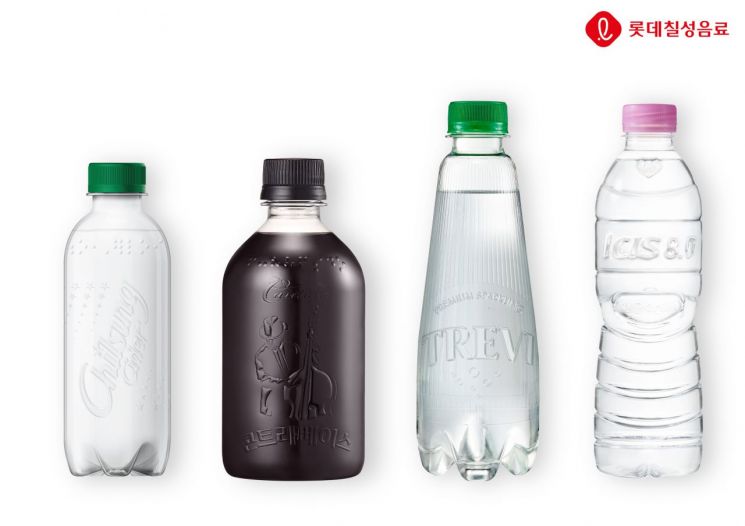
According to the industry on the 5th, Lotte Chilsung Beverage succeeded in reducing 182 tons of plastic last year through the sales of the label-free bottled water 'Icis 8.0 ECO.' Considering that the label weight of a conventional bottled water PET bottle is 0.37g, this means saving 500 million labels. Since each label is 21.1cm long, if connected in a line, it would circle the Earth two and a half times (10km circumference).
Lotte Chilsung Beverage was the first in the industry in 2020 to launch label-free bottled water by removing labels from the PET bottle body. Since then, label-free products have become a key purchasing criterion for environmentally conscious value consumers through word of mouth. After Icis, in 2021, Jeju Development Corporation's 'Samdasoo' and Nongshim's 'Baeksansu' also launched label-free versions, making all three major domestic bottled waters available without labels.
Samdasoo, the top-selling product, released colorless caps and colorless bottles following the label-free initiative. Thanks to these efforts, plastic usage was reduced by 2,570 tons in 2023, which is 9% of the total compared to 2020. Jeju Development Corporation plans to reduce plastic usage by 50% by 2030 compared to 2020 as part of its eco-friendly management strategy.
In addition to label-free bottles, container lightening is also ongoing to achieve plastic reduction. Lotte Chilsung Beverage reduced plastic usage by 8,565 tons last year compared to 2010 through container lightening. This effort reduced the PET weight of 14 products, including bottled water, coffee, tea, Gatorade, and Lipton, from 28g to 24g, a further 14% reduction.
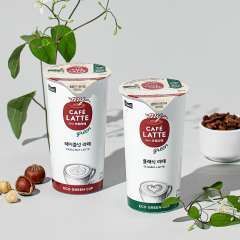
Maeil Dairies recently launched two types of eco-friendly cup coffee, 'My Cafe Latte Green.' My Cafe Latte is Korea's first cup coffee, launched in 1997. The new products reduced carbon emissions by 20% compared to previous versions. They cut ink usage by 94% and removed plastic lids and straws, reducing plastic use by 3.2g per unit. Except for the aluminum material, all parts are recyclable.
Some food companies are using alternative materials instead of hard-to-recycle plastics. Dong-A Otsuka launched the premium functional canned product 'THE Mashinda,' which contains drinking spring water in a 355ml sleek can. By adopting aluminum cans, which are easier to recycle than plastic, they aimed to contribute to environmental protection and resource conservation.
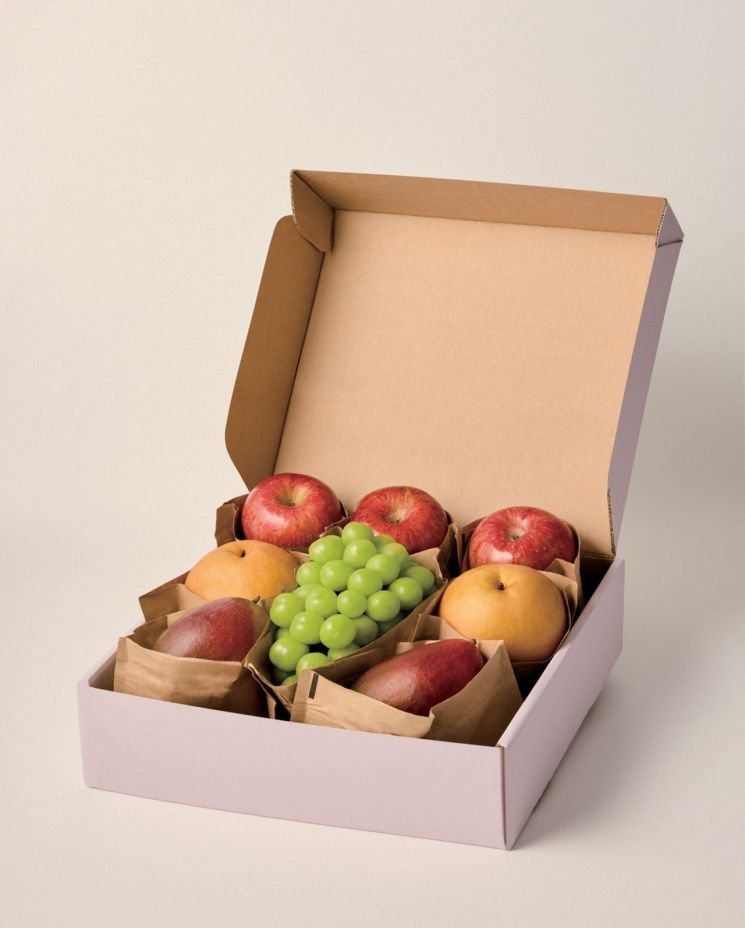
Food companies are actively pursuing plastic-free initiatives to meet the demands of consumers who value the environment and value consumption. Especially after the COVID-19 pandemic, social interest in eco-friendliness has significantly increased. Moreover, the plastic-free movement is not just about ESG management's 'image control.' It also serves as an efficient marketing tool to boost sales. For example, Hyundai Department Store's trial introduction of Chuseok gift sets without plastic packaging last holiday sold out 10,000 sets early. The eco-friendly packaging replaced plastic cushioning materials with paper cushioning called 'Honey Cushion.'
An industry insider said, "The plastic-free movement, represented by label-free PET bottles, not only protects the environment but also opens the wallets of those pursuing value consumption, increasing sales," adding, "More eco-friendly materials will be applied across more categories in the future."
© The Asia Business Daily(www.asiae.co.kr). All rights reserved.
![Clutching a Stolen Dior Bag, Saying "I Hate Being Poor but Real"... The Grotesque Con of a "Human Knockoff" [Slate]](https://cwcontent.asiae.co.kr/asiaresize/183/2026021902243444107_1771435474.jpg)
















