Film and Drama Production Down 40% in Two Years in Q2
Unemployment Rises Amid Layoffs at Paramount and Others
BBC reported on the 29th (local time) that Hollywood, which enjoyed a golden age due to the online video service (OTT) boom, is recently struggling with a downturn. This is largely attributed to the massive strikes that hit Hollywood last year and the internal damage caused by declining advertising revenue.
According to the report, recently, American media giant Paramount Global has cut 15% of its staff ahead of a merger and acquisition (M&A) with Hollywood production company Skydance. The number of movies and drama productions made across the United States in the second quarter of this year decreased by 40% compared to 2022. The unemployment rate in the U.S. film and TV industry was recorded at 12.5% last August, but industry insiders believe the actual figure is much higher when considering those who were unable to apply for unemployment benefits.
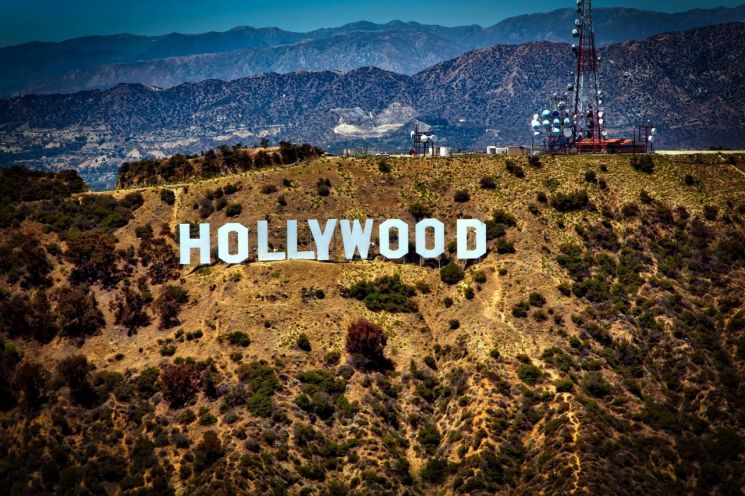
BBC conveyed the atmosphere, stating, "Jobs in Hollywood are drying up, and scheduled drama and movie productions are being canceled one after another," adding, "Two years ago, industry workers used to spend $200 dining out with their families, but now they are worried even about paying $5 at McDonald's." This contrasts sharply with just a few years ago when Hollywood production companies were rushing to start projects to sign contracts with new OTT services like Netflix and Hulu.
The signal flare of this Hollywood downturn was the massive strike by Hollywood writers and actors' unions that broke out last year. At that time, the Writers Guild of America (WGA) and the Screen Actors Guild?American Federation of Television and Radio Artists (SAG-AFTRA) demanded solutions to copyright infringement issues caused by the expanded use of artificial intelligence (AI), residual payments from streaming platforms such as Netflix, and basic wage increases. The joint strike by writers and actors, the first in 63 years since 1960, brought Hollywood production to a halt, with economic losses estimated at $5 billion (about 6.7 trillion won).
However, even though nearly a year has passed since the strike ended, Hollywood is not showing signs of recovery but rather appears to be faltering further. Experts analyze this as the bursting of the OTT boom bubble, which is less profitable compared to cable TV. As cable TV, which guaranteed advertising and subscription revenue to production companies, declined due to the rise of OTT, production companies have faced the challenge of discovering new revenue models.
Matthew Belloni, founder of Puck News, a media outlet covering the U.S. entertainment industry, pointed out, "In recent years, the rapid rise in stock prices of streaming service companies like Netflix and Paramount has overheated the content market," adding, "Just a few years ago, there were about 600 productions being made and aired, but at some point, the stock market stopped rewarding this."
However, there is also optimism. Duncan Crabtree-Ireland, the chief negotiator for the Hollywood actors' union, said, "People say Hollywood is always in crisis, but Hollywood is a place that faces all kinds of changes and technological innovations," and predicted, "Based on the creative talents' ability to create value, the currently sluggish production will soon increase."
The government has also rolled up its sleeves. Last month, Los Angeles Mayor Karen Bass stated, "The entertainment industry is a very important cornerstone of Los Angeles' economic vitality," and launched a task force to consider providing incentives for Hollywood film production. According to Mayor Bass, the economic scale contributed by the entertainment industry to Los Angeles reaches $115 billion annually and creates over 680,000 jobs.
© The Asia Business Daily(www.asiae.co.kr). All rights reserved.
![Clutching a Stolen Dior Bag, Saying "I Hate Being Poor but Real"... The Grotesque Con of a "Human Knockoff" [Slate]](https://cwcontent.asiae.co.kr/asiaresize/183/2026021902243444107_1771435474.jpg)















