Downplaying Korea and Praising China... Misleading Public Opinion
"Not Just Individual General Comments... An Organized Movement"
A study has revealed that China is conducting organized public opinion manipulation by disparaging Korean products and praising Chinese products in online articles and posts.
On the 29th, a research team led by Professor Kim Eun-young of the Department of Police Administration at Catholic Kwandong University and Professor Hong Seok-hoon of the Department of International Relations at Changwon National University released a report titled "Understanding the Reality of Cognitive Warfare in Competitive Industries between Korea and China." According to the report, such comments were continuously posted on articles in fiercely competitive industrial sectors between Korea and China, such as electric vehicles, batteries, and e-commerce. This is the first time that the existence of organized Chinese comments targeting the domestic economic sector has been confirmed.
The research team analyzed comments on articles related to competitive industries between Korea and China on online platforms such as Naver, YouTube, and Nate from July 2023 to August this year.
The research team stated, "Some individuals suspected to be Chinese particularly reacted to and focused on commenting on articles related to Korea-China technology and competition sectors," adding, "Some also posted comments disparaging Korea and inciting social division on other issues, but tended to comment when Korea-China competitive industry topics became prominent."
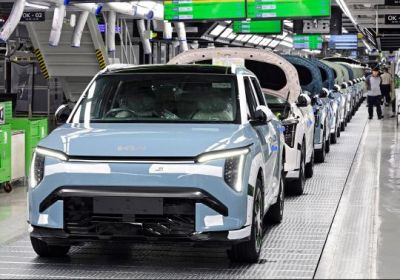
For example, among comments on electric vehicle-related articles, 'intimidation cases' such as "Chinese cars have improved in quality, so who would buy Hyundai-Kia? Closing down as soon as possible is the way to make money," and "I need to try a Chinese car once. Look at Hyundai-Kia (derogatory term: Hyunggi cars). They need to be more cautious," were frequently found.
The research team explained that they identified suspected Chinese accounts by applying criteria used in previous overseas studies to identify Chinese accounts, such as ▲Chinese-style translation patterns ▲Chinese-specific ID and profile characteristics ▲repetitive comments from the same ID.
These accounts operated as a network and were divided into two groups, showing movements of systematically flocking to domestic industry-related articles and posting comments under the coordination of core players. The research team added, "It is unlikely that the accounts identified this time represent the entire number of suspected Chinese accounts commenting on the domestic Naver portal; rather, it is reasonable to consider them as only a very small portion of the total suspected Chinese accounts."
Professor Kim Eun-young told Yonhap News, "The sample size of 70 is excessively small, yet it shows a normal distribution, which is an unusual phenomenon that would not occur if individuals were randomly posting comments," explaining, "There is circumstantial evidence that (the suspected Chinese individuals) are performing tasks assigned in an organized manner and selecting multiple articles to post comments."
© The Asia Business Daily(www.asiae.co.kr). All rights reserved.
![Clutching a Stolen Dior Bag, Saying "I Hate Being Poor but Real"... The Grotesque Con of a "Human Knockoff" [Slate]](https://cwcontent.asiae.co.kr/asiaresize/183/2026021902243444107_1771435474.jpg)















