Savings Banks and Capital Companies Jointly Sell Non-Performing Loans
Scale Under 100 Billion Won... Completion by End of September
As high interest rates persist and economic recovery delays, non-performing loans (NPLs) are accumulating, prompting the secondary financial sector to engage in joint sales. Both the savings banks and capital industries are set to sell NPLs worth less than 100 billion KRW by the end of this month.
According to the financial sector on the 26th, the Korea Federation of Savings Banks recently concluded negotiations for the third joint sale of unsecured personal and personal business secured NPLs. Approximately 15 companies are participating in this joint sale, with the total sale amount confirmed to be less than 100 billion KRW. The contract is scheduled to be signed by the end of this month.
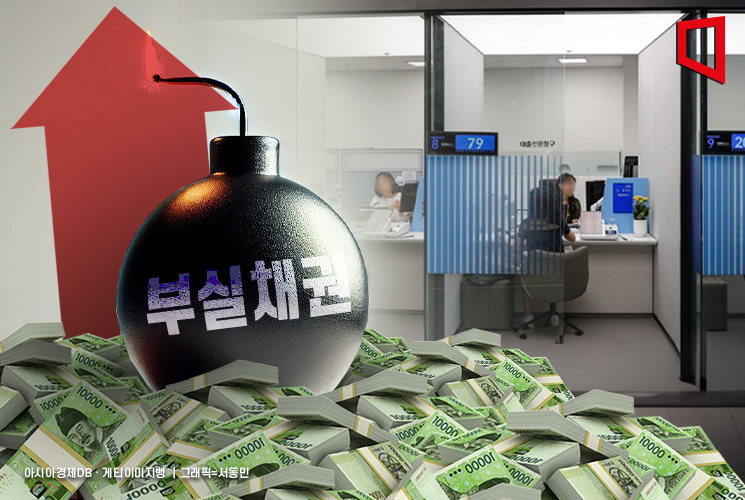
Previously, the savings bank industry conducted joint sales of NPLs worth around 100 billion KRW every half-year, centered around the Federation. At the end of last year, 12 savings banks sold about 100 billion KRW of unsecured personal NPLs. Since the beginning of this year, with the possibility of selling personal business secured NPLs to NPL investors, 18 savings banks sold a total of 136 billion KRW in NPLs by the end of the first half of this year.
Despite these efforts, improving soundness has been challenging, leading the savings bank industry to shift from half-yearly to quarterly joint sales of NPLs. According to the Financial Supervisory Service, the delinquency rate of savings banks stood at 8.36% at the end of the first half of this year, up 1.81 percentage points from the end of last year. Particularly, for personal business loans, since borrowers mostly operate in economically sensitive sectors such as food and lodging, there remains a possibility of further increases in delinquency rates if economic recovery slows.
A representative from the Korea Federation of Savings Banks stated, “The smaller scale of the third joint sale compared to the first and second rounds is due to the change in the joint sale cycle from half-yearly to quarterly. After conducting this joint sale, we will monitor the delinquency rate situation and may proceed with another joint sale in the fourth quarter.”
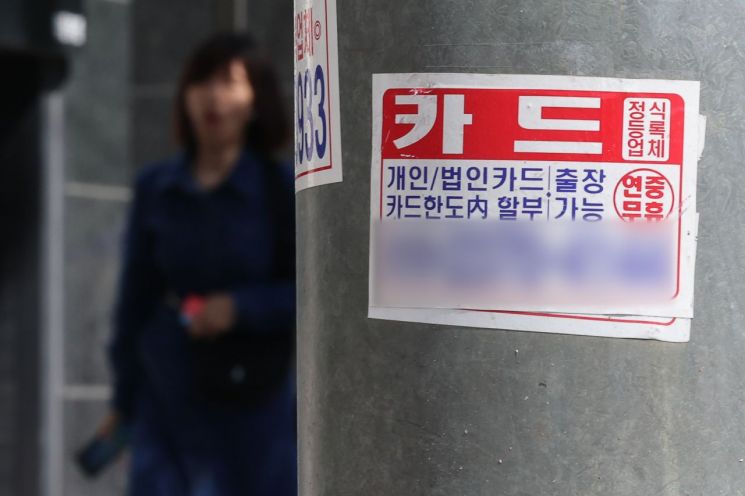
The Korea Credit Finance Association also plans to complete the sale of personal NPLs from the capital industry to NPL investors by the end of this month. Initially, the association estimated the joint sale scale to be up to 500 billion KRW, but due to lower-than-expected participation and the predominance of small-sized companies among participants, the sale amount is reported to be below 100 billion KRW.
According to the Financial Supervisory Service’s Financial Statistics Information System, as of the end of March, among 51 capital companies engaged in leasing and installment finance businesses, 11 had delinquency rates exceeding 10%. Lower-tier companies saw delinquency rates soar to the 20% range (2 companies), 30% range (1 company), and even up to 88.9%.
A financial sector official explained, “In the current buyer-favored market, the purchase prices offered by NPL investors are low, so the capital industry has little incentive to sell to NPL investors. Some large capital companies may find it more advantageous to sell individually and thus might not participate in the association’s joint sales.”
© The Asia Business Daily(www.asiae.co.kr). All rights reserved.
![Clutching a Stolen Dior Bag, Saying "I Hate Being Poor but Real"... The Grotesque Con of a "Human Knockoff" [Slate]](https://cwcontent.asiae.co.kr/asiaresize/183/2026021902243444107_1771435474.jpg)

















