Chain Reaction of Rising Material and Labor Costs
Ultimately Weakening the Management Structure
Restaurants awarded the French gourmet rating 'Michelin Star' are closing down due to excessive cost increases, leading to the phrase 'curse of the star.'
On the 24th (local time), according to the British economic magazine The Economist, Daniel Sands, a professor at the London School of Economics, investigated and published the business conditions of restaurants that opened in New York from 2000 to 2014 and were featured in the New York Times (NYT) gourmet column.
The study found that as of 2019, 40% of these restaurants that received a 'Michelin Star' had closed down, roughly 4 out of 10. Even when analyzing considering location, price, and type of cuisine, there was no significant change in the closure rate. While Michelin-starred restaurants gain popularity, customers' expectations rise accordingly, causing a burden due to increased costs.
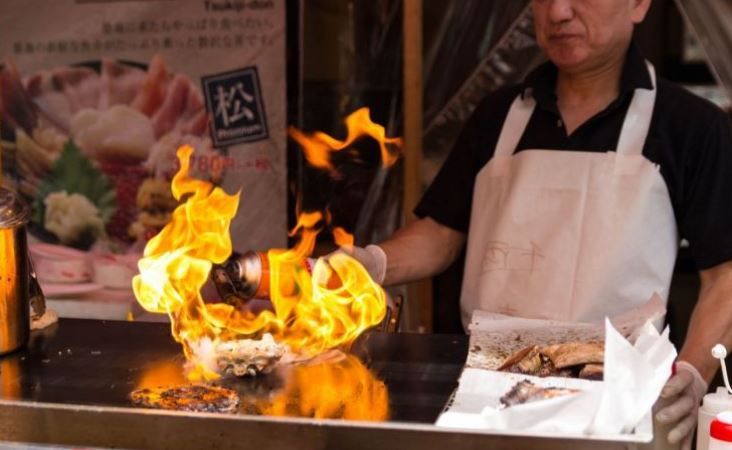
For example, Google searches for restaurants newly awarded a Michelin star increased by about one-third on average. However, as attention rises, so do customer expectations. Additionally, with the influx of new customers such as tourists, the requirements these restaurants must meet become more complex, often leading to increased costs. Moreover, Michelin-starred restaurants frequently experience a chain reaction of rising ingredient costs, and chefs often demand wage increases, making their management structures vulnerable.
The Economist pointed out, "It is not only the restaurant industry that suffers from this 'curse of the star.' In general, many executives experience a decline in performance or fail to meet competitors after receiving awards."
Like Michelin-starred restaurants, 'star' executives often focus more on writing or other external activities rather than their core business, which can pose risks of declining competitiveness. The magazine advised, "Reaching the pinnacle of Michelin is the greatest honor, but from a business perspective, it may be safer not to have high expectations."
Hugh Acheson, a judge on the American cooking survival program Top Chef, told BuzzFeed News in the past, "The restaurant industry is full of stress, and we are constantly under a microscope," adding, "People often forget that when they evaluate chefs or restaurants, they are talking about human beings."
British food critic William Sitwell said, "All great chefs want to create excellent and delicious food," but added, "After being labeled a 'Michelin Star Chef,' the journey toward perfection turns into a dangerous obsession."
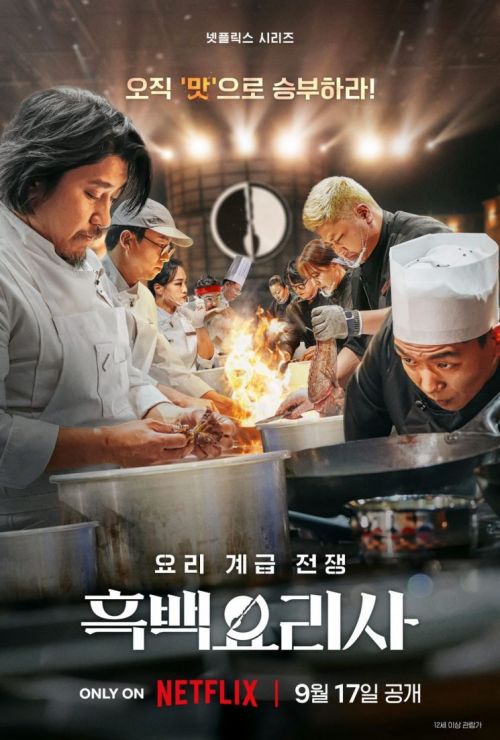
Meanwhile, the domestic restaurant industry is experiencing a boost thanks to the rising popularity of the Netflix cooking competition show 'Heukbaek Yori-sa' (Black and White Chef). 'Heukbaek Yori-sa' features 100 contestants competing for the title of top chef, with Baek Jong-won, CEO of The Born Korea, and An Seong-jae, the only Michelin 3-star chef in Korea from Mosu Seoul, appearing as judges. Notably, Chinese cuisine Grand Master Yeo Kyung-rae, 'Master Chef Korea 2' winner Choi Kang-rok, and '2010 Iron Chef' winner Edward Lee also participated as White Spoon chefs, drawing attention.
© The Asia Business Daily(www.asiae.co.kr). All rights reserved.
![Clutching a Stolen Dior Bag, Saying "I Hate Being Poor but Real"... The Grotesque Con of a "Human Knockoff" [Slate]](https://cwcontent.asiae.co.kr/asiaresize/183/2026021902243444107_1771435474.jpg)
















