20 cases in 2020 → 29 cases in 2021 → 66 cases in 2022
128 cases last year, doubling in one year
Most cases due to implicit renewal and non-establishment of accidents
Cases of tenants failing to receive their jeonse deposit refunds despite being enrolled in the Jeonse Deposit Return Guarantee Insurance provided by the Housing and Urban Guarantee Corporation (HUG) are on the rise.
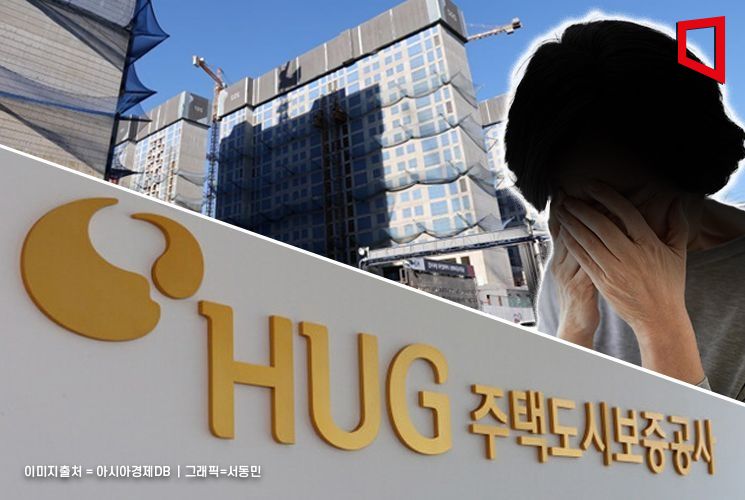
According to data submitted by HUG to Maeng Seong-gyu, a member of the National Assembly's Land, Infrastructure and Transport Committee from the Democratic Party of Korea, a total of 411 cases of refusal to fulfill jeonse guarantees were recorded over the 4 years and 8 months from 2020 to August of this year. The total amount of guaranteed deposits involved was 76.5 billion KRW.
By year, the number of cases increased from 12 in 2020, 29 in 2021, and 66 in 2022, then surged to 128 last year, and reached 176 cases from January to August this year. The scale of refused guarantee deposits was 2.3 billion KRW in 2020, 6.9 billion KRW in 2021, 11.8 billion KRW in 2022, and 24.9 billion KRW last year. From January to August this year, it amounted to 30.6 billion KRW.
The main reason for refusal to fulfill jeonse guarantees this year was "non-establishment of guarantee accident," accounting for 113 cases (64%). Tenants enrolled in the jeonse deposit insurance can request HUG to return the deposit if they do not receive it within one month after the termination or expiration of the jeonse contract without justifiable reasons. However, if the jeonse contract is implicitly extended and has not been terminated or expired, applying for guarantee fulfillment can be rejected on the grounds of "non-establishment of guarantee accident," resulting in refusal to return the deposit.
Following this, cases where the deposit refund was refused due to "fraud or false jeonse contracts" numbered 28 (24.8%), and cases where tenants lost their right to oppose and priority repayment rights, leading to refusal, numbered 26 (23.0%).
Assemblyman Maeng stated, "HUG should strengthen its obligation to explain when tenants enroll in the jeonse deposit guarantee to enhance the reliability of guarantee services."
© The Asia Business Daily(www.asiae.co.kr). All rights reserved.
![Clutching a Stolen Dior Bag, Saying "I Hate Being Poor but Real"... The Grotesque Con of a "Human Knockoff" [Slate]](https://cwcontent.asiae.co.kr/asiaresize/183/2026021902243444107_1771435474.jpg)















