Attempted Forest Land Development... Crime Committed Despite Knowing Graves Belonged to Others
Court: "No Intent, but No Effort to Verify"
A man in his 60s who illegally excavated an ancestral grave on someone else's property was sentenced to probation.
On the 16th, Chief Judge Jeong Woo-hyeok of Criminal Division 5 at Cheongju District Court announced that A (61), who was tried on charges of grave excavation, was sentenced to 8 months in prison with 2 years of probation. The charge involves digging up one grave of the victim's great-grandfather located in a forested area in Beonam-ri, Jochiwon-eup, Sejong City, from May 13 to September 2020.
A is accused of arbitrarily excavating the victim's great-grandfather's grave in Sejong in 2020.
A committed the act under the mistaken belief that the grave was that of his own direct ancestor, over whom he had disposal rights. It is known that he developed the forested area, including the site of the victim's great-grandfather's grave, into farmland.
Investigations revealed that he was aware that the forested area contained graves managed by others but proceeded with the excavation regardless. All excavated remains were cremated.
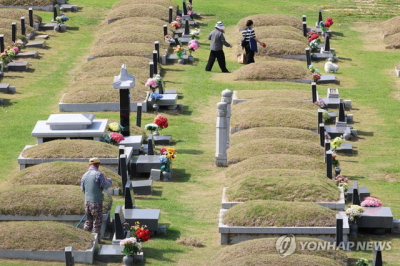
Chief Judge Jeong explained, "It is difficult to conclude that there was intent to commit the crime, but the defendant made no effort whatsoever to verify whose grave he was excavating or who had disposal rights over it."
He added, "Considering the irreversible damage caused by cremating the excavated remains, the lack of evidence that the excavation was conducted with proper respect according to religious and customary practices, the sentence was determined accordingly."
Illegally excavating someone else's grave is punishable by up to five years in prison. Those who damage or abandon remains after excavation can face up to ten years in prison.
Especially during holidays, many people visit gravesites and memorial parks nationwide, and cases of grave damage or unauthorized relocation often lead to legal disputes. Excavating graves or damaging remains can result in criminal penalties as well as civil liability for damages.
According to statistics from the National Police Agency, there were 829 cases of grave excavation offenses from 2018 to 2022. Legal disputes related to graves mainly arise from conflicts among bereaved families.
In April, a man who excavated the graves of his ex-wife's parents during a post-divorce property dispute and illegally reburied the remains elsewhere was sentenced to one year in prison with two years of probation.
© The Asia Business Daily(www.asiae.co.kr). All rights reserved.
![Clutching a Stolen Dior Bag, Saying "I Hate Being Poor but Real"... The Grotesque Con of a "Human Knockoff" [Slate]](https://cwcontent.asiae.co.kr/asiaresize/183/2026021902243444107_1771435474.jpg)















