Concerns Over Military Doctor Supply as Enlistment of Soldiers Increases
308 Enlisted from 10 National Universities
Preference for Military Doctors and Public Health Doctors Continues to Decline
This year, the number of students who applied for a leave of absence due to military enlistment at 10 national medical schools nationwide has increased more than sixfold compared to last year. On the 3rd, MBC reported an interview with Kim, a first-year student at a medical school in Seoul. Kim is preparing to enlist in the Air Force early next year. He gave up his plan to serve as a military doctor after obtaining a medical license upon graduation. Not only Kim but also his fellow medical school freshmen friends have decided to enlist or have started preparing for entrance exams to transfer to top-tier medical schools.
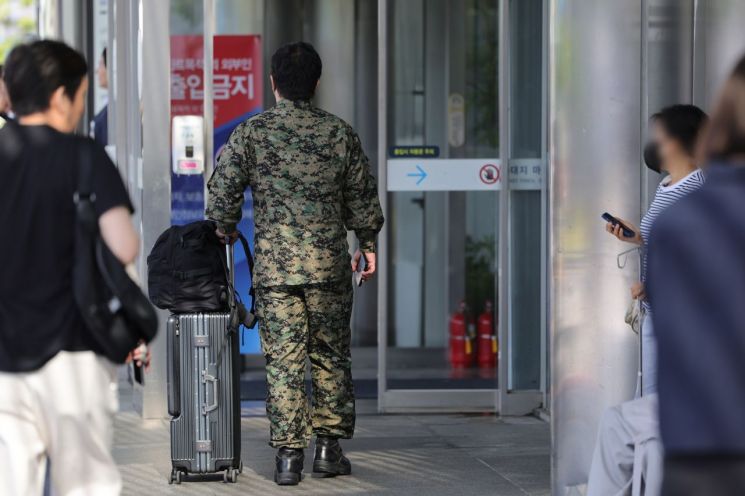 Amid concerns over a medical crisis in emergency rooms due to a shortage of doctors, the government has decided to dispatch military medical officers to large hospitals struggling with emergency room operations starting from the 4th.
 [Photo by Yonhap News]
Among them, 308 students applied for military leave of absence at 10 national medical schools this year. This is more than six times the 51 students last year. In some schools, the number surged more than elevenfold, from 4 to 46. Military doctors must serve for 38 months, more than twice as long as active-duty soldiers in the Army. However, the monthly salary of a military doctor at the rank of first lieutenant with one year of service is about 2.04 million KRW, which is not much different from the 2.05 million KRW that a sergeant will receive starting next year.
In this context, the government's push to increase the number of medical students has poured fuel on the already declining preference for military doctors and public health doctors. The Ministry of National Defense plans to recruit about 700 military doctors annually, and currently, about 2,100 military doctors support the military medical system. However, if more than 300 medical students choose to enlist as active-duty soldiers like this, a red light will inevitably be triggered in the supply of military doctors and public health doctors, which had been replenished by around 1,000 annually. Moreover, considering the military leave of absence of medical students from private medical schools, which were not included in this survey, the scale of disruption is expected to be even greater.
Meanwhile, amid concerns about an emergency room medical crisis due to a shortage of doctors, the government decided to dispatch military doctors to large hospitals struggling to operate emergency rooms starting from the 4th. However, frontline medical sites argue that this is not a fundamental solution and that regional and military medical gaps will worsen. The medical community points out that it is difficult to immediately deploy public health doctors and military doctors to emergency room duties. Many of them are 'general practitioners' who have passed the national medical licensing exam but have not undergone specialist training, resulting in a lack of clinical experience. In particular, the medical community notes that some of them may be performing procedures such as nasogastric tube insertion (L-tube) and bone marrow puncture for the first time in the emergency room.
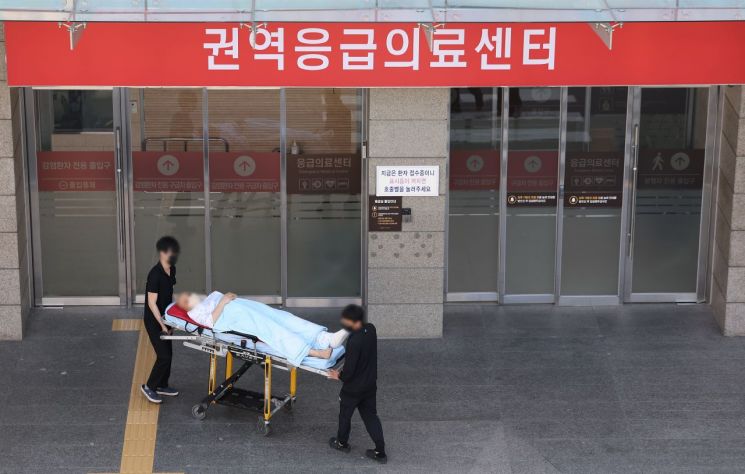 As emergency room operations across the country face disruptions, the government urgently deployed additional personnel, including military doctors, on the 4th.
 [Photo by Yonhap News]
There are concerns that the increase in military doctors and public health doctors dispatched to university hospitals could widen the medical gaps in the military and local communities. Public health doctors are physicians who serve three years in health centers, health clinics, or local medical institutions in medically underserved rural areas instead of military service. Military doctors are responsible for medical treatment, surgery, and other duties at military hospitals.
However, the government stated that since public health doctors and military doctors are mobilized from the perspective of minimizing medical gaps, the damage to local residents will be minimal. On the 3rd, Park Min-su, the 2nd Vice Minister of Health and Welfare, said at a briefing, "Due to the characteristics of regional medical care, the patients handled by public health doctors are mild cases, and before their mobilization, we will respond by increasing the amount of prescribed medication or utilizing telemedicine. Although local residents may feel inconvenienced, we judge that there will be no significant medical gaps."
© The Asia Business Daily(www.asiae.co.kr). All rights reserved.
![Clutching a Stolen Dior Bag, Saying "I Hate Being Poor but Real"... The Grotesque Con of a "Human Knockoff" [Slate]](https://cwcontent.asiae.co.kr/asiaresize/183/2026021902243444107_1771435474.jpg)

















