Interview with Former People Power Party Emergency Committee Chairman Kim Jong-in
Proposed National Health Insurance Introduction in 1977 to President Park Chung-hee
"Should Have Predicted Health Insurance Financial Impact Before Increasing Medical School Quotas"
"The Only Solution to Medical Crisis Is Accepting 'Uigeopyeongwon' Evaluation"
Former People Power Party Emergency Committee Chairman Kim Jong-in (84) made headlines last month after it was revealed that he suffered a torn artery in his forehead and was refused admission at 22 emergency rooms. Kim was the key figure in designing the overall policy during the introduction of the National Health Insurance (then called Medical Insurance) in South Korea in 1977. As Minister of Health and Social Affairs in 1989, he directly implemented the policy to expand health insurance coverage to the entire population.
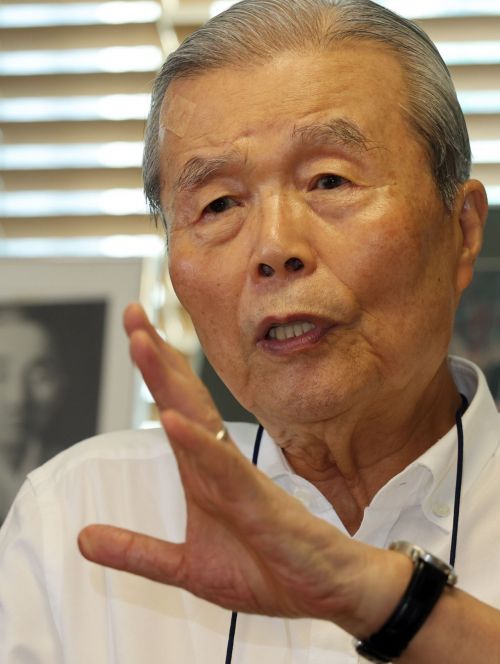 Former Emergency Committee Chairman of the People Power Party, Kim Jong-in, is sharing his views on the current legislative conflict during an interview with Asia Economy at his office in Gwanghwamun, Seoul. Photo by Heo Younghan younghan@
At every turning point in the introduction and establishment of Korea's health insurance, Kim Jong-in had to mediate conflicts among stakeholders and devise policy alternatives. We sought his experiential advice to help resolve the current extreme conflict between the government and the medical community. Asia Economy interviewed Kim twice, on the 29th of last month and the 3rd of this month, at the office of the Korea Development Strategy Institute in Naesudong, Jongno-gu, Seoul, where he serves as chairman. Kim had a bandage on his right forehead as his wound had not fully healed.
-Why did the government introduce health insurance in 1977?
▲Initially, the plan was not to implement health insurance. At that time, the number of workers in Korea was rapidly increasing, and labor disputes were intensifying. In 1975, when I was a professor at Sogang University, the Blue House requested me to devise measures to stabilize society, and one of my proposals was the health insurance system. Since national income was low and government finances were insufficient, many economic ministers, including the Ministry of Health and Social Affairs?which should have been the most supportive?opposed it, saying "introducing health insurance is premature" or "let's first introduce pensions that do not require immediate expenditure." However, President Park Chung-hee accepted my report and ordered its promotion. My persuasion that "do not just consider the cost of health insurance, but look at the ripple effects it can generate; it will never negatively impact the economy" was successful.
-How did health insurance change our medical system?
▲At first, it was implemented for companies with 500 or more employees. Given Korea's financial situation, it was impossible to cover the entire population immediately, so it was first applied to workers in large companies who could pay premiums on time. A 2% premium was collected from wages, split equally between companies and workers, which is the same structure as today (currently, the legal upper limit for premium rates has risen to 8%). Workers who enrolled in health insurance also benefited their dependents, and since young workers rarely suffered from serious illnesses, the insurance finances were managed stably, allowing government control and accumulation of surplus funds. Later, health insurance expanded to rural residents and urban self-employed, and within 12 years, it became a system covering the entire population, making it a highly successful policy. Above all, the introduction of health insurance marked the beginning of the full development of Korea's medical system. Hospitals and the pharmaceutical industry grew significantly, many medical schools were established, and at least no Korean citizen was unable to visit a hospital due to lack of money.
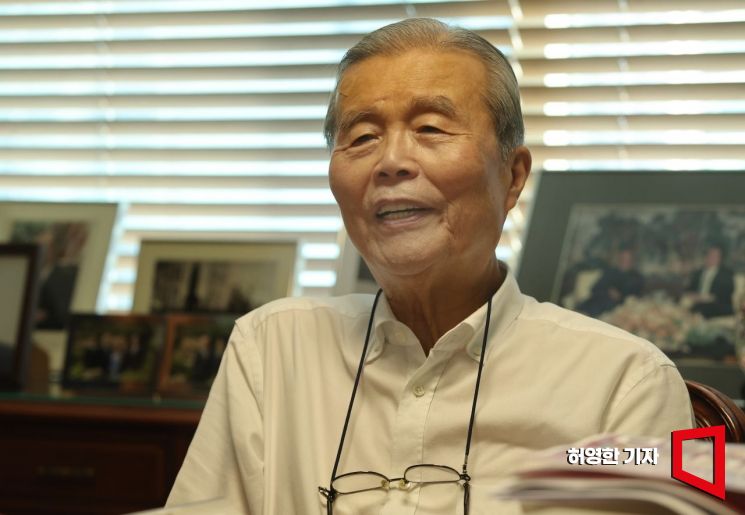 Former People Power Party emergency response committee chairman Kim Jong-in is being interviewed by Asia Economy at his office in Gwanghwamun, Seoul. Photo by Heo Young-han younghan@
-Were there any unexpected aspects in the current medical system compared to when health insurance was introduced?
▲With improved medical accessibility, Koreans began to use hospitals more than people in other countries. Doctors had to see too many patients, and three-minute consultations became routine in university hospitals. From this perspective, the current shortage of doctors is indeed a fact. Statistics show that Korea has slightly fewer doctors than the OECD average, but medical productivity is nearly three times that of the OECD. It is a more efficient medical system than any other country, but this efficiency arises because a small number of personnel produce a large output. Korean doctors have been overworked. Another issue is that when regional health insurance merged with workplace health insurance, patients from local areas flocked to tertiary hospitals in Seoul, breaking down the medical delivery system that should have proceeded from primary to secondary to tertiary care. I believe administrative officials should have operated the system more precisely from the start.
-The government currently claims that increasing the number of doctors will not increase the financial burden on health insurance. What do you think?
▲That is not true. Doctors hold a monopolistic position, so prices for medical services do not decrease. When the number of doctors increases, new medical services are created, generating revenue. In this process, medical expenses inevitably rise. The general economic theory that prices fall when supply increases does not apply to healthcare. If the public understands that increasing the number of doctors will cause medical costs to skyrocket, the policy to increase medical school quotas cannot succeed.
-There have been conflicts between the government and medical associations in the past as well.
▲When the health insurance system was first introduced, the government set hospital fees at about 55% of the customary fees (prices formed in the market for medical services not covered by health insurance), which led to doctors' opposition. The government persuaded the medical community by promising gradual increases. Also, when new medical schools were to be established, doctors opposed the increase in their numbers, and there was even a constitutional lawsuit demanding the abolition of the mandatory designation system (which required all medical institutions without exception to accept health insurance patients). Doctors opposed these because their income was affected, but it was not as extreme as now. This time, the government suddenly announced an increase of 2,000 medical school seats, which caused strong backlash. The government should not have fought with doctors, and the political sphere should have played a mediating role.
-How important is fee adjustment in medical reform?
▲Since the initial low setting of medical fees when health insurance was introduced in 1977, I have said that fees should be appropriately adjusted so that the introduction of social health insurance does not hinder medical advancement. The government should have allocated fees realistically to distribute doctors evenly across various medical fields so they can function properly, and this remains true today. For example, the current fee for natural childbirth in obstetrics is only a few tens of thousands of won, which is a serious problem.
-During this medical crisis, doctors have become 'public enemies.'
▲Doctors deal with human lives and should not be treated carelessly. Of course, doctors must prioritize patient care according to the Hippocratic Oath. The worst example of doctor selfishness is the United States. President Franklin Roosevelt tried to introduce social health insurance starting in 1935, but despite passing Congress, it faced opposition from the medical community and interest groups, leading to lawsuits and an unconstitutional ruling, ultimately failing to be implemented. Since then, the US medical market has been centered on private health insurance, treating public healthcare as a private matter, which has caused ongoing problems. The American Medical Association (AMA) refuses to increase domestic medical school quotas, even if foreign doctors are admitted. Because it is based on private insurance, doctors must also purchase expensive malpractice insurance.
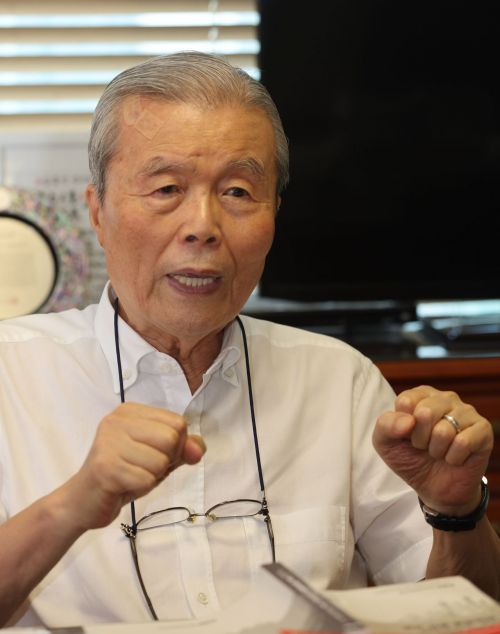 Former Kim Jong-in, Emergency Committee Chairman of the People Power Party, is expressing his views on the current legislative conflict during an interview with Asia Economy at his office in Gwanghwamun, Seoul. Photo by Huh Younghan younghan@
-What were the problems in the process of establishing the policy to increase medical school quotas?
▲The government should not have only considered the supply of doctors but also analyzed the impact of increasing doctor supply. However, there was no such preparation. For example, they should have explained in advance how much the health insurance burden would increase with more doctors and how the financial situation of health insurance would evolve. The National Health Insurance Service, which must bear the related costs to reform the medical delivery system and hospital system, has not predicted how much expenses will rise or how to secure funding.
-There are talks in the political sphere about reconsidering the increase in medical school quotas.
▲Such policies require medical experts within political parties who can analyze and frankly state why the policy is problematic and what issues may arise, but there is not a single one. Therefore, even if politicians now say to reduce or suspend the quota increase, the public still does not trust them.
-Then how should this medical crisis be resolved?
▲If the Korea Institute of Medical Education and Evaluation (KIMEE) objectively assesses whether our medical schools can educate 1,509 more students next year based on facilities, faculty, and all other factors, a solution will emerge. If KIMEE says, "Only this many students can be educated; no more," that decision must be followed. Medical education is not just about blackboards and chalk but involves practical training from the start. I believe there is no other way currently.
-How will the ongoing medical crisis change the medical environment in the future?
▲By around next spring, the operating systems of the 'Big 5' (Seoul National University, Seoul Asan, Severance, Samsung Seoul, Seoul St. Mary's) will change. University hospitals cannot be maintained in the way they have been without residents. Costs will rise significantly, medical quality will decline, and to maintain profitability, hospitals will have to be selective about patients. Ultimately, Korean healthcare will experience considerable turmoil for some time. Over nearly 50 years, we have established a social medical system based on health insurance that provides universal medical services regardless of income level, but this medical crisis has severely damaged it. Measures such as increasing the out-of-pocket rate for emergency rooms are representative examples, essentially telling only those who can afford it to use emergency rooms. As a result, hospital use by the public will become inconvenient, and hospital management will become difficult, requiring considerable time to overcome. It is like dropping a bomb into a clear lake to stir up muddy water; while the explosion is instantaneous, it takes a very long time for the mud to settle and the water to clear.
© The Asia Business Daily(www.asiae.co.kr). All rights reserved.
![Clutching a Stolen Dior Bag, Saying "I Hate Being Poor but Real"... The Grotesque Con of a "Human Knockoff" [Slate]](https://cwcontent.asiae.co.kr/asiaresize/183/2026021902243444107_1771435474.jpg)

















