Government Establishes 'Standards for the Romanization of Foreigners' Names' Regulation
Romanized Names to Follow Surname-Given Name Order and Spacing Rules
'SAWYER TOM', 'TOM SAWYER', 'Soyeotom', 'Tom Soye', 'Soye Tom', 'Tom Soye'. Foreign names that have been recorded differently on various certificates. Moreover, it was not easy to explain that two people were the same person when submitting certificates where the name was only written in Roman letters (SAWYER TOM) and certificates where it was only written in Hangul (Soyeotom).
Accordingly, the government has decided to apply a principle for the notation of foreign names going forward. As a measure to enhance convenience for them, Romanized names will be written in the order of surname-first and given in uppercase letters as the standard.
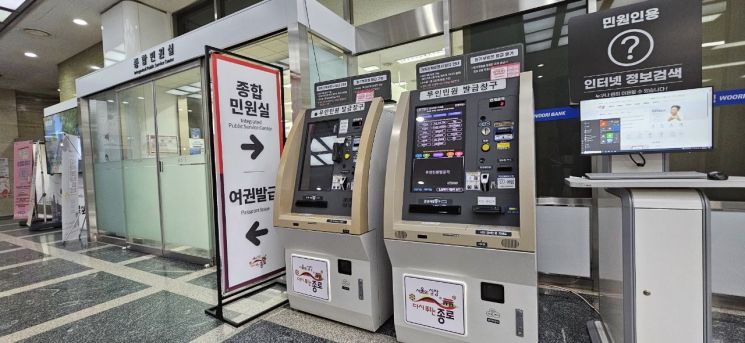
On the 28th, the Ministry of the Interior and Safety announced that from the 29th until the 19th of next month, it will publicly notify the 'Standard for the Notation of Foreigners' Names' based on these contents, gather public opinions, and finalize and implement the standard regulations.
Until now, the methods for recording foreign names on documents issued by administrative agencies have varied, causing inconvenience for foreigners in verifying their identity. For example, the order of names differed on each certificate, and even the spacing was inconsistent. When submitting certificates where the name was only written in Roman letters and others only in Hangul, it was difficult to prove that the persons listed on both certificates were the same individual.
Accordingly, the Ministry of the Interior and Safety reviewed inconvenience cases identified through last year's 'Policy Dialogue with Customers' and prepared this standard. According to the standard, from now on, foreign names in Roman letters will be written in surname-first order in uppercase letters, with a space between the surname and given name as a principle.
If there is a Romanized name recorded on immigration-related documents such as the foreigner registration card, that name will be used. If such documents are not available, the Romanized name recorded in the machine-readable zone of the foreigner's passport will be used. Additionally, the Hangul name of the foreigner will be written in surname-first order, with the surname and given name attached without a space as a principle.
If there is a Hangul name recorded on official documents or certificates such as the family relation register, that name will be used. If there is no Hangul name on official documents or certificates, the original pronunciation of the Romanized name will be transcribed into Hangul following the 'Foreign Language Orthography Rules'. Furthermore, to improve the convenience of identity verification for foreigners, it is a principle to record both the Romanized name and the Hangul name together. However, if it is difficult to record both names due to related systems or institutional reasons, only one of the two may be recorded. Lee Yong-seok, Director of the Digital Government Innovation Office at the Ministry of the Interior and Safety, said, "We expect that the identity verification process for foreigners will become more convenient through the establishment of this standard," and added, "We will continue to identify and improve inconveniences foreigners face in daily life."
© The Asia Business Daily(www.asiae.co.kr). All rights reserved.
![Clutching a Stolen Dior Bag, Saying "I Hate Being Poor but Real"... The Grotesque Con of a "Human Knockoff" [Slate]](https://cwcontent.asiae.co.kr/asiaresize/183/2026021902243444107_1771435474.jpg)















