US Rate Cut in September Seen as a Done Deal
South Korea Likely to Cut Rates in October-November
"Must Watch Housing Prices and Household Debt Trends"
Following the Jackson Hole meeting, the September interest rate cut in the United States has become a foregone conclusion, and major central banks such as those in Europe, the United Kingdom, and Canada have also begun lowering their benchmark interest rates, leading to assessments that the 'era of global tightening' is coming to an end. South Korea has kept its rates on hold for now due to concerns over housing prices and household debt, but the prevailing view is that it will cut rates in October or November after the U.S. lowers rates in September.
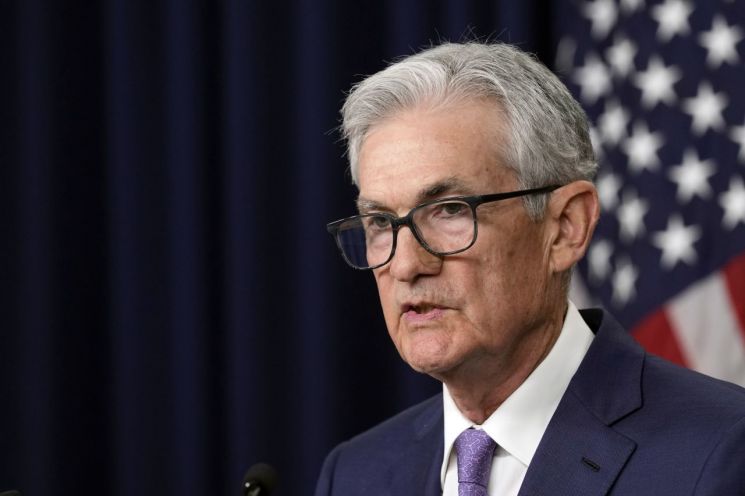
On the 23rd (local time), Jerome Powell, Chair of the U.S. Federal Reserve (Fed), made the September rate cut a foregone conclusion during his speech at the Jackson Hole meeting held in Wyoming. Powell said, "The time has come to adjust policy," adding, "The timing and pace of rate cuts depend on incoming data, changing outlooks, and the balance of risks." Unlike the high-intensity tightening declared two years ago at the Jackson Hole meeting due to inflation concerns, this speech even left open the possibility of a big cut (a 0.5 percentage point rate cut).
Not only the U.S., but major countries such as Europe and the U.K. have also started cutting rates. Earlier, the European Central Bank (ECB) cut rates by 0.25 percentage points to 4.25% in June and hinted at further cuts at the September policy meeting. The Bank of England (BOE) also cut rates by 0.25 percentage points to 5% earlier this month. The Bank of Canada (BOC) cut rates by 0.25 percentage points to 4.75% in June and further cut by 0.25 percentage points to 4.5% last month.
However, Japan has diverged from the global rate-cutting trend and is raising rates. The Bank of Japan (BOJ) exited its long-standing negative interest rate policy by raising the policy rate from -0.1% to 0?0.1% in March and made a surprise 0.15 percentage point hike to 0.25% on the 31st of last month.

The Bank of Korea (BOK) maintained its benchmark interest rate unchanged for the 13th consecutive time on the 22nd. This decision was based on the judgment that it is difficult to lower rates prematurely to stabilize housing prices and maintain financial stability.
At a press conference held immediately after the Monetary Policy Committee (MPC) meeting, BOK Governor Lee Chang-yong said, "Looking at inflation alone, conditions for a rate cut have been created," but added, "While domestic demand can be addressed over time, financial stability issues such as housing prices could become more risky if not addressed now," emphasizing the importance of financial stability.
Monetary Policy Committee member Shin Sung-hwan met with reporters at Jackson Hole on the 23rd and said, "(The MPC meeting on the 22nd) was very difficult," adding, "There is no need to strictly follow the U.S. when deciding policy rates." This means that the evaluation of South Korea's economic situation should take precedence over the movements of central banks worldwide, including the U.S., when making rate decisions.
South Korea to Cut Rates in October or November... One Cut Within the Year
The market widely expects the BOK to cut its benchmark interest rate once in October or November after the U.S. implements a rate cut in September.
Yoon Yeo-sam, a researcher at Meritz Securities, said, "The Jackson Hole Conference, which attracted much market attention, was effectively a rate cut announcement," and added, "Considering the cautious tone from the BOK Governor's remarks at the August MPC, I maintain the existing forecast of a rate cut in October and one cut within the year."
Ahn Ye-ha, a researcher at Kiwoom Securities, also forecasted, "If the Fed cuts rates in September after confirming a slowdown in inflation and stability in financial sectors such as household loans, South Korea will follow with a rate cut in October."
Jo Yong-gu, a researcher at Shin Young Securities, evaluated, "The BOK will implement one rate cut considering financial stability, government-led policy responses, and the vulnerable economic sectors and domestic demand that have faced difficulties."
BOK MPC members also assessed that the possibility of a rate cut in October or November has increased compared to before. At the MPC meeting on the 22nd, four out of six members expressed that the possibility of a rate cut within three months should be kept open. This contrasts with the previous MPC meeting on July 11, where only two out of six members supported keeping the possibility of a rate cut open. Governor Lee said regarding this, "The possibility of a cut within three months includes opinions covering both October and November," adding, "We will decide rates in October while monitoring upcoming indicators."
© The Asia Business Daily(www.asiae.co.kr). All rights reserved.
![Clutching a Stolen Dior Bag, Saying "I Hate Being Poor but Real"... The Grotesque Con of a "Human Knockoff" [Slate]](https://cwcontent.asiae.co.kr/asiaresize/183/2026021902243444107_1771435474.jpg)
















