Leaders of the US and Four Other Countries Urge Iran to Refrain from Military Actions
International Oil Prices Rise and Israel's Credit Rating Falls
Warnings have emerged that Iran could attack Israel within 24 hours at the earliest, heightening fears of an escalation in the Middle East. Despite international efforts, including those by the United States, to dissuade Tehran, Iran's leadership has reaffirmed its intent for retaliation. As a result, international oil prices surged to the $80-per-barrel range, and Israel's credit rating was downgraded.
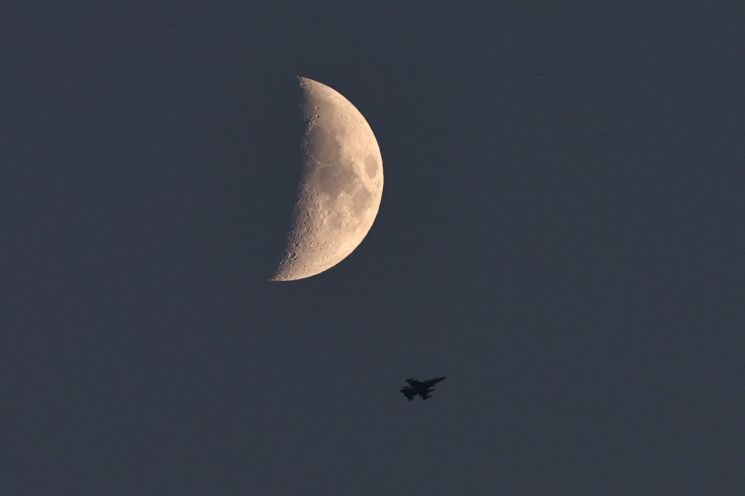
John Kirby, the U.S. White House National Security Council (NSC) National Security Communications Coordinator, stated during a briefing on the 12th (local time), "We are closely monitoring the rising tensions in the Middle East," adding, "The likelihood that Iran or its proxy forces will attack Israel within days has increased." Following Fox News' report citing local sources that a retaliatory attack on Israel could occur within 24 hours, the White House confirmed the imminence of such an attack. On the same day, Sky News Arabia also predicted that the so-called "Axis of Resistance," composed of Iran and its allied forces, would launch military actions targeting the Jewish holiday of Tisha B'Av on the 12th and 13th.
The risk of escalation in the Middle East sharply increased after the death of Ismail Haniyeh, the top leader of the Palestinian armed faction Hamas, who was killed the day after the presidential inauguration ceremony held in Tehran late last month. Not only Hamas but also the Lebanese armed group Hezbollah lost a top commander due to Israeli attacks. Furthermore, tensions peaked when Hamas rejected a proposed 15-day ceasefire negotiation offered by mediators including the United States the day before.
Israel also announced that it raised its military alert level to the highest in preparation for attacks from Iran, Hezbollah, and others. Daniel Hagari, the chief spokesperson for the Israel Defense Forces, said in a statement, "We take the declarations and statements of our enemies very seriously," adding, "Accordingly, we are maintaining the highest level of readiness in both offense and defense."
Western countries including the United States and Germany, as well as the Vatican, have appealed to break the cycle of violence in the Middle East, but these efforts have so far had little effect. Pietro Parolin, Cardinal Secretary of State of the Vatican, called Iranian President Masoud Pezeshkian on the same day, repeatedly emphasizing, "We must avoid the expansion of conflict and instead make every effort for dialogue, negotiation, and peace." However, President Pezeshkian responded, "According to international law and regulations, a nation that is attacked has the right to self-defense," reaffirming Iran's intention for retaliation, according to the Iranian state-run IRNA news agency.
President Joe Biden, in a joint statement with the leaders of the United Kingdom, France, Germany, and Italy, expressed support for Israel's defense against attacks carried out by Iran and its allied terrorist groups, urging Iran to cease its threats of military attacks against Israel.
Amid rising fears of escalation in the Middle East, international oil prices soared. West Texas Intermediate (WTI) crude oil closed at $80.06 per barrel, up $3.22 (4.19%) from the previous trading day. Brent crude, the global oil price benchmark, ended at $82.30 per barrel, up $2.64 (3.31%) from the previous day.
Israel's credit rating also took a direct hit. International credit rating agency Fitch Ratings announced in a statement that "the ongoing war in Gaza and geopolitical risks are placing a burden on the country's public finances," and downgraded Israel's credit rating from A+ to A.
Cedric Julian Berry, an analyst at Fitch Ratings, explained, "This (credit rating downgrade) reflects the ongoing war in Gaza, increased geopolitical risks, and military operations on multiple fronts," adding, "The Gaza conflict could continue until 2025 and there is a risk of expansion to other fronts." Earlier, Moody's also downgraded Israel's credit rating from A1 to A2 in February for similar reasons.
© The Asia Business Daily(www.asiae.co.kr). All rights reserved.
![Clutching a Stolen Dior Bag, Saying "I Hate Being Poor but Real"... The Grotesque Con of a "Human Knockoff" [Slate]](https://cwcontent.asiae.co.kr/asiaresize/183/2026021902243444107_1771435474.jpg)















