Ministry of Health and Welfare Project 'Interactive AI-Based Welfare Blind Spot Discovery Initial Consultation Information System' to Pilot from July... Full Effort to Identify At-Risk Households through Diverse Public and Private Sector Projects Reflecting Regional Characteristics
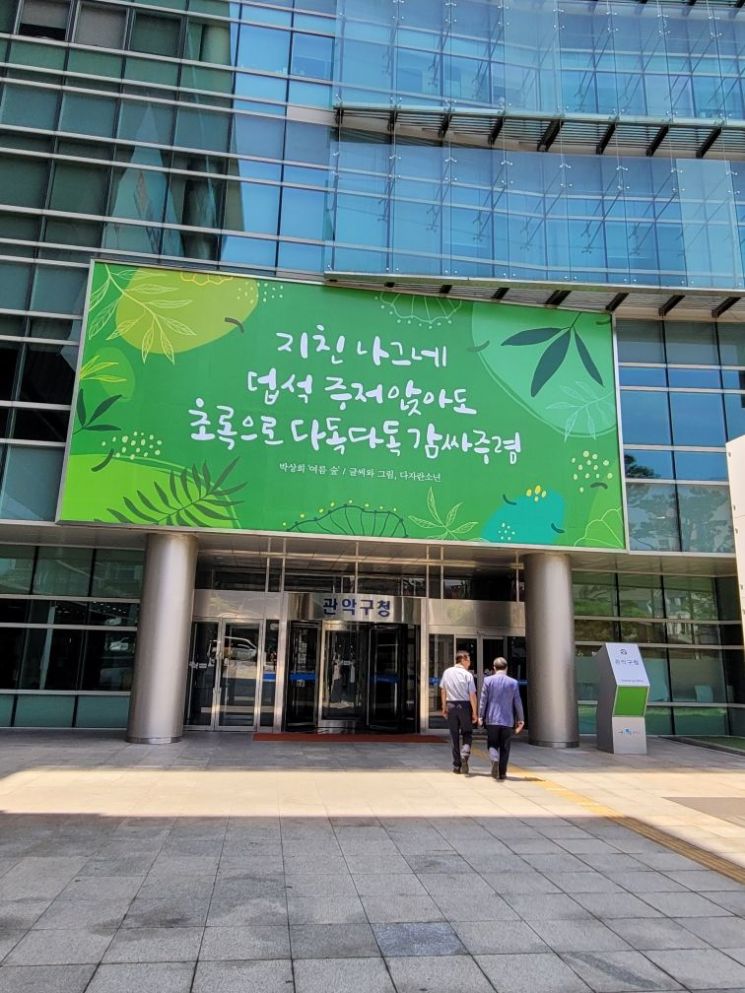
Gwanak-gu (Mayor Park Jun-hee) has introduced artificial intelligence (AI) into the initial counseling of welfare blind spot targets to systematically and promptly identify households in crisis.
The district has regularly conducted investigations to discover welfare crisis households by acquiring and analyzing 45 types of crisis information such as power outages and water supply interruptions.
However, due to various social factors such as an increase in isolated households, aging population, and weakened economic power, the number of crisis households has continuously increased, making in-depth welfare counseling difficult with the current investigation personnel alone.
Accordingly, the district has participated in the Ministry of Health and Welfare's pilot project for 'Initial Counseling to Discover Welfare Blind Spots' using artificial intelligence (AI) and has been promoting the project since July.
Previously, investigation personnel visited homes or made phone calls one by one to conduct initial counseling for suspected crisis households, but now, an interactive AI automated phone system first conducts initial counseling on the crisis situation and welfare needs of registered target households in the computer network.
Subsequently, if it is determined that in-depth counseling is necessary, social welfare officers at the local community center will conduct direct counseling and link the target individuals to customized welfare services.
The district expects that by introducing artificial intelligence in discovering crisis households, it will be possible to provide welfare services more intensively and efficiently to those who truly need help.
Meanwhile, the district is making every effort by promoting projects utilizing various resources to systematically and promptly identify crisis households.
This year, during the actual condition survey of single-person basic livelihood security recipients at risk of solitary death, the district conducted counseling for a total of 9,650 households and identified 5,865 households at risk of solitary death.
The district is strongly promoting various solitary death prevention projects, including providing 3,700 welfare check services using smart technology and human safety nets for households at risk of solitary death.
In addition, public-private cooperative projects to discover crisis households are actively being promoted.
Ten projects reflecting local characteristics, such as ‘Residents Watching Residents Day (Juju Day)’, where local community leaders inspect every corner of neighborhood alleys, and the ‘Shintongbangtong Welfare Platform’, where licensed real estate agents discover blind spots in actual residence, have linked 10,584 customized public and private welfare services to crisis households.
Park Jun-hee, Mayor of Gwanak-gu, said, “By establishing a welfare system utilizing artificial intelligence (AI), we can provide more efficient and prompt welfare services,” and added, “We will continue to make every effort to discover welfare blind spots by utilizing various resources.”
© The Asia Business Daily(www.asiae.co.kr). All rights reserved.
![Clutching a Stolen Dior Bag, Saying "I Hate Being Poor but Real"... The Grotesque Con of a "Human Knockoff" [Slate]](https://cwcontent.asiae.co.kr/asiaresize/183/2026021902243444107_1771435474.jpg)















