-Focus Responsibility on PG Companies... Balance with Platforms Needed
-Assemblyman Kim Byung-gi: "Time to Consider Mandatory E-commerce Insurance Enrollment"
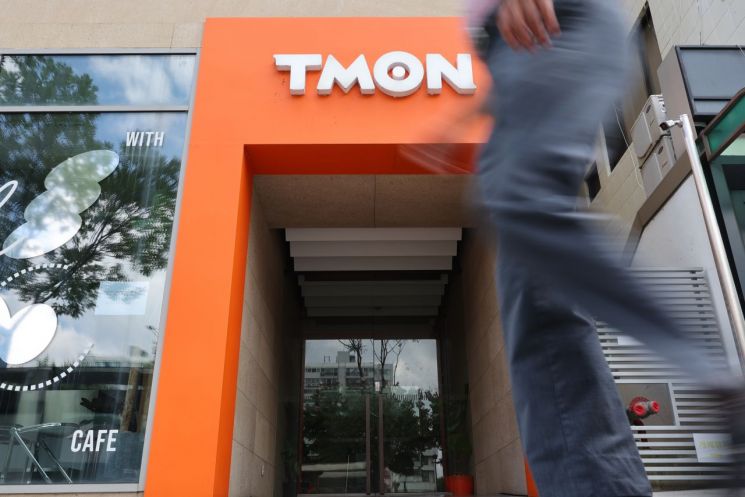
The delay in settlement payments by TMON and WEMAKEPRICE has raised concerns about the safety of the online payment market. In particular, it was revealed that the two companies did not subscribe to payment guarantee insurance for electronic payment gateway (PG) providers, sparking discussions on the necessity of mandatory insurance enrollment. Under the current Specialized Credit Finance Act, PG companies are primarily responsible for refund procedures, but there are calls to assign corresponding responsibilities to e-commerce platforms as well.
According to financial authorities on the 2nd, PG companies such as KG Inicis have received general product payment and delivery information from TMON and WEMAKEPRICE and have begun the payment cancellation process, but they are likely to bear the full brunt of the refund amounts. This is because the two companies have filed for corporate rehabilitation, increasing the likelihood that they will not transfer the refund funds. Article 19 of the Specialized Credit Finance Act states that "payment gateway companies must comply when credit card members request transaction cancellations or refunds," so PG companies are refunding consumers first using their own funds without having received the refund amounts from TMON and WEMAKEPRICE.
Payment guarantee insurance is a safety measure designed to prepare for large-scale refund suspension situations like this incident. It is a product that compensates the insured (PG company) on behalf of the policyholder (e-commerce platform) when refunds that should be processed by the PG company are not properly made. If TMON and WEMAKEPRICE had subscribed to payment guarantee insurance for PG companies, the PG companies could have received compensation.
However, major e-commerce companies customarily do not subscribe to this insurance. Under current law, there is no obligation to subscribe to payment guarantee insurance. PG companies find it practically difficult to demand insurance enrollment from e-commerce platforms. A PG company official lamented, "Since products are delivered within a day or two and transactions worth billions of won occur, it is absurd for a PG company to ask a large platform, which is in the 'dominant' position, to take out payment guarantee insurance."
Jeon Sang-beom, a lawyer at Logos Law Firm, explained, "To legally mandate insurance enrollment, the possibility of risk must be considered, but when the provision assigning primary responsibility to PG companies was included in the Specialized Credit Finance Act, it seems they did not anticipate the risk of such a large-scale settlement delay." He added, "As e-commerce rapidly expanded during the COVID-19 period, leading to cutthroat competition among e-commerce platforms, it was only a matter of time before an accident occurred. It is time to discuss regulatory improvements."
If institutional measures are not established, consumer protection gaps may arise if a large-scale online payment cancellation incident like this occurs again. During an emergency inquiry at the National Assembly’s Finance and Economy Committee on the 30th of last month, Kim Byung-gi, a member of the Democratic Party representing Dongjak-gu Gap, Seoul, pointed out, "The financial authorities instructed PG companies to refund consumers for TMON and WEMAKEPRICE payments through payment cancellations, but this is merely a temporary fix. If they have not subscribed to payment guarantee insurance, the canceled card payment amounts will remain as a burden on the PG companies, raising concerns about insolvency."
Considering the rapid growth of the online shopping market and increased transaction volumes, there is a growing need to strengthen consumer protection, enhance the stability of payment systems, and balance responsibilities between PG companies and e-commerce platforms. In a phone interview with Asia Economy, Representative Kim Byung-gi said, "The current system, which places responsibility solely on PG companies, does not reflect the reality of the online shopping ecosystem. Since large e-commerce platforms hold a superior position over PG companies in the industry ecosystem, it is worth considering making payment guarantee insurance mandatory for e-commerce platforms."
© The Asia Business Daily(www.asiae.co.kr). All rights reserved.
![Clutching a Stolen Dior Bag, Saying "I Hate Being Poor but Real"... The Grotesque Con of a "Human Knockoff" [Slate]](https://cwcontent.asiae.co.kr/asiaresize/183/2026021902243444107_1771435474.jpg)















