Japanese Starbucks Stores Used Like Studios
Multiple Electronic Devices Charging Including Laptops and Tablet PCs
Netizens Divided: "Crossed the Line" vs. "Fits Cafe Purpose"
An excessive case of 'Kagongjok' (people who study for long hours in cafes) was spotted at a franchise cafe in Japan. On the 25th, a Japanese netizen using the nickname 'Naomi' posted a photo on X (formerly Twitter) with the caption, "Is this even allowed at Starbucks?" The photo showed a male customer occupying a table near the store entrance, using multiple laptops, a tablet PC, and a mobile phone, setting up the space like a workspace.
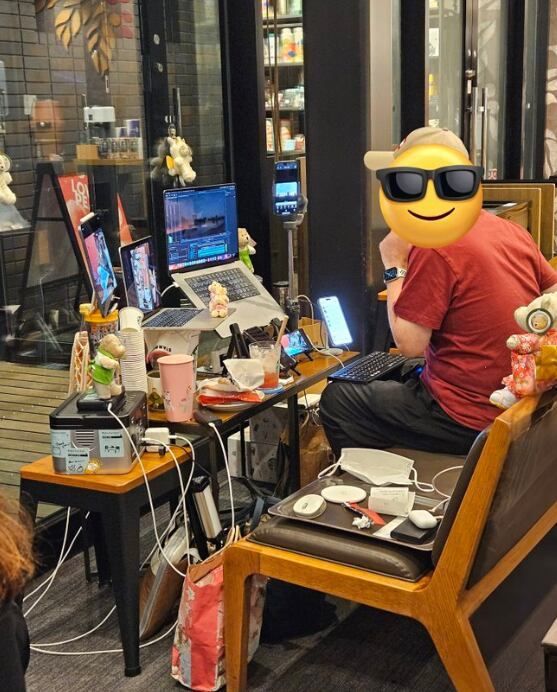 On the 25th, a Japanese netizen using the nickname "Naomi" posted on X (formerly Twitter) a message saying, "Is this allowed at Starbucks?" along with a photo. The photo showed a male customer occupying a table near the store entrance, setting up multiple laptops, tablets, and phones as if using the space like a workspace.
 [Photo by X (formerly Twitter)]
On his table, there were not only several electronic devices but also a used beverage cup, a dessert bowl, chargers, and USB cables scattered messily. Stacked paper cups and several teddy bears placed around were also noticeable. Around the long bench seat where he was sitting, there were trays holding other dishes and miscellaneous items, as well as shopping bags filled with various goods occupying the space. This post became a huge topic online, surpassing 11.13 million views by 2 p.m. on the 26th, just one day after being made public.
Japanese netizens reacted with comments such as, "It would be embarrassing if someone like this was in the cafe," "It's amazing how he set up such a work environment," "The staff must be at a loss," "I wonder what he's actually doing with all those laptops and smartphones," "Looks like a cafe DJ," and "Someone might think it's a private workspace."
Why Have Kagongjok Become Unwelcome Guests in Cafes?
Not only in Japan but also in Korea, in April this year, a customer was caught occupying two tables at Starbucks, setting up monitors and laptops on stands, drawing criticism. In August last year, a self-employed business owner who was troubled by Kagongjok announced the operation of a 'NO 20s Zone' banning entry to people in their 20s, such as college students and office workers, which sparked controversy.
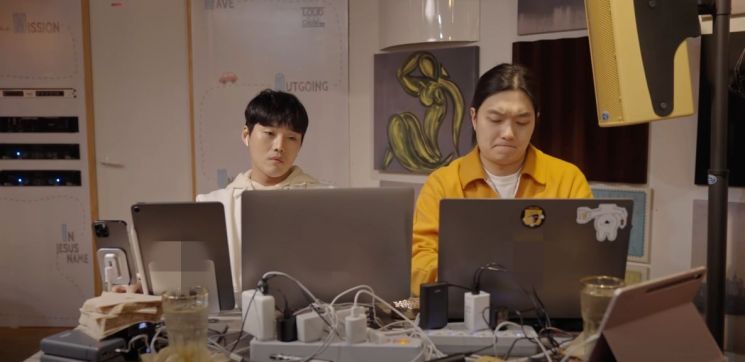 The recent backlash against the "Kagongjok" (cafeteria study group) stems from the fact that cafe owners are struggling to operate due to increases in public utility fees, rising prices of raw materials such as milk and coffee beans, and rent hikes.
 [Photo by YouTube channel 'Neodeolteu']
At that time, netizens had mixed views on Kagongjok. Most commented, "I've seen many people studying or working in cafes, but this crosses the line," "If you're going to do that, wouldn't it be better to rent a shared office? Do they think it's a PC bang?" On the other hand, some said, "Unless Starbucks restricts it, even if it's annoying, you can't really say anything," and "It has somewhat changed, but isn't that originally the purpose of cafes?"
Although Kagongjok have recently become targets of social criticism, the cafe industry actually grew rapidly and established itself because of them. Therefore, when the term Kagongjok first appeared in the 2010s, it did not receive much criticism, as studying in cafes was considered normal.
The reason Kagongjok have recently drawn criticism is due to rising public utility fees, increased prices of raw materials such as milk and coffee beans, and rent hikes, which have made it difficult for cafe owners to operate. Even during the old teahouse days, there were customers who stayed all day after ordering just one cup of coffee, but teahouse owners did not kick them out. However, since 2020, the situation for cafe owners has changed. Customers who stay for long hours after ordering just one cup of coffee have become unwelcome guests who do not help sales.
Additionally, with the use of smartphones, laptops, and other electronic devices, cafe owners have had to bear increased electricity costs. Some Kagongjok have even caused inconvenience by forcing silence on other customers, harming their experience. As other customers became uncomfortable or stopped visiting due to Kagongjok, criticism arose mainly from cafe users and owners, and now Kagongjok have become notorious as troublesome customers and targets of reproach.
© The Asia Business Daily(www.asiae.co.kr). All rights reserved.
![Clutching a Stolen Dior Bag, Saying "I Hate Being Poor but Real"... The Grotesque Con of a "Human Knockoff" [Slate]](https://cwcontent.asiae.co.kr/asiaresize/183/2026021902243444107_1771435474.jpg)
















