Powdered Rice Easier to Mill Than Regular Rice
No Gluten, Easier Digestion and Lower Oil Absorption
High Supply Price, Limited Consumer Appeal
From ramen to frying powder, dumplings, and financiers have appeared. As the government implements the 'Powdered Rice Activation' policy to reduce dependence on imported wheat and increase food self-sufficiency, the food industry is releasing a flood of rice-based products this year. Powdered rice is easier to mill than regular rice, making it advantageous for noodle making, baking, and confectionery, and it has rapidly emerged as a wheat substitute because it lacks gluten, which hinders digestion. However, the high price of rice makes it unsustainable without government support, and the lack of clear marketing appeal points is cited as a limitation.
According to the industry on the 28th, SPC Samlip plans to launch four new products using powdered rice, including waffles and stick bread, in September. Following last year's introduction of powdered rice products centered on cakes such as madeleines and financiers, they are currently researching and developing to sell a wider variety of products this year.
Powdered rice is different from rice flour. It is a specially bred variety developed to replace regular rice, which is hard and difficult to mill. Unlike regular rice, which must be soaked in water before milling, powdered rice can be milled as is, reducing costs for producers. It can also be used in various fields such as noodle making, confectionery, and baking. For consumers, it contains no gluten, which burdens the stomach, making it easier to digest and absorbing less oil, which is beneficial for health.
The government has been supporting the development of products using powdered rice since last year to resolve the surplus rice supply caused by decreased rice consumption while reducing dependence on imported wheat and increasing food self-sufficiency. As a result, about 30 types of powdered rice products are expected to be released or have been released this year.
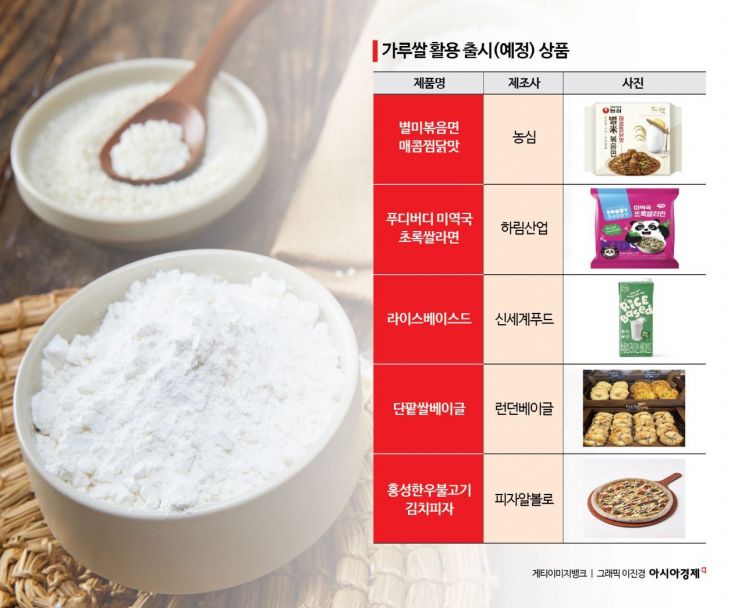
Already, Nongshim started selling 'Byulmi Stir-fried Noodles Spicy Steamed Chicken Flavor' last month. It is a non-fried dried noodle containing domestically produced powdered rice, and Nongshim applied the optimal noodle-making method and blending ratio to leverage the softer texture of powdered rice compared to regular rice. Shinsegae Food launched 'You Are What You Eat Plant-Based Rice Based,' a beverage made from 100% plant-based ingredients including domestic powdered rice and brown rice oil, on the 21st. Besides food companies, famous restaurants are also developing and selling powdered rice products. Seongsimdang sells 'Chocomi (米) Madeleines,' and London Bagel released 'Sweet Red Bean Rice Bagel' in May.
Samyang Foods also launched fried dumplings and chicken using rice flour, and Sempio plans to introduce 'Domestic Rice Gochujang' fermented using the powdered rice variety 'Baromi2.' Sajodongawon and Samyangsa are developing powdered rice batter and frying powder.
However, there are many hurdles to overcome to increase powdered rice consumption, reduce wheat dependence, and raise food self-sufficiency. First, the high supply price of powdered rice is a problem. Powdered rice costs 3,000 to 4,000 KRW per kilogram, which is much more expensive compared to imported wheat flour (around 2,000 KRW per kilogram).
The government currently supplies powdered rice at around 1,000 KRW per kilogram to activate the initial market, but for the market to sustain growth, it is necessary to secure price competitiveness independently. Previously, during the Lee Myung-bak administration, the 'R-10 Korea Project' was conducted to replace 10% of domestic wheat flour usage with rice flour to balance rice supply and demand, but when government support was cut off, food companies with deteriorated profit structures stopped producing rice-processed foods.
The government plans to expand the cultivation area of powdered rice to achieve economies of scale and lower supply prices. The annual production volume of powdered rice, expected to be 10,000 tons (cultivation area 2,000 hectares) this year, will be significantly increased to 200,000 tons (42,000 hectares) by 2027.
Besides the high supply price, finding marketing appeal points is also a challenge to expand powdered rice product consumption. Currently, aside from being healthier than wheat flour, there is no clear incentive that leads to purchasing powdered rice products. Meanwhile, consumer prices are generally set higher than wheat flour products.
For Nongshim's Byulmi Stir-fried Noodles, the price is 2,380 KRW per pack at discount stores, which is three times that of Shin Ramyun (780 KRW). A Nongshim official explained, "By using powdered rice, we developed a premium product concept that enhances the flavor of the sauce, so the price is set higher than existing ramen." SPC Migak Bakery's powdered rice bread is also priced at 3,480 KRW, more expensive than the premium wheat flour bread 'Roman Mill Bread' (3,200 KRW) of the same weight.
An industry insider involved in developing powdered rice products said, "In fact, when choosing processed foods such as snacks, bread, and ramen, consumers generally focus more on taste and texture than health," adding, "To encourage more consumers to willingly buy powdered rice products that are more expensive than regular products, it is necessary to find another appeal point besides health."
© The Asia Business Daily(www.asiae.co.kr). All rights reserved.
![Clutching a Stolen Dior Bag, Saying "I Hate Being Poor but Real"... The Grotesque Con of a "Human Knockoff" [Slate]](https://cwcontent.asiae.co.kr/asiaresize/183/2026021902243444107_1771435474.jpg)















