Imported Beer Volume in First Half Hits 109,557 Tons, Down 10% YoY
Japanese Beer Imports Nearly Double, Approaching Record High
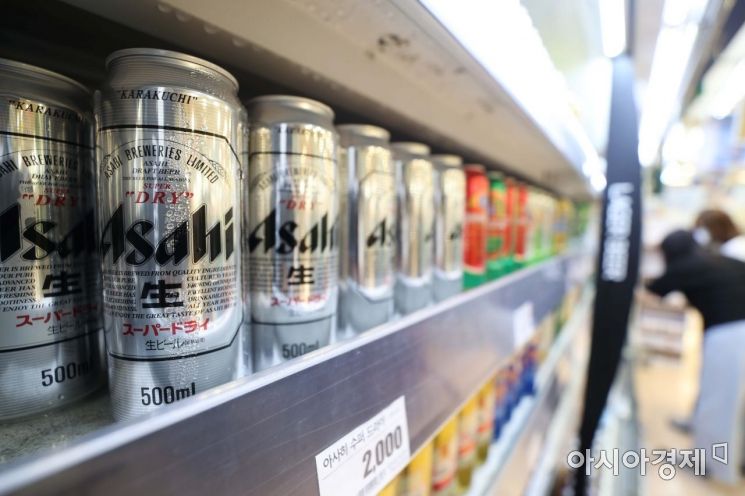
The imported beer market in the first half of this year is facing a double challenge of diversification in beverage types and a consumption slump. While the imported beer market slightly declined, the Japanese beer craze that began last year continues, showing a 'solo growth trend.'
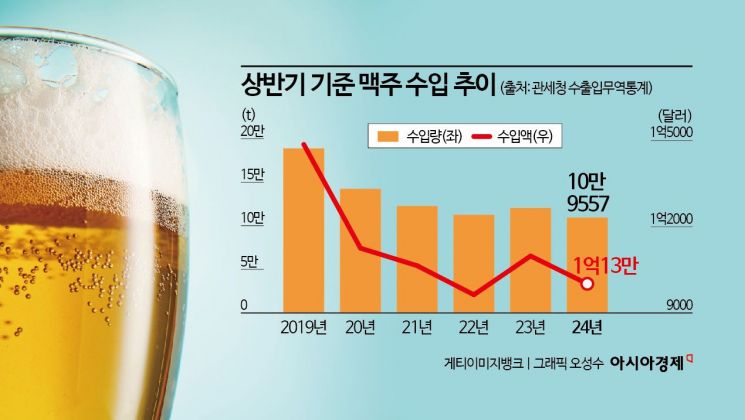
According to the Korea Customs Service export-import trade statistics on the 24th, the volume of beer imports in the first half of this year was 109,557 tons, down 9.2% (11,105 tons) from the same period last year (120,662 tons). During the same period, the import value also decreased by 8.8% (9.66 million dollars), from 107.9 million dollars (about 152 billion KRW) to 101.3 million dollars (about 139 billion KRW).
Before the COVID-19 pandemic in the first half of 2019, beer import volume and value reached 188,944 tons and 148.61 million dollars, respectively, but have been on a continuous decline since the following year. Although there was a slight rebound last year as the endemic phase began in earnest, the trend reversed to a decline this year, reducing the import volume to around 100,000 tons in the first half.
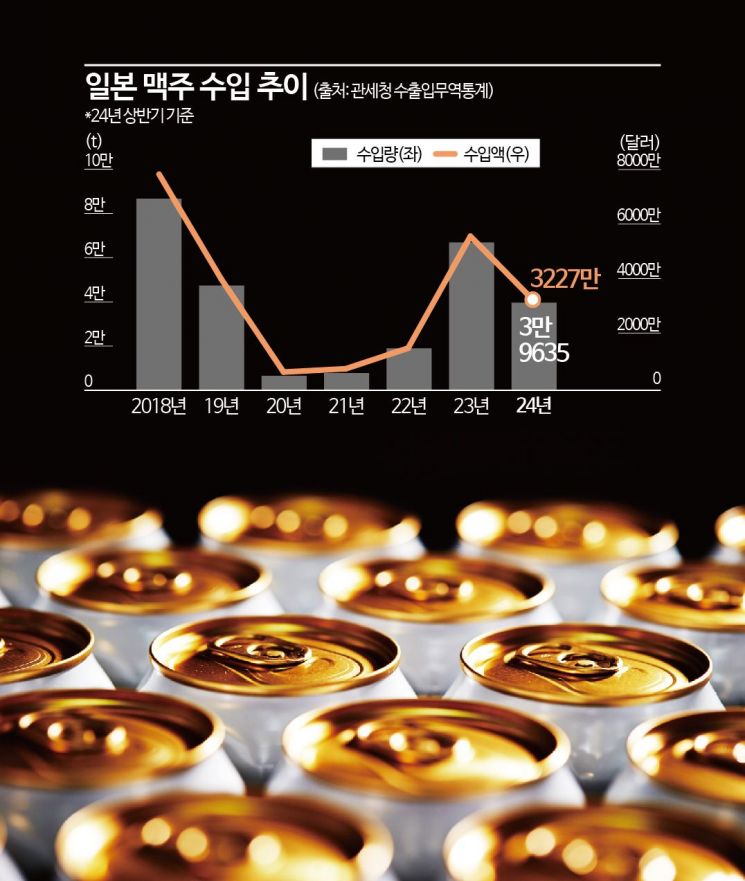
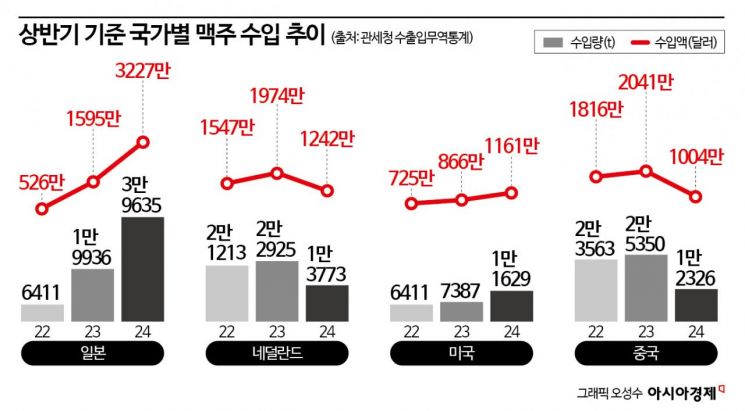
Looking at the data by country, Japan's growth was remarkable. The volume of Japanese beer imports in the first half of this year was 39,635 tons, an increase of 98.8% (19,699 tons) compared to the same period last year (19,936 tons), and the import value also more than doubled to 32.27 million dollars (about 4.5 billion KRW) from 15.95 million dollars in the previous year.
Japanese beer, which was virtually ousted from the domestic market due to the boycott movement that began in 2019, has been recovering to pre-boycott levels since last year. The import value, which was 78.3 million dollars (about 10.9 billion KRW) in 2018 before the boycott, shrank to only 5.67 million dollars (about 800 million KRW) in 2020, less than one-tenth of that level. However, it has been recovering since the following year, increasing last year's import value by 283.3% year-on-year to 55.52 million dollars (about 7.7 billion KRW), reclaiming the top spot in imported beer for the first time in five years since 2018.
Considering the usual trend of a clear increase in import volume in the second half after the peak summer season, this year's Japanese beer import volume is expected to surpass the levels before COVID-19 and the boycott, potentially setting a new record. However, some in the industry suggest that the volume was imported somewhat earlier than usual compared to the second half, so it may not show a remarkable growth trend compared to last year.
With the successful revival of Japanese beer, Japanese beer manufacturers are also strengthening their offensive in the Korean market. Lotte Asahi Liquor, which led the revival of Japanese beer by launching the 'Asahi Super Dry Draft Beer Can' last year, introduced the second draft beer can series 'Asahi Shokusai' this year and continued aggressive marketing by releasing Okinawa beer 'Orion The Draft' in April. Lotte Asahi Liquor's sales last year were 138.6 billion KRW, a 330.5% increase from the previous year, and operating profit also rose about 12 times from 3.5 billion KRW to 42 billion KRW during the same period.
The decline of Chinese beer, which lost its throne to Japan in the second half of last year after being the top imported beer country in 2022 and experiencing the 'urine terror' controversy, was also evident. In the first half of this year, Chinese beer import volume was 12,326 tons, down 51.4% from 25,350 tons in the same period last year, and import value dropped 50.8% to 10.04 million dollars (about 1.4 billion KRW) from 20.41 million dollars.
On the other hand, American beers, represented by 'Budweiser' and 'Miller,' performed well, with both import volume (11,629 tons) and import value (11.61 million dollars) increasing by 57.4% and 34.1%, respectively, compared to the previous year.
In recent years, as imported liquors have rapidly diversified and the quantitative growth of the imported beer market has effectively stagnated, concerns are rising that the slump in imported beer will prolong due to the combined downturn in the liquor and dining industries caused by high inflation and consumption stagnation. A liquor industry official said, "The recent decline in beer imports should be understood not as a temporary change but as a reflection of changes in drinking culture," adding, "It seems inevitable that imported beer must also pursue high-quality diversification, as it is difficult to return to the days when beer accounted for the vast majority of imported liquors."
However, there is also an opinion that the import volume may still increase since the peak season for the beer market is the summer after July when the heat intensifies. Especially with climate change breaking record high temperatures every year and the added demand boost from the Paris Olympics this year, there are clear factors for increased demand.
© The Asia Business Daily(www.asiae.co.kr). All rights reserved.
![Clutching a Stolen Dior Bag, Saying "I Hate Being Poor but Real"... The Grotesque Con of a "Human Knockoff" [Slate]](https://cwcontent.asiae.co.kr/asiaresize/183/2026021902243444107_1771435474.jpg)


















