Floating Offshore Wind Power Commercialization Gains Momentum
Eligibility for Fixed Wind Power Bidding by Year-End
Challenges Including Shared Water Surface Usage Fees Remain
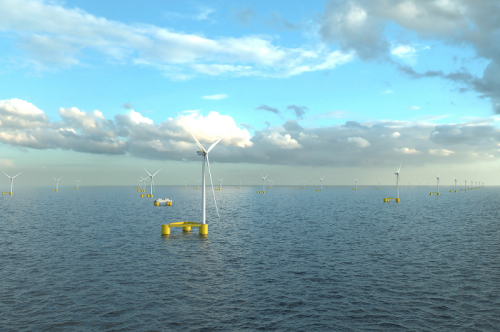
Three floating offshore wind power complexes being promoted in the distant waters of Ulsan have simultaneously passed the government's Environmental Impact Assessment (EIA). This is seen as a step forward in the commercialization of floating offshore wind power. Once the EIA is approved, they can participate in the government's offshore wind power bidding. However, it is pointed out that many hurdles remain, such as negotiations for public water surface point and usage fees, and reviews of military operational feasibility.
According to the Ministry of Trade, Industry and Energy on the 16th, on the 15th, three floating offshore wind power development projects?Haewoolyi Offshore Wind Power, Firefly Offshore Wind Power, and Ghost Whale Offshore Wind Power?completed final consultations with the Ministry of Environment and the Ministry of Oceans and Fisheries regarding the Environmental Impact Assessment and received final approval from the Ministry of Trade, Industry and Energy.
The Environmental Impact Assessment is a process that comprehensively evaluates the potential environmental impacts of constructing and operating offshore wind power complexes and establishes mitigation plans. The EIA is one of the key permits and approvals procedures for offshore wind power projects and takes the most time. It is also a basic prerequisite for proceeding with other permits such as development activity permits.
The EIA is broadly divided into marine and terrestrial investigations. The marine sector evaluates marine ecosystems, marine physics, and marine sediment, while the terrestrial sector assesses terrestrial ecosystems, terrestrial environmental quality, noise, and socio-economic impacts. Based on the investigation results, mitigation measures to minimize the expected impacts from the offshore wind power complex development are incorporated into the project plan.
Currently, a total of seven floating offshore wind power projects are underway in the exclusive economic zone (EEZ) of the distant waters of Ulsan. Among these, three priority projects have now passed the government’s Environmental Impact Assessment.
Haewoolyi Offshore Wind Power is a corporation established by CIP (Copenhagen Infrastructure Partners), a Danish green energy investment and development company, for the Ulsan offshore wind power project. Haewoolyi has received power generation business permits for three floating offshore wind power complexes totaling 1.5 gigawatts (GW). It is collaborating with HSG Sungdong Shipbuilding on the substructure.
Firefly Offshore Wind Power is a 750-megawatt (MW) floating offshore wind power project promoted by Equinor, a Norwegian state-owned integrated energy company. Equinor is preparing for the wind power fixed-price contract bidding scheduled for the end of this year. Domestic companies Samsung Heavy Industries and POSCO E&C are cooperating on the project.
Ghost Whale Offshore Wind Power is a floating offshore wind power project promoted by Bada Energy in the distant waters of Ulsan, with a total capacity of 1.5 GW. Bada Energy is an offshore wind power company jointly established by Corio Generation under the UK’s Green Investment Group, France’s TotalEnergies, and SK Ecoplant.
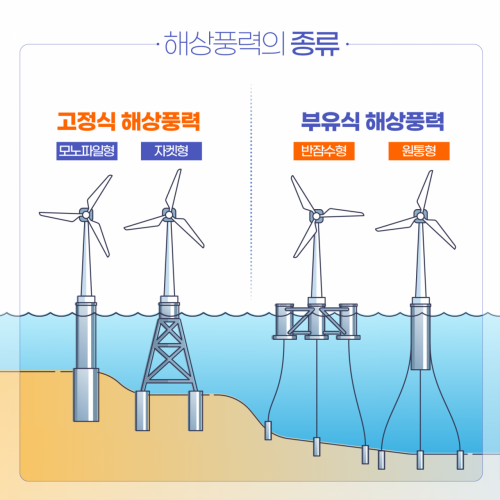
Meanwhile, offshore wind power is divided into fixed and floating types. Floating offshore wind power involves floating buoyant structures installed in distant waters, on which turbines are mounted. Compared to fixed offshore wind power installed near the coast, floating offshore wind power installed in distant waters has the advantage of utilizing stronger winds to increase electricity production efficiency.
© The Asia Business Daily(www.asiae.co.kr). All rights reserved.
![Clutching a Stolen Dior Bag, Saying "I Hate Being Poor but Real"... The Grotesque Con of a "Human Knockoff" [Slate]](https://cwcontent.asiae.co.kr/asiaresize/183/2026021902243444107_1771435474.jpg)
















