KCC·LX Hausys Publish Sustainability Report
Strengthened Environmental Regulations on Exports... Expansion of Eco-friendly Management Investments
As carbon emission regulations in major export countries such as the United States and Europe enter the final countdown, building materials companies like KCC and LX Hausys are also moving busily. This is because the fate of the companies depends on achieving carbon neutrality by 2050 through eco-friendly and future energy businesses.
On the 9th, KCC and LX Hausys announced through their Sustainability Reports that they will strengthen their climate change response strategies for carbon neutrality. Both companies are leading firms in the domestic building materials industry and are recognized for being at the forefront of investment in eco-friendly businesses.
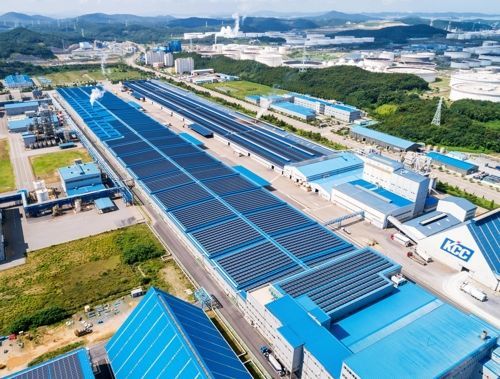
KCC is working to reduce greenhouse gas emissions centered on solar power projects. KCC currently operates solar power plants at 13 business sites. As of last year, it produced about 29.8 GWh of electricity from solar power. This amount of electricity can supply approximately 8,174 households for one year. In addition, based on the know-how accumulated from operating rooftop solar power plants at its business sites and factories, KCC is also engaging in external development as a private power generation industry operator.
LX Hausys has strengthened greenhouse gas emission reductions through process innovation and operational optimization. Process innovation involves reducing energy use and introducing external heat sources to lower greenhouse gas emissions. Last year, the company invested 8.4 billion KRW to advance such environmental management. This year, it plans to invest about 7 billion KRW in energy-saving areas to reduce greenhouse gas emissions. Through this, the goal is to reduce greenhouse gas emissions by more than 2,000 tons compared to the previous year, bringing total emissions below 113,184 tons.
The reason these companies are increasing investments to reduce carbon emissions is exports. One of KCC’s main products, coatings, is used in new cars by Hyundai Motor Company and Kia Motors. One of LX Hausys’s core businesses is also the automotive industry, with automotive parts and interior finishing materials as major products. The United States and Europe are major export markets for automobiles, and these countries impose direct restrictions through carbon emission regulations.
The European Union (EU) has introduced the Carbon Border Adjustment Mechanism (CBAM), an environmental regulation. CBAM mandates the purchase of certificates corresponding to the amount of carbon emitted during the production process when exporting six carbon-intensive products?steel, aluminum, fertilizer, and others?to the EU. After a pilot implementation in October last year, it will undergo a transition period until 2025 and be fully enforced from 2026.
The United States is pushing to introduce the Clean Competition Act (CCA), similar to the CBAM first implemented by Europe. The U.S. CCA plans to impose a tariff of $55 per ton of greenhouse gas emissions on 12 imported products, including petrochemicals, refining, and steel, starting in 2025.
An industry official explained, “With environmental regulations on export products about to be fully implemented, investments to reduce carbon emissions are increasing,” adding, “As the number of export items subject to regulations is likely to increase, eco-friendly management is essential to secure export competitiveness.”
© The Asia Business Daily(www.asiae.co.kr). All rights reserved.
![Clutching a Stolen Dior Bag, Saying "I Hate Being Poor but Real"... The Grotesque Con of a "Human Knockoff" [Slate]](https://cwcontent.asiae.co.kr/asiaresize/183/2026021902243444107_1771435474.jpg)















