Various Savings Methods Popular Among Chinese Youth

Recently, 'saving money' has been spreading like a trend among young people in China. The methods vary. They include saving golden beans, accumulating money while playing games, no-passbook savings with small amounts over a short period, and using only cash without cards. The common point is that these are not stressful or forced ways of saving. We followed various saving-related hashtags posted on Chinese social networking services (SNS).


Jang Han (30), a Chinese citizen, has been saving golden beans since last year. Every month, he receives his salary and checks the price of gold. When the price of gold is low, he buys golden beans and puts them in a glass jar. Jang expressed satisfaction with collecting golden beans. He said, "It feels like saving money in a piggy bank when I was young. I like this feeling of saving money even while spending."
'Golden beans' is a saving method that became popular in China last year. It involves collecting small gold nuggets, like beans, in a glass jar. Posting certification photos on SNS is also a trend among young people. Experts see this as evidence that Chinese youth have broadened their knowledge of investment and financial management, and they analyze that young people buy and collect golden beans as a symbol of saving rather than consumption.

Generations born after the 2000s also enjoy 'money-saving games.' Xiao Ding (25) thought of a way to earn money while playing games and posted on SNS that he 'pretended to raise a baby while saving money.' For example, in the game, while buying items needed to raise a baby, he actually saved 25 yuan. Xiao said he managed to save over 3,000 dollars after 60 days.
Besides 'pretending to raise a baby,' there are many games with various scenarios and stories in virtual reality where players can keep saving records, such as 'pretending to raise a dog,' 'pretending to inherit a mansion,' and 'a princess in distress.' These add fun elements to what could be a boring saving process through games. Xiao Ding explained, "Through games, you can also experience in advance that unexpected expenses are often high, which helps develop a habit of saving."
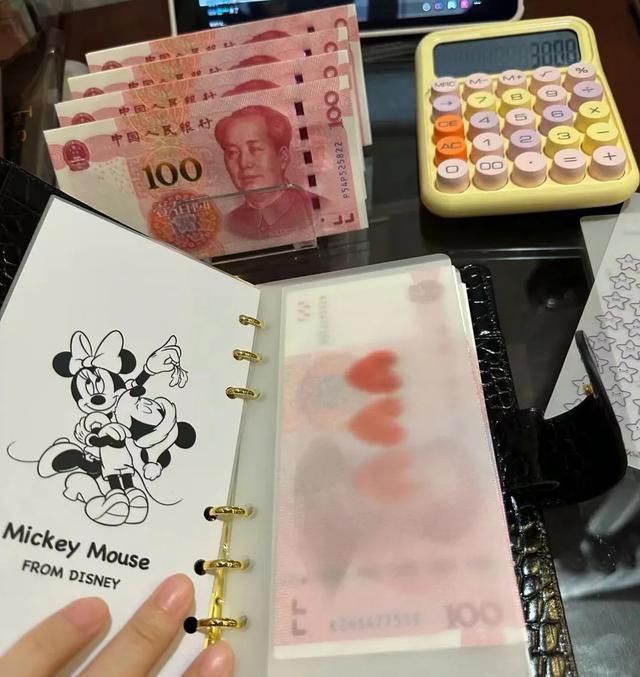
Yanfei, an associate professor in the Department of Sociology at Tsinghua University, argues that the saving trend among young people is not a short-term social phenomenon but is likely to continue long-term. The reason is the difficulty of saving due to employment difficulties and rent costs. Professor Yan said, "Those born between 1990 and 1995 find it harder to accumulate wealth in the stock and real estate markets compared to the 70s and 80s generations," adding, "Young people have chosen to avoid excessive consumption and instead save and manage their money long-term to achieve economic freedom."
© The Asia Business Daily(www.asiae.co.kr). All rights reserved.
![Clutching a Stolen Dior Bag, Saying "I Hate Being Poor but Real"... The Grotesque Con of a "Human Knockoff" [Slate]](https://cwcontent.asiae.co.kr/asiaresize/183/2026021902243444107_1771435474.jpg)

















