Low-Wage Issues Festered in China Surface to the Top
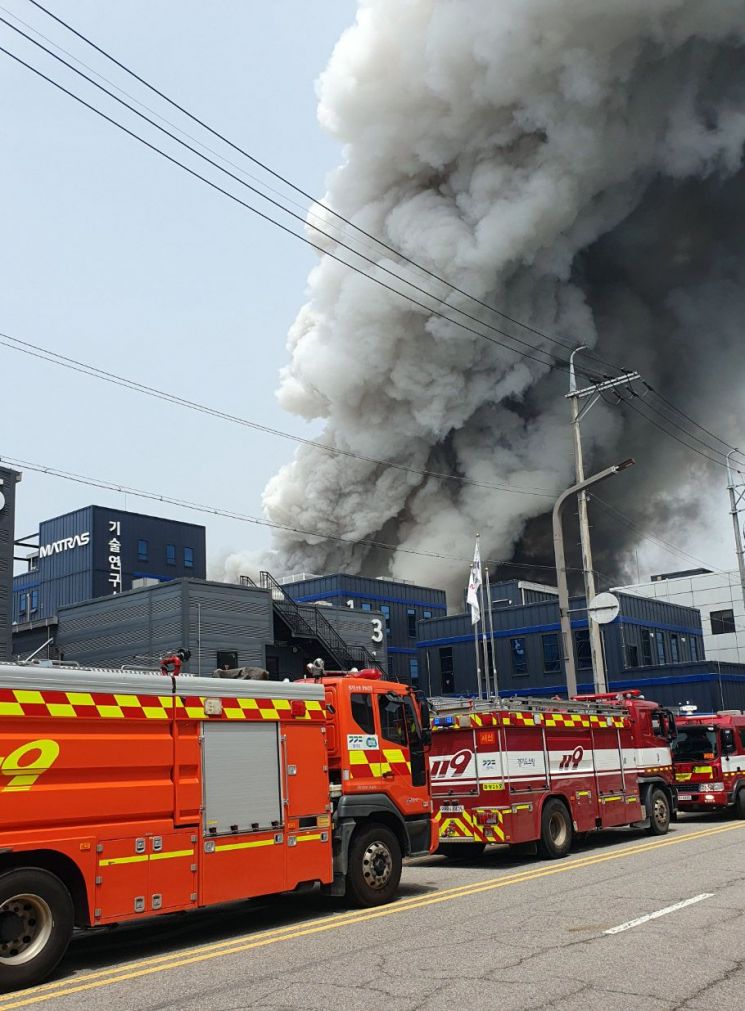
After 17 Chinese nationals died in a fire accident at the Aricell factory, a primary battery manufacturer in Hwaseong, Gyeonggi Province, the lives of Chinese people who left for Korea to earn money are being reexamined in China.
On the 29th, local Chinese media reported on the Aricell factory fire accident, highlighting the long-standing low-wage issues in China and noting that many Chinese people are working in Korea to earn money. Comments from young Chinese people expressing dissatisfaction with low wages in China and saying they want to work in Korea for financial reasons can be easily found in article comments and on social networking services (SNS).
Mr. Lin Feng introduced himself as a Chinese person working in Korea in an interview with Chinese media and said he knows many married middle-aged Chinese women working in Korea. Lin came to Korea last August and currently works at a food company. He said that after deducting insurance premiums and taxes, he earns about 12,600 yuan (approximately 2,393,700 KRW) per month. He mentioned that if one can endure the fatigue, it is possible to receive a satisfactory monthly salary in Korea.
Lin said, "I work from 8 a.m. to 5 p.m. on weekdays (Monday to Friday), and overtime is from 7 p.m. to 9 p.m." He added, "Sometimes I work on Saturdays, but if it's not busy, I finish by 5 p.m." He also said, "Although the cost of living in Korea is high, if you live frugally, you can save a lot of money." Another Chinese worker in Korea, Mr. Xiaogang, said in an interview that he earns the minimum wage of 9,860 KRW per hour, but including overtime and night shift allowances, he makes about 15,700 yuan (approximately 3 million KRW).
Mr. Li Dong, another Chinese person, introduced himself as having worked in Korea for 11 years. He said, "Chinese people working in Korea do the hardest and most dangerous labor," adding, "These are mostly jobs that Koreans avoid." Li mentioned unfair and difficult experiences he faced in Korea and lamented, "Temporary workers who are not regular employees find it hard to enjoy social security," but explained that working at construction sites can earn up to 20,000 to 30,000 yuan (3.8 million to 5.7 million KRW) per month.
Chinese media Xinhua Net reported on the treatment of Chinese workers in Korea, stating, "If you work as a cook in Korea, you can receive meals and accommodation," and "The monthly salary is about 12,000 yuan (approximately 2.28 million KRW), with overtime pay at 1.5 times the hourly wage."
As the issue of low wages in China comes to the surface, Chinese people are engaging in discussions through article comments and SNS. While some posts say it is natural to have higher salaries in Korea due to the higher cost of living, many express dissatisfaction, saying the low-wage problem in China must be resolved. Comments such as "It would be better to work in Korea" and "When will the wage issue be solved in China?" are common. One netizen mentioned the poor working conditions in China, saying, "Before talking about wages in China, people need to understand the basic 8-hour work system, weekend holidays, and overtime pay."
According to the '2023 Minimum Wage Systems of Major Countries' report, Korea has one of the highest minimum wages in Asia. China's minimum wage is about half that of Korea. As of January this year, the minimum wage in Shanghai is 26.9 yuan per hour (5,124 KRW), and in the capital Beijing, it is 26.4 yuan (approximately 5,028 KRW).
© The Asia Business Daily(www.asiae.co.kr). All rights reserved.
![Clutching a Stolen Dior Bag, Saying "I Hate Being Poor but Real"... The Grotesque Con of a "Human Knockoff" [Slate]](https://cwcontent.asiae.co.kr/asiaresize/183/2026021902243444107_1771435474.jpg)















