President Joe Biden Focuses on Stabilizing Oil Prices
High Oil Prices, Main Cause of Inflation, Pose Major Election Risk
Russia and Iran Sanctions Bypass Crude Oil
Iran and Venezuela's Export Volumes Rising This Year
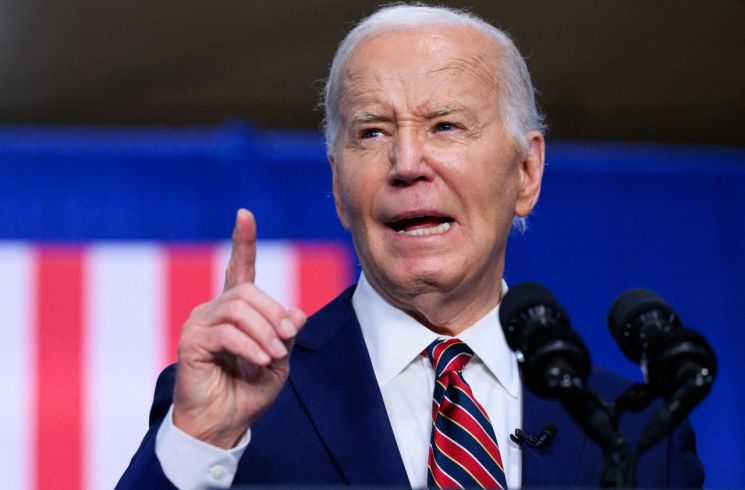
U.S. President Joe Biden appears to be making every effort to stabilize oil prices ahead of the election. High oil prices are a major cause of inflation and could pose a significant obstacle to his reelection. There are also criticisms that the Biden administration is turning a blind eye to oil exports from Russia and Iran, countries under economic sanctions, in order to push down oil prices.
On the 25th (local time), the Wall Street Journal (WSJ), citing U.S. diplomatic officials and energy industry insiders, reported that “the president is making every effort to ensure that American consumers can fill up at low prices ahead of the election,” and “as a result, sanctions by the Biden administration against major oil-producing countries and adversaries are being eased more than expected.”
On the same day, the Biden administration announced sanctions targeting the Iranian military’s “shadow financial network.” The sanctions focus on punishing individuals and companies located in third countries such as the United Arab Emirates and China that support multi-billion-dollar financial transactions on behalf of Iran’s Ministry of Defense, military logistics, and the Islamic Revolutionary Guard Corps. However, Homayoun Falakshahi, an oil analyst at Kepler, predicted that “this sanction will only affect a portion of Iran’s oil exports and will not cause significant changes in the global market.” Since February this year, Iran’s daily oil exports have exceeded 1.5 million barrels, a figure that greatly surpasses the level during the early days of President Biden’s administration.
When the U.S. Treasury announced an expansion of sanctions against Russia targeting Chinese financial institutions on the 12th, the WSJ explained that sanctions on the oil industry were barely included. In February, the Treasury sanctioned Sovcomflot, Russia’s largest state-owned shipping company, to block Russian oil exports, but only 14 out of 91 oil tankers faced actual measures. The remaining oil tankers continued to operate. The WSJ reported that “some employees within the U.S. Treasury are frustrated by the lack of sanctions on the transaction networks transporting Russian and Iranian oil.”
Earlier this year, the Biden administration also requested Ukraine to stop drone attacks on Russian refineries. At that time, as Ukraine repeatedly destroyed energy facilities in Russian regions such as Belgorod, concerns over supply caused global diesel and gasoline prices to surge sharply.
The Biden administration is also reported to have recently approved special licenses allowing major commodity traders to transport Venezuelan oil. The U.S. has imposed comprehensive sanctions on Venezuela’s oil industry to pressure the Maduro regime, which has faced allegations of election fraud since 2019. However, as of this year, Venezuela’s oil exports have increased by 5%.
International oil prices, which surpassed $90 per barrel last year due to the Israel-Hamas war, have been trading in the $70?80 per barrel range this year despite attacks on Red Sea shipping by Yemen’s Houthi rebels. Earlier this month, prices even reached their lowest level in over four months. Analysts see the increase in oil production from sanctioned countries as a factor contributing to the decline in oil prices.
The WSJ analyzed that the Biden administration’s easing of sanctions on adversarial oil-producing countries and the increase in their production are related to the administration’s intention to prevent a resurgence of inflation for reelection purposes. Bob McNally, CEO of Rapidan Energy Group, said, “For a U.S. president, a sharp rise in gasoline prices is a major fear.”
© The Asia Business Daily(www.asiae.co.kr). All rights reserved.
![Clutching a Stolen Dior Bag, Saying "I Hate Being Poor but Real"... The Grotesque Con of a "Human Knockoff" [Slate]](https://cwcontent.asiae.co.kr/asiaresize/183/2026021902243444107_1771435474.jpg)















