'Russell Salmusa' Appearance in Bangladesh Raises Authorities' Concerns
Spreading Across 28 Areas... Frequently Found in Farmlands
Bangladesh Records Approximately 7,000 Deaths from Venomous Snakes Annually
Concerns are growing among health authorities in Bangladesh as venomous snakes have appeared. On the 23rd (local time), the British BBC reported, "All health centers and hospitals in Bangladesh have been ordered to stockpile antivenom following reports of a surge in snakebite patients nationwide." Samantha Lal Sen, the Minister of Health, also stated, "If there are victims bitten by snakes, bring them to the hospital as quickly as possible."
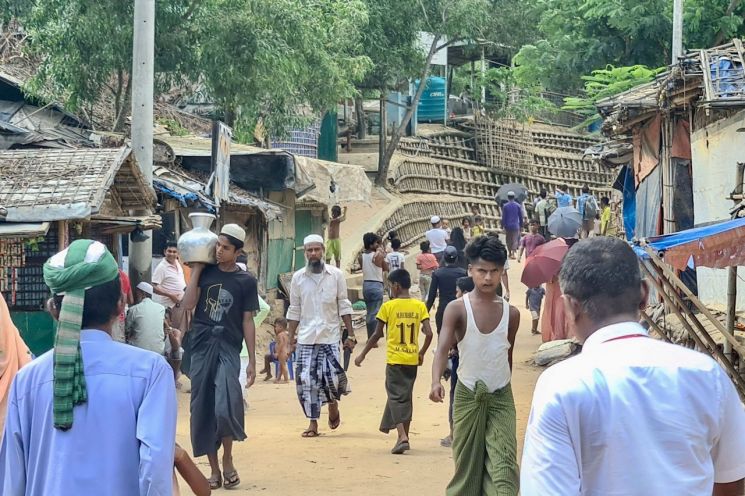
The identity of the venomous snake is the 'Russell's viper.' Named after Patrick Russell, a Scottish physician and snake researcher, it is considered one of the four major venomous snakes in India, along with the Indian cobra, saw-scaled viper, and the umbrella snake. Russell's viper was believed to have gone extinct in Bangladesh in 2002, but it has recently reappeared, with frequent cases of fatal snakebites occurring. At least 15 people have died from Russell's viper bites this year, most of whom are farmers.
Russell's viper is a snake that can reach a length of 1.5 meters as an adult and is known for its violent and aggressive nature. It primarily preys on rodents and is often found near human settlements, especially in agricultural fields during harvest season. It lives close to humans and is often mistaken for non-venomous snakes, leading to many casualties. Scientists have identified that this snake, which mainly inhabits dry areas, has adapted to various climatic conditions and has now spread to more than 28 regions within Bangladesh.
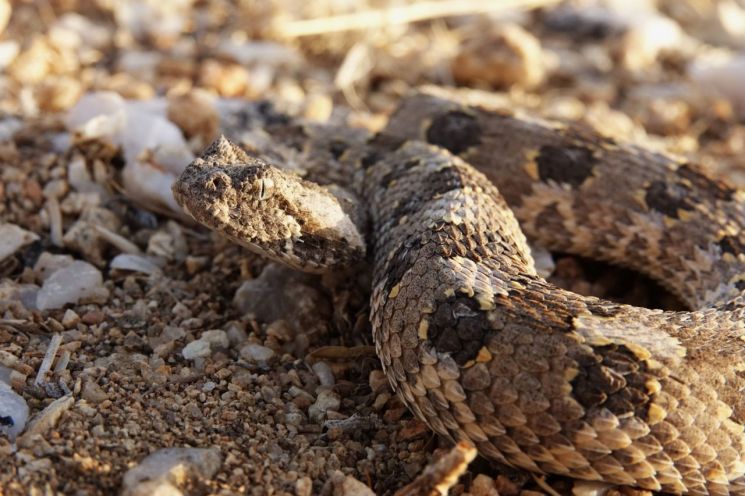 Concerns are growing among health authorities as venomous snakes have appeared in Bangladesh.
 [Image source=Pixabay]
Most victims can survive if they receive antivenom promptly. Dr. Robed Amin, Director of the Non-Communicable Disease Control Department, said, "It is often unclear at first whether the snake that bit someone is venomous or not," adding, "Victims should be transferred to hospitals with trained personnel." He also emphasized the importance of rapid transport, stating, "There is sufficient stock of antivenom nationwide."
In Bangladesh, approximately 7,000 people die from snakebites each year. According to the World Health Organization (WHO), snakebite is one of the most neglected tropical diseases, and addressing it is one of the top priorities.
© The Asia Business Daily(www.asiae.co.kr). All rights reserved.
![Clutching a Stolen Dior Bag, Saying "I Hate Being Poor but Real"... The Grotesque Con of a "Human Knockoff" [Slate]](https://cwcontent.asiae.co.kr/asiaresize/183/2026021902243444107_1771435474.jpg)
















