OECD Fertility Rate Hits Record Low of 1.51
South Korea Plummets from 6 to 0.78... Lowest in the World
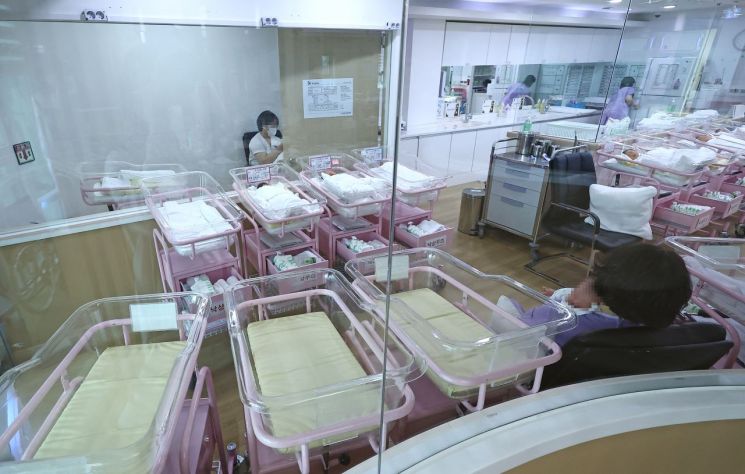
According to data compiled by the Organisation for Economic Co-operation and Development (OECD), the average total fertility rate of major countries worldwide has halved over the past 60 years since 1960. South Korea, which currently records the lowest fertility rate globally, has seen a drastic decline to just one-eighth of its 1960 level during the same period.
According to a research report released by the OECD on the 20th, the average total fertility rate of the 38 OECD member countries, which was 3.34 in 1960, dropped to a record low of 1.51 in 2022, less than half of the previous figure. During the same period, South Korea’s rate fell from 6 to 0.78, plummeting to nearly one-eighth of its former level. South Korea’s fertility rate ranks among the lowest within OECD member countries.
The total fertility rate refers to the expected number of children a woman will have in her lifetime, with a minimum of 2.1 needed to maintain the population. By country, as of 2022, Spain (1.16), Italy (1.24), Poland (1.26), Japan (1.26), Greece (1.32), and Canada (1.33) all recorded fertility rates in the low 1s. South Korea was the only OECD member country with a rate below 1.
Across the OECD, the average age of childbirth has increased, and the proportion of women who remain childless throughout their lives has also risen. The average age at childbirth increased from 26.5 years in 2000 to 30.9 years in 2022. During this period, South Korea’s average rose from 29 to 32.5 years, Italy’s from 30.4 to 32.4 years, and Spain’s from 30.7 to 32.6 years.
The childlessness rate among women born in 1975 was more than double that of women born a generation earlier in 1955: 28.3% in Japan, 23.9% in Spain, and 22.5% in Italy, compared to 11.9%, 9.5%, and 11.1% respectively. In South Korea, the rate was 8.3% for women born in 1955 and 12.9% for those born in 1975.
The report states, "The younger generation is experiencing practical difficulties and changes in perception. Young people increasingly face challenges in achieving economic independence and settling in employment and housing markets," adding, "Rising housing costs negatively affect fertility rates, and consecutive global crises such as COVID-19, the climate crisis, and soaring living expenses have heightened economic insecurity among young people," identifying these as causes of the low fertility trend.
It also points out that young people’s inability to become independent from their parents and their worries about unemployment deepen the low fertility trend. The proportion of young adults in their 20s living with their parents was high in South Korea (81%), Italy (80%), and Greece (78%). Among those aged 25 to 54, the percentage worried about the possibility of themselves or immediate family members losing their jobs in the short term was highest in Greece (81%) and Mexico (78%), with South Korea at 64%.
The report warns of future economic and fiscal pressures and emphasizes the need for policy alternatives from governments worldwide. It stresses, "Population aging will lead to reduced tax revenues and increased government spending, intensifying fiscal pressures," and highlights the necessity of immigration policies, productivity improvements, and measures to help people maintain their health and work longer.
© The Asia Business Daily(www.asiae.co.kr). All rights reserved.
![Clutching a Stolen Dior Bag, Saying "I Hate Being Poor but Real"... The Grotesque Con of a "Human Knockoff" [Slate]](https://cwcontent.asiae.co.kr/asiaresize/183/2026021902243444107_1771435474.jpg)















