Biden's 'Tax Hike on the Wealthy' vs Trump's 'Tax Cuts'
Trump: "Corporate Tax Rate Cut from 21% to 20%"
Some Republicans Advocate 15%
Biden Pushes to Raise to 28%
Projected $1 Trillion Revenue Gap Over Next Decade
Corporate tax has emerged as a major issue in the upcoming U.S. presidential election this November. Democratic presidential candidate President Joe Biden has pledged a "tax increase on the wealthy," while Republican presidential candidate former President Donald Trump advocates for "tax cuts and the trickle-down effect," presenting opposing tax policies as key campaign promises. Analysts suggest that depending on who enters the White House, U.S. government corporate tax revenue could increase or decrease by about $1 trillion (approximately 1,382 trillion won).
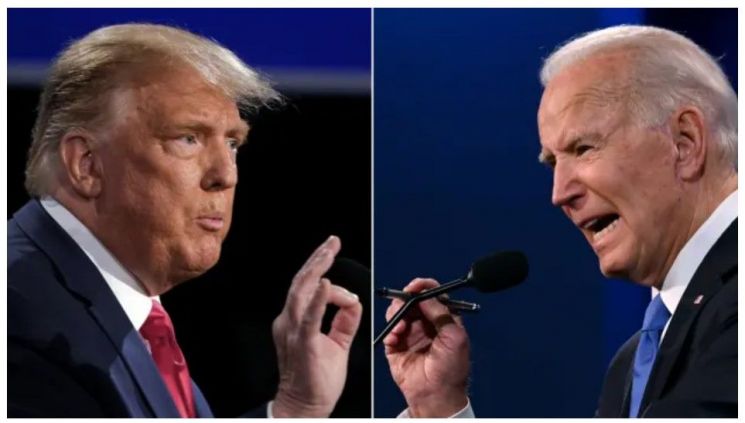
According to the Wall Street Journal (WSJ) and others on the 17th (local time), corporate tax has become one of the biggest controversies in the election as former President Trump and President Biden show opposing stances on tax policy.
The corporate tax debate was ignited by former President Trump. On the 13th, at an event hosted by the Business Roundtable in Washington D.C. attended by about 100 business leaders including Jamie Dimon, Chairman of JP Morgan, and Tim Cook, CEO of Apple, he promised to lower the top corporate tax rate from the current 21% to 20%. Previously, in his first year in office in 2017, Trump passed a tax reform bill that reduced the corporate tax rate from 35% to 21% and the income tax rate from 39.6% to 37%.
Within the Republican Party, there are also calls to lower the corporate tax rate to 15%. If this happens, the U.S. corporate tax rate would be the lowest since 1935.
On the other hand, President Biden is considering raising corporate taxes. He is pushing for a plan to increase the corporate tax rate up to 28%. The Biden administration attempted to raise corporate tax rates after taking office but faced opposition in Congress, resulting in maintaining the corporate tax rate at 21% while introducing a 15% minimum tax rate.
According to WSJ analysis, raising the corporate tax rate by 1 percentage point would secure more than $130 billion (about 180 trillion won) in tax revenue over 10 years. The difference in corporate tax rates promised by President Biden and former President Trump is at least 8%, so depending on who becomes the White House occupant, the gap in corporate tax revenue is expected to reach $1 trillion.
In particular, as a significant portion of the tax laws passed in 2017 expire next year, the controversy over tax policy is expected to intensify. This includes income tax rates, child tax credits, state and local tax deductions, tax rates on privately held companies, and estate tax exemptions.
Regarding corporate tax, the opinions of both the Democratic and Republican parties are sharply divided. The Republican Party argues that lowering corporate taxes can increase corporate investment. The corporate tax rate reduction measures promoted during the first term of the Trump administration are also considered successful. They especially emphasize that no companies moved their corporations overseas to reduce taxes after the corporate tax rate was lowered to 21% in 2017. The Republican Party is also concerned that raising corporate tax rates could increase the burden on companies amid a high-interest-rate environment caused by accumulated stringent monetary tightening.
On the other hand, the Democratic Party aims to consolidate its support base through tax increases on large corporations and high-income earners. They plan to cover the revenue shortfall caused by expansionary fiscal policy through raising corporate tax rates. According to the Congressional Budget Office (CBO), corporate tax is expected to account for 8% of U.S. tax revenue over the next 10 years, which is lower than individual income tax.
White House National Economic Council Director Lael Brainard pointed out, "The share of corporate tax (in total tax revenue) is already low, while corporate profits are at record highs," adding, "We are not raising sufficient funds from the corporate sector." This signals a corporate tax increase.
President Biden and former President Trump also take opposing approaches to income tax. President Biden plans to raise the top income tax rate for individuals earning over $400,000 (about 553 million won) from 37% to 39.6%. In contrast, former President Trump has proposed lowering or abolishing income tax and compensating for the revenue shortfall by raising tariffs. He also pledged not to tax income earned from tips, targeting service-sector voters.
The WSJ reported, "The corporate tax rate debate has sparked a political battle involving more than $1 trillion," and "American companies are paying close attention to the election outcome."
© The Asia Business Daily(www.asiae.co.kr). All rights reserved.
![Clutching a Stolen Dior Bag, Saying "I Hate Being Poor but Real"... The Grotesque Con of a "Human Knockoff" [Slate]](https://cwcontent.asiae.co.kr/asiaresize/183/2026021902243444107_1771435474.jpg)















