Growing Interest in Long-Lasting Clothes
Collaboration with 'MJeco' Targeted Select Shop Brands
Kolon 'Lecord' Revives Over 30,000 Discarded Garments
Sales of products branded as 'slow fashion' have surged significantly. This is thanks to consumers' growing interest in clothing that can be worn for a long time, rather than consuming low-quality, inexpensive items to keep up with trends, as seen in 'fast fashion.' In particular, among the MZ (Millennial + Generation Z) generations, a culture emphasizing unique individuality over trends is expanding, leading to an increase in consumers pursuing value-driven consumption.
According to 'Champion,' a sportswear brand operated by LF, the sales rate of long-sleeve and short-sleeve T-shirts using the 'Reverse Weave' technique has roughly doubled compared to the same period last year, up to the end of last month. The Reverse Weave technique involves weaving the fabric at a 90-degree angle and sewing it to minimize horizontal shrinkage of the garment. Fibers tend to stretch sideways when subjected to frequent forces such as washing, but the Reverse Weave method helps maintain firm quality by minimizing fabric deformation.
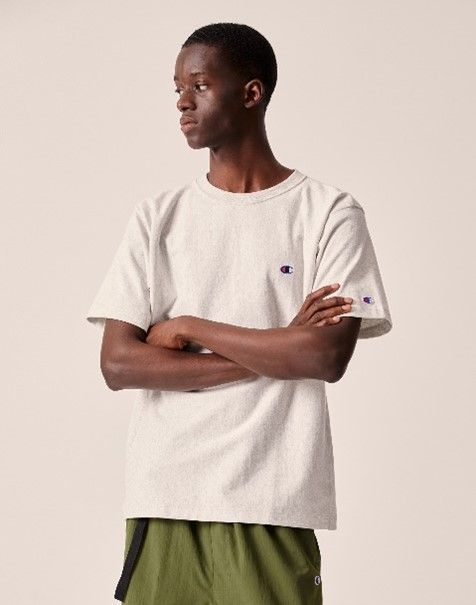
The appearance of T-shirts made with the Reverse Weave technique is similar to that of regular half-sleeve T-shirts. However, even after multiple washes, there is little deformation around the neck or underarm areas. A Champion representative said, "With low-quality clothes, there are items that have to be discarded after just one or two wears," adding, "There is a strong tendency to purchase clothes linked to economic and environmental values."
Recently, SPA brands, which have been at the center of fast fashion, are also introducing slow fashion items and boosting sales. E-Land Group's 'SPAO' offers short-sleeve T-shirts designed to last longer by applying neck taping to prevent neck stretching and double stitching. Since the beginning of this year, sales growth for this item has recorded double digits, reaching the 23% range.
Purchasing clothes that can be worn for a long time is a global trend. According to the global research firm Report Linker, the sustainable fashion market size is expected to expand from $7.6 billion in 2022 to $11.1 billion by 2029.
Industry insiders cite the growing number of consumers seeking sustainable consumption for environmental reasons as the background for the shift in interest from fast fashion to slow fashion. According to a KOTRA report, 87% of the clothing produced annually due to fast fashion trends ends up in landfills or incinerators. Additionally, 4% of total greenhouse gas emissions come from the fashion industry. The KOTRA report stated, "The U.S. fashion industry is increasingly inclined to recycle produced clothing or purchase only necessary items."
A representative from a major domestic fashion company analyzed, "Nowadays, it is more important how consumers can express their individuality and what value they can gain through consumption rather than simply following trends," adding, "This explains the increased demand for recycled clothing products compared to the past."
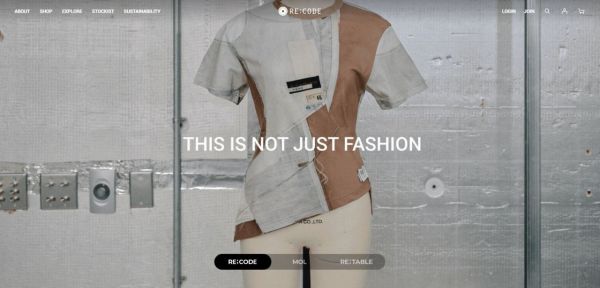
The domestic fashion industry is also introducing eco-friendly clothing in line with this consumption trend. Targeting 'MJEco' (MZ generation + Eco [environment]), who regard the environment as an important value, major fashion brands are continuing collaborations. 'RE;CODE,' operated by Kolon, is creating new clothes by utilizing three-year-old unsold inventory. It is actively promoting recycled products through collaborations with global brands such as Nike, Lacoste, Tommy Hilfiger, and fashion designer brand Jiyong Kim. Since RE;CODE started its business in 2012 until the first quarter of this year, it has revived 31,803 pieces of inventory clothing.
LF's 'Hazzys' is also collaborating with emerging designer brands using inventory destined for incineration. Last year, it partnered for the first time with 'Allians Store,' a vintage shop in Busan, mainly showcasing vintage jackets and coats. The second collaboration took place from last month 29th to this month 9th at Starfield Suwon, where they teamed up with the recycled fashion brand 'TVOS' to sell recycled products. Over two weeks, about 3,000 customers visited the store, and promotional gifts were all distributed within a week. A Hazzys representative said, "We will continue to collaborate with various brands to promote the value of sustainable fashion."
© The Asia Business Daily(www.asiae.co.kr). All rights reserved.
![Clutching a Stolen Dior Bag, Saying "I Hate Being Poor but Real"... The Grotesque Con of a "Human Knockoff" [Slate]](https://cwcontent.asiae.co.kr/asiaresize/183/2026021902243444107_1771435474.jpg)

















