If You Own a 'Luxury Car', Basic Pension Will Be Cut
Vehicles Valued Over 40 Million Won Classified as 'Luxury Cars'
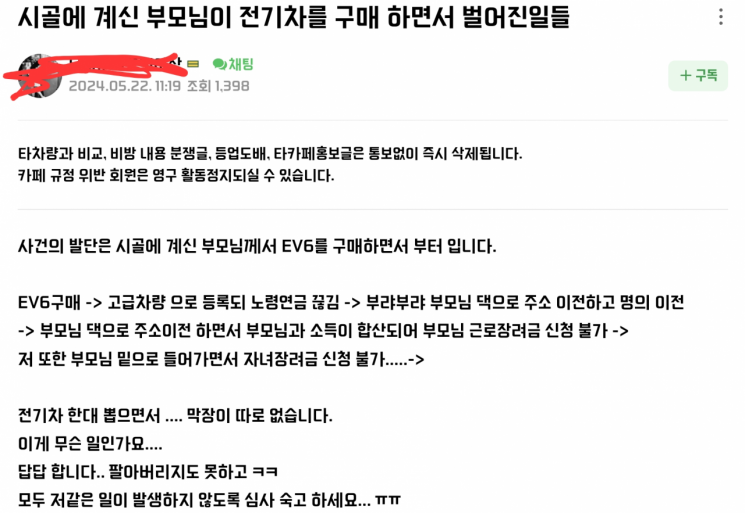
Recently, a story was posted on an online community about someone who gifted their parents an electric car and ended up losing their basic pension, drawing significant attention. The protagonist, Mr. A, reportedly purchased a Kia EV6 for his parents living in the countryside.
However, since the EV6 was classified as a 'luxury car,' Mr. A's parents lost their eligibility for the basic pension. Realizing his mistake, Mr. A said, "I hurriedly changed the address to my parents' home and transferred the ownership."
But the situation worsened. During the address change process, Mr. A's income was combined with his parents' income, making it impossible for his parents to apply for the earned income tax credit. To make matters worse, Mr. A also became registered under his parents, blocking his application for the child tax credit as well.
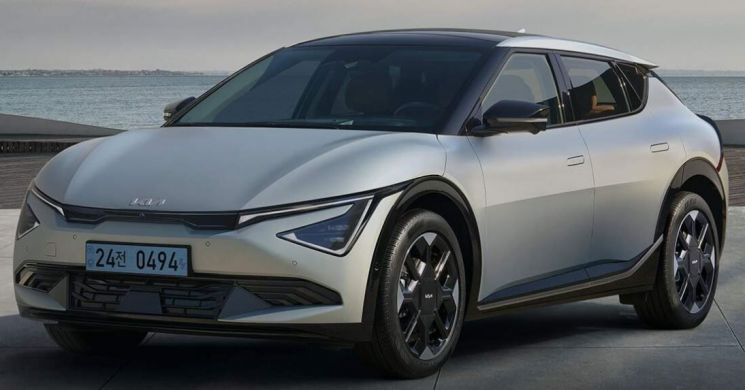
Distraught, Mr. A said, "Buying an electric car has been nothing but a disaster," adding, "Now I can't even sell the EV6, and it's frustrating. I hope no one else goes through what I did, so please think carefully."
Can owning one electric car really cause someone to lose their pension eligibility? Unfortunately, it is true. Currently, seniors who own luxury vehicles cannot receive the basic pension. The Ministry of Health and Welfare explains, "Ownership and operation of luxury vehicles correspond to the top 30% income bracket, reflecting the sentiments of our citizens."
The problem lies in the definition of luxury vehicles. According to Article 124 of the current Local Tax Act, a luxury vehicle is classified as a car with an engine displacement of 3000cc or more, or a vehicle priced at 40 million KRW or more. While conventional internal combustion engine cars may not be classified as luxury cars depending on engine displacement, electric cars, which have no engine displacement, are always judged as luxury cars based solely on vehicle price.
However, there are currently almost no electric cars sold domestically for under 40 million KRW. According to data compiled by the Korea Automobile Mobility Industry Association and others, as of the end of last year, the average starting price of 14 domestic electric passenger car models was 57.84 million KRW. Even the EV6, considered an affordable electric car, starts at 55.4 million KRW (before tax benefits) according to Kia Motors' official website. In other words, simply owning an electric car puts one at risk of losing eligibility for the basic pension.
Netizens who read the story responded with comments such as, "It's a sad story, but I learned a useful tip thanks to it," "So this is what they meant by not buying a new car after retirement," and "When gifting electric cars to parents in rural areas, you also need to be aware that subsidies vary by region."
Some also pointed out the irony, saying, "It's ironic that the government provides subsidies to promote eco-friendly cars, yet buying an electric car results in losing pension benefits."
© The Asia Business Daily(www.asiae.co.kr). All rights reserved.
![Clutching a Stolen Dior Bag, Saying "I Hate Being Poor but Real"... The Grotesque Con of a "Human Knockoff" [Slate]](https://cwcontent.asiae.co.kr/asiaresize/183/2026021902243444107_1771435474.jpg)
















