Opposition-Led Surge in Tax Law Revision Discussions
Full-Scale Progress Expected After Government Announces July Tax Revision Direction
Growing Concerns Within Opposition Over Tax System Reform Direction
From the early days of the 22nd National Assembly, both ruling and opposition parties have been pouring out ideas regarding the direction of tax reform. It is noteworthy that in the minority ruling party situation, the opposition is proactively presenting agendas related to comprehensive real estate tax, financial investment tax, inheritance tax, and more. The direction of tax reform could expand to include corporate tax, carbon tax, and others, leading to a major confrontation between the ruling and opposition parties in the regular National Assembly session this September.
In particular, proposals such as abolishing the comprehensive real estate tax for owner-occupied single homes and reforming inheritance tax to reduce the tax burden on the middle class by reflecting housing price increases have drawn attention. The abolition of the comprehensive real estate tax for owner-occupied single homes was proactively mentioned by Park Chan-dae, the floor leader of the Democratic Party, and Go Min-jung, a senior member of the Democratic Party, attracting public attention. Regarding the comprehensive real estate tax, the Presidential Office stated that "it is desirable to completely abolish the comprehensive real estate tax." As the government and ruling party actively address the comprehensive real estate tax issue, the Democratic Party has taken a breather, saying, "(Regarding the revision of the comprehensive real estate tax) the direction has not been decided."
Regarding inheritance tax, discussions have emerged that adjustments should be made to reduce the tax burden on the middle class in proportion to the rise in housing prices. Im Kwang-hyun, a Democratic Party lawmaker and former deputy commissioner of the National Tax Service, said at a party strategy meeting the day before, "In a situation where the number of middle-class inheritance tax subjects is expected to continue increasing, we will review amendments to the inheritance tax law that reasonably alleviate the tax burden on these households." The People Power Party is also considering revising the legal framework for inheritance and gift taxes. The People Power Party’s Policy Committee stated, "We plan to push for reform during the regular National Assembly session."
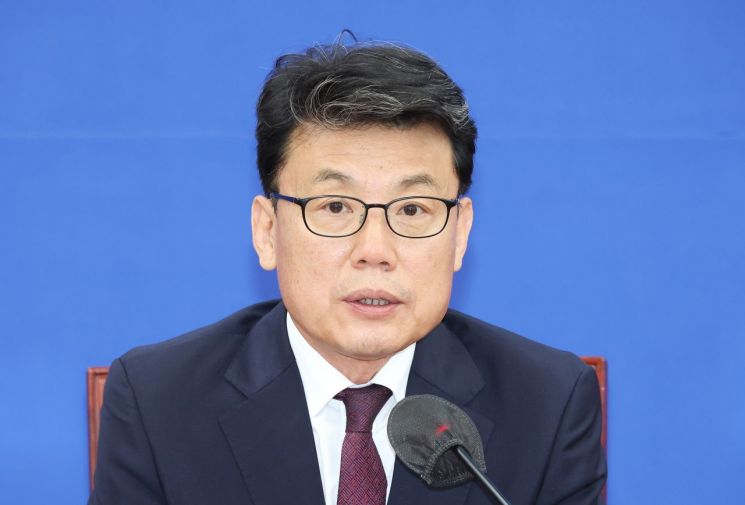
It is not only tax cuts being discussed. The opposition has also revealed that they are considering tax increase measures such as restoring corporate tax in relation to tax revenue shortages. Jin Sung-jun, chairman of the Democratic Party’s Policy Committee, said at a meeting the day before, "We are also considering measures to restore corporate taxes that the government had cut." Previously, during the 2022 budget approval, both ruling and opposition parties had lowered all corporate tax brackets by 1 percentage point each. The introduction of a carbon tax is also being seriously considered. For now, tax reform discussions at the idea stage are expected to intensify after the government unveils the tax law amendment bill in July.
Within the Democratic Party, the proactive proposal of tax cut discussions regarding tax reform is seen as part of a strategy to gain support from the moderate voter base. However, strong opposition from party members and others within the party regarding recent tax cut discussions is a variable. Calls for caution are also being raised. Skeptical voices question the appropriateness of raising tax cut discussions while the opposition points out tax revenue shortages and tax cuts favoring the wealthy. A Democratic Party official said, "Lawmakers may present ideas considering their constituencies, but (abolishing the comprehensive real estate tax for owner-occupied single households) will not easily go beyond internal party discussions."
More fundamentally, concerns are being voiced about the frequent changes to tax laws. Lee Sang-min, senior research fellow at the Nara Salrim Research Institute, said, "The frequent calls to change laws on already decided tax laws should be approached cautiously as it reduces predictability." Another political insider said, "It is worrisome that tax systems themselves are politicized and approached strategically depending on political camps."
© The Asia Business Daily(www.asiae.co.kr). All rights reserved.
![Clutching a Stolen Dior Bag, Saying "I Hate Being Poor but Real"... The Grotesque Con of a "Human Knockoff" [Slate]](https://cwcontent.asiae.co.kr/asiaresize/183/2026021902243444107_1771435474.jpg)















