A professor A at the Korea Advanced Institute of Science and Technology (KAIST) was convicted for leaking core technologies related to autonomous vehicles to China.
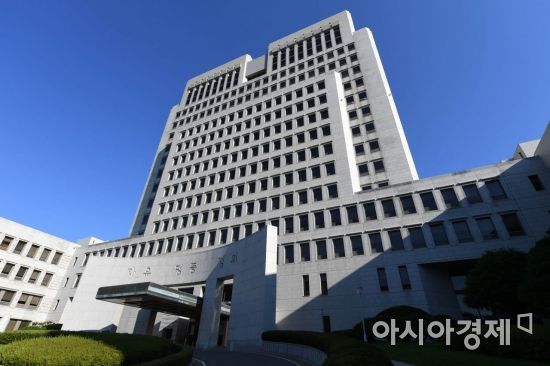
According to the legal community on the 30th, the Supreme Court Division 1 (Presiding Justice No Tae-ak) dismissed the appeal of Professor A, who was indicted for violating the Industrial Technology Protection Act and other charges, thereby upholding the original sentence of two years imprisonment.
Professor A worked as a professor in the Department of Electrical Engineering at KAIST and served as co-director of the Chongqing Yangtze River KAIST International Program from February 2017. In May of the same year, he was selected as a foreign expert under the Thousand Talents Plan by the Chinese government. The Thousand Talents Plan is a program initiated by the Chinese government in 2008 to attract overseas high-level talents.
According to the prosecution, from November 2017 to February 2020, Professor A uploaded research materials, which were industrial technologies, trade secrets, and major business assets owned by KAIST, to a shared OneDrive cloud accessible by KAIST-affiliated researchers and over 30 professors and researchers from Chongqing University of Technology, allowing them to frequently access and download the data. This constituted a violation of the Industrial Technology Protection Act and the Unfair Competition Prevention Act. The leaked research included materials related to the core technology "LIDAR," known as the "eyes of autonomous vehicles."
As the head of the Chongqing University of Technology-KAIST Education Cooperation Center, Professor A was also charged with breach of trust related to the operating funds allocated to the center. Additionally, he faced charges of fraud and obstruction of business.
In the first trial, the court found Professor A guilty of technology leakage and sentenced him to two years in prison with a three-year probation. Professor A argued that the research materials in question were basic research results not yet commercialized and did not constitute advanced technology, but this was rejected. However, he was acquitted of fraud and obstruction of business charges.
In the second trial, the court reversed the acquittal on the obstruction of business charge and sentenced him to two years imprisonment without suspension. The court stated, "LIDAR technology was designated as a national core technology in January 2018 and is judged to have sufficient value to be protected as it is likely to contribute significantly to domestic industrial development and create considerable added value."
Professor A appealed, but the Supreme Court finalized the guilty verdict. The Supreme Court stated, "There is no error in the lower court’s judgment regarding the violation of the rules of logic and experience, exceeding the limits of free evaluation of evidence, or misinterpretation of the legal principles concerning the specification of the charges, the definition of ‘advanced technology’ under the Industrial Technology Protection Act, ‘trade secrets’ under the Unfair Competition Prevention Act, the intent and purpose of the offenses of violating the Industrial Technology Protection Act, violating the Unfair Competition Prevention Act (including unauthorized disclosure of trade secrets), breach of trust, fraud, and obstruction of business."
© The Asia Business Daily(www.asiae.co.kr). All rights reserved.
![Clutching a Stolen Dior Bag, Saying "I Hate Being Poor but Real"... The Grotesque Con of a "Human Knockoff" [Slate]](https://cwcontent.asiae.co.kr/asiaresize/183/2026021902243444107_1771435474.jpg)















