In a Supreme Court ruling, it was determined that it is necessary to calculate the appropriate burden charges and contributions for Korea Philip Morris, which moved already produced cigarettes to a temporary warehouse or processed them as if they had been shipped out in advance in the computer system ahead of the 2015 tobacco tax increase. Previously, the lower courts ruled that the amended law could only be applied to cigarettes shipped out after January 1, 2015, when the tobacco tax was actually raised, and thus the additional charges imposed on Korea Philip Morris were deemed illegal. However, this was overturned by the Supreme Court.
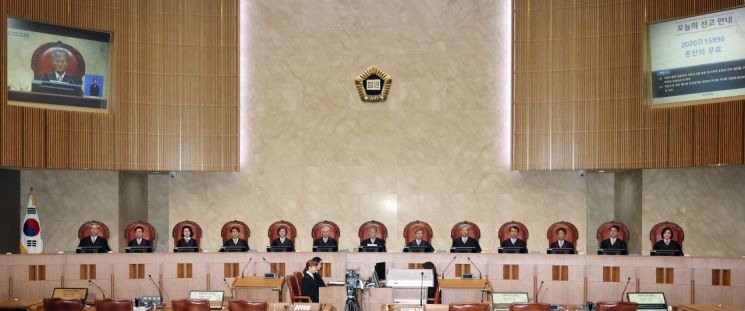
On the 23rd, the Supreme Court en banc unanimously overturned and remanded the lower court ruling in the case where tobacco company Korea Philip Morris filed a lawsuit against the Korea Environment Corporation and the Minister of Health and Welfare, seeking cancellation of the 'waste charge imposition.'
When the government policy to raise cigarette prices was announced starting January 2015, Korea Philip Morris moved already manufactured cigarettes to a temporary warehouse or reported cigarettes subject to unpaid tax shipment and entered them into the computer system as if they had been shipped out, with the intent to benefit from the difference in increased taxes and charges. After the tobacco taxes and charges were raised, the company delivered and sold cigarettes to wholesalers at prices reflecting the increased rates.
Accordingly, the Korea Environment Corporation and the Minister of Health and Welfare imposed additional waste charges and differences in previously paid charges on Korea Philip Morris for the cigarettes shipped out in advance under the amended law. Korea Philip Morris filed a lawsuit challenging the imposition and seeking cancellation of the charges.
The lower courts ruled that the shipment date of the cigarettes should be considered as the time they left the manufacturing plant, and since they were shipped out before December 31, 2014, the imposition of additional charges under the amended law was illegal, siding with Korea Philip Morris.
However, the Supreme Court ruled that the shipment date should be considered not when the cigarettes were moved from the manufacturing plant to the temporary warehouse, but when they were moved from the temporary warehouse to the logistics center. Therefore, cigarettes that were shipped out again after January 1, 2015, when the Local Tax Act and other laws came into effect, must be subject to the revised tax rates stipulated in the amended regulations. Furthermore, the Court stated that the interpretation of 'shipment' and 'unpaid tax shipment' in the amended Local Tax Act and related laws should be consistently applied to the meaning of 'shipment from the manufacturing plant.'
Accordingly, the Supreme Court stated, "After remand, the lower court needs to recalculate the appropriate burden charges and contributions reflecting the purpose of the remand."
In particular, the supplementary provisions cited as the basis for imposing the waste charge were amended belatedly on February 3, 2015, after the enforcement of the Local Tax Act, but they stipulate retroactive application of the amended regulations to cigarettes shipped out from January 1 of that year. The Court ruled ex officio that this violates the constitutional principle prohibiting retroactive legislation and is therefore invalid.
© The Asia Business Daily(www.asiae.co.kr). All rights reserved.
![Clutching a Stolen Dior Bag, Saying "I Hate Being Poor but Real"... The Grotesque Con of a "Human Knockoff" [Slate]](https://cwcontent.asiae.co.kr/asiaresize/183/2026021902243444107_1771435474.jpg)















