Two former Gangwon FC soccer players were sentenced to seven years in prison for conspiring to sexually assault a woman who was unconscious due to intoxication.
According to the legal community on the 21st, the Supreme Court's 3rd Division (Presiding Justice Eom Sang-pil) upheld the original verdict sentencing Kim Daewon (25) and Jo Jaewan (29), who were indicted for charges including quasi-rape by trespassing under the Sexual Violence Punishment Act, to seven years in prison. They were also ordered to complete 80 hours of sexual violence treatment programs, have their personal information disclosed for five years, and face employment restrictions in child and youth-related institutions.
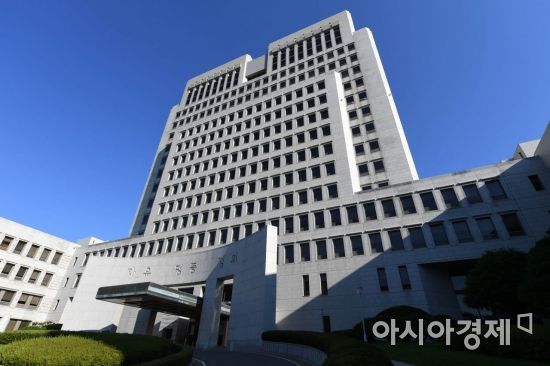
The court explained the reason for dismissing Kim's appeal, stating, "There is no error in the lower court's judgment that violates the rules of logic and experience, exceeds the limits of free evaluation of evidence, or misinterprets the principles of indictment specificity, conspiracy as joint offenders, and trespassing, which would affect the verdict."
Regarding Jo's appeal, the court stated, "There is no error in the lower court's judgment that failed to conduct necessary hearings, violated the rules of logic and experience, exceeded the limits of free evaluation of evidence, or misinterpreted the principles of trespassing, which would affect the verdict."
The two were indicted for breaking into a motel room in Gangneung City in October 2021, where a woman intoxicated by alcohol was asleep, and sexually assaulting her. Quasi-rape is a crime punished similarly to rape by force or threat, committed by taking advantage of a person's mental incapacity or inability to resist. Jo was also charged with illegally filming the victim's body.
At the time, they met the victim and her two friends in another area, drank alcohol, and then moved to Gangneung City. According to the prosecution's charges, Kim first took the victim to the motel and had sexual intercourse with her. While the victim was asleep due to intoxication, Kim left the room with the door open and encouraged Jo by saying, "The victim is looking for you. The door is open, so go find her."
However, when Jo arrived at the motel, the door was closed for unknown reasons. Jo deceived the motel manager by claiming to be the victim's boyfriend, entered the room, and had sexual intercourse with her.
When the victim's companions wondered about their whereabouts, Kim lied, saying, "Jo is talking with the victim outside."
Both denied the charges in court. Kim claimed that he only left the door open and did not foresee the sexual assault, so he did not conspire in the crime.
Jo argued that his entry into the motel room where the victim was located could not be considered trespassing. He claimed he had permission from Kim, who was staying in the room, and also from the motel manager, so it was not an intrusion. He further argued that since he was part of the group that had been drinking with the victim and Kim until just before, and Kim paid the room fee with his card, he should be considered to have occupancy rights to the room. However, Jo admitted to illegally filming the victim's body.
However, the first trial court rejected their defenses and found them guilty, sentencing each to seven years in prison.
The court ruled, "It can be seen that there was at least an implicit conspiracy between the defendants regarding Jo's intrusion into the motel room where the victim was asleep due to intoxication and the sexual assault of the victim in a state unable to resist."
It also dismissed Kim's claim that he could not have foreseen Jo's crime, stating, "Even if Jo entered the room in a manner different from Kim's expectation, the causal relationship between the conspiracy between the defendants and Jo's crime is not broken."
Regarding Jo's claim that he did not trespass because he entered with Kim's consent, the court stated, "Kim entered the room with the victim but left the room around 4:30 p.m. with no plan to return, thus losing actual control over the room. It is reasonable to consider that the room was solely under the victim's actual control."
While Kim initially had the right to consent to entry as a co-occupant when entering the room with the victim, after leaving the room, only the victim could be considered the occupant with residential rights. Therefore, Kim's consent does not affect whether Jo's act constitutes trespassing.
Both appealed.
In the second trial, Kim challenged the prosecutor's indictment. He argued that including the fact that he had sexual intercourse with the victim just before the quasi-rape charge in the indictment was a violation of the principle of indictment specificity, as it could prejudice the judge by including facts outside the charges.
However, the court rejected this, stating, "It is reasonable to consider that the specific facts were included to clarify the content of the defendants' conspiracy."
Kim also denied conspiracy, claiming, as in the first trial, that he only encouraged Jo to visit the motel and did not anticipate the sexual crime.
The court ruled, "It can be recognized that there was not only a simple conspiracy regarding Jo's crime but also functional control over the act of quasi-rape by trespassing, constituting joint execution."
The court pointed out that the defendants met the victim's two friends, drank, and moved to Gangneung City while exchanging messages that could be interpreted as confirming with whom among the victim's group they would have sexual relations. "The defendants shared the purpose or intention to have sexual relations with the intoxicated woman before arriving in Gangneung City," the court noted.
Furthermore, right after Kim had sexual intercourse with the victim, he sent several messages to Jo urging him to come to the room for sexual intercourse. When Jo did not respond, Kim met Jo in front of his house and said, "I left the door open, so go there." Based on this, the court judged, "It can be evaluated that Jo decided to sexually assault the victim or strengthened his intention to do so with Kim's cooperation, and the defendants can be seen as conspiring to sexually assault the victim from at least that point onward." The court also noted, "Kim likely recognized that the victim was unconscious when leaving the motel room, and the defendants shared the victim's condition through such messages."
Kim claimed that leaving the motel room door open was a "habit developed during his soccer career." He argued that when soccer players stay at lodging during away games, they leave the door open so teammates sharing the same room can easily enter and exit.
However, the court found this unconvincing, stating, "It is more consistent with experience to view that Kim, recognizing the victim's inability to resist, left the door open to allow Jo easy access to the room."
The court also found that Jo attempted to enter in an unusual way with Kim's help and, when that failed, deceived the motel manager to enter, thus constituting trespassing.
Regarding intent for trespassing, the court, like the first trial court, judged, "There was at least indirect intent to trespass into the room without the victim's explicit or implicit consent."
The Supreme Court also found no problem with the second trial court's judgment.
Gangwon FC imposed an indefinite suspension on the two players after being contacted by the police in October 2021. Subsequently, Kim's contract with Gangwon FC expired, and Jo's contract was terminated.
© The Asia Business Daily(www.asiae.co.kr). All rights reserved.
![Clutching a Stolen Dior Bag, Saying "I Hate Being Poor but Real"... The Grotesque Con of a "Human Knockoff" [Slate]](https://cwcontent.asiae.co.kr/asiaresize/183/2026021902243444107_1771435474.jpg)















