US ITC Report
"Higher Tariffs on Chinese Components Would Harm Korea"
As the U.S. government pushes to raise tariffs on Chinese electric vehicles (EVs), an analysis has shown that if all countries worldwide increase tariffs on Chinese EVs, South Korea's EV exports would increase by 10%. However, if the world raises tariffs on parts instead of Chinese EVs, South Korea is expected to suffer losses.
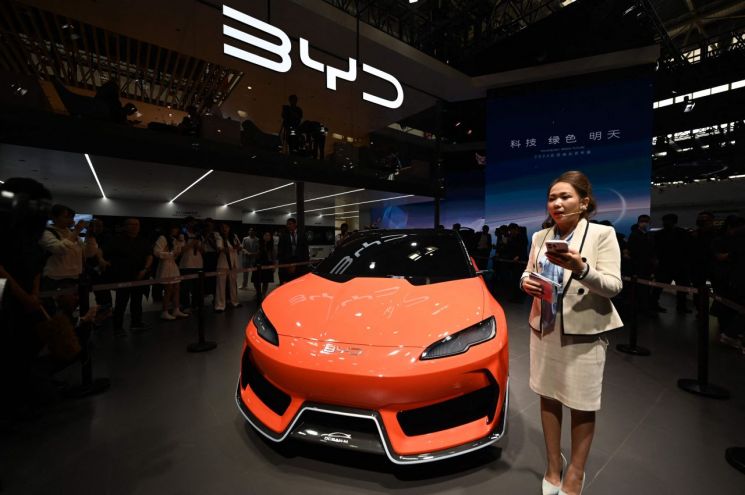
On the 12th (local time), the U.S. International Trade Commission (ITC) released a recent research report forecasting that if the U.S., European Union (EU), Japan, South Korea, and other countries around the world increase tariffs on Chinese EVs and hybrid vehicles by 20%, China's exports to these countries would significantly decline.
By region, the decrease in exports of Chinese EVs and hybrid vehicles is estimated at 59.6% for Japan, 60.2% for South Korea, 62.9% for the U.S., 53.4% for the EU, and 60.3% for the rest of the world.
The decline in China's exports is expected to lead to an increase in exports from other countries. U.S. EV and hybrid vehicle exports are projected to increase the most, by 13.6%. South Korea follows with a 10% increase, the EU with 7.8%, and Japan with 4.6%.
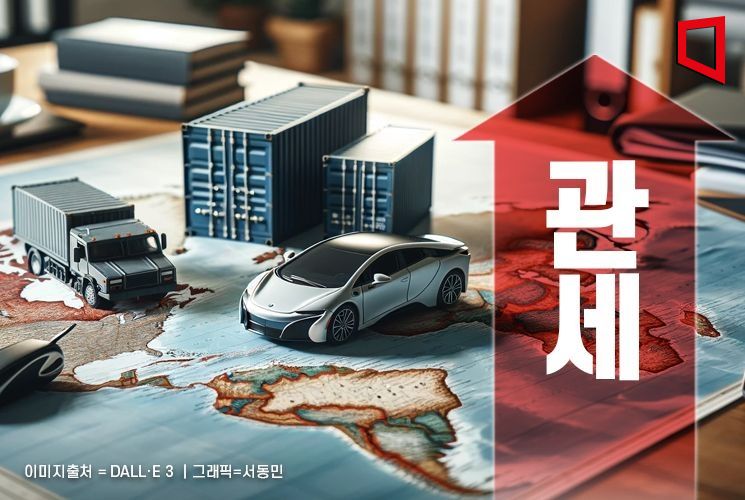
With global exports rising, South Korea's domestic production of EVs and hybrid vehicles is estimated to increase by 7.5%. Production is also expected to rise in Japan (4.6%), the U.S. (6.5%), and the EU (7.8%).
As EV and hybrid vehicle production increases, parts production in these countries is expected to grow by 2 to 2.9%. Imports of Chinese EV parts by these countries are also estimated to increase by 1.6 to 4%.
As a result, the report forecasts a $2.6 billion decrease in consumer welfare in China. Japan is expected to see an increase of $125 million, South Korea $173 million, and the U.S. $709 million. The EU, however, is projected to experience a $615 million decrease, indicating that the efficiency loss from tariffs outweighs export gains.
The report also examined a scenario where all countries worldwide raise tariffs on Chinese EV parts by 20%. In this case, China's EV parts exports are estimated to decrease by 23.9%.
Conversely, parts production in other countries is expected to increase significantly: Japan by 23.1%, South Korea by 37.9%, the U.S. by 22.1%, and the EU by 43.8%.
However, the impact of tariffs on Chinese parts on EV and hybrid vehicle production varies by country. EV production is projected to increase by 2.7% in Japan and 1.9% in the U.S., but decrease by 4.1% in South Korea and 11.4% in the EU. The report attributes this to the strengthened price competitiveness of Chinese EVs. As China's EV parts exports decline, the price of Chinese parts used in domestic EV production falls, resulting in a 0.06% decrease in China's EV export prices.
Meanwhile, increased costs of parts imports cause EV export prices in other countries to rise: 1.8% in Japan, 3.6% in South Korea, 2.0% in the U.S., and 4.8% in the EU. This leads to a boost in China's EV exports, with regional export growth rates estimated at 19.3% for Japan, 20.0% for South Korea, 18.0% for the U.S., and 13.5% for the EU.
© The Asia Business Daily(www.asiae.co.kr). All rights reserved.
![Clutching a Stolen Dior Bag, Saying "I Hate Being Poor but Real"... The Grotesque Con of a "Human Knockoff" [Slate]](https://cwcontent.asiae.co.kr/asiaresize/183/2026021902243444107_1771435474.jpg)
















