Ministry of Land, Infrastructure and Transport to Announce Final Guideline Draft by End of Month
Local Government Briefing Held... "Securing Development Gains is Important"
Preparations by cities and provinces for selecting candidates for the integrated railway underground development project will officially begin.
On the 7th, the Ministry of Land, Infrastructure and Transport announced that it will hold a briefing session on the 8th in Seoul for 16 local governments nationwide. This is to reflect local government opinions on the guideline draft prepared by collecting opinions from the Railway Underground Consultative Body subcommittee members, Korea Rail Network Authority, Korea Railroad Corporation, Korea Land and Housing Corporation (LH), and other public institutions. The final draft is scheduled to be distributed by the end of this month.
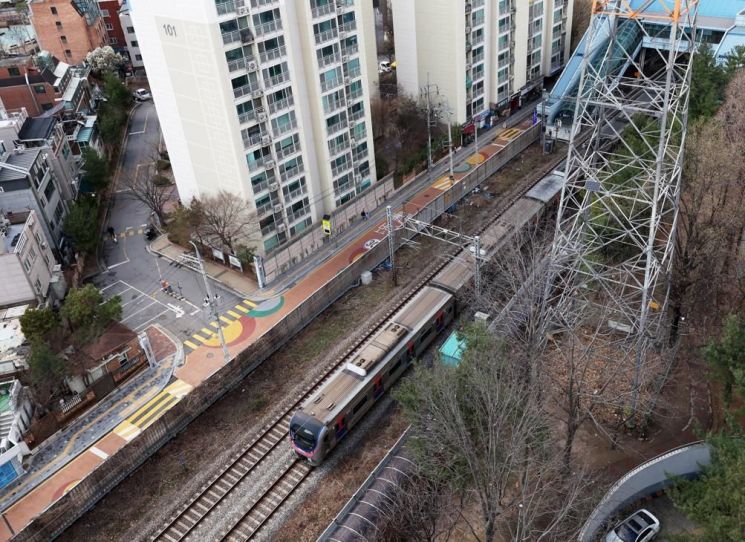
The Ministry of Land, Infrastructure and Transport will first select the first pilot projects by the end of this year based on the proposed projects by the end of October and support the commencement of basic plan establishment from next year. The evaluation criteria include ▲ feasibility of undergrounding and site development project plans ▲ rationality of project cost estimates ▲ financial feasibility ▲ appropriateness of project implementation system ▲ adequacy of funding procurement plans ▲ and local government proactiveness (administrative and financial). Subsequently, additional project proposals will be accepted until May next year to finalize the railway underground integrated development target routes, which will be included in the comprehensive plan by the end of 2025.
When preparing project proposals, local governments must analyze the necessity of the project from various perspectives such as transportation, urban planning, and economy, and present the project targets, scope, and duration. They are also required to include the project vision and goals, as well as phased project implementation strategies. The proposal must also contain an analysis of the correlation with national and metropolitan plans and projects currently being promoted by the government and local governments.
Additionally, general status related to railway lines and a comparative analysis of two or more railway underground alternatives must be conducted to derive the optimal basic concept plan including the results. The plan should include horizontal and longitudinal alignment plans for each section, construction plans for start and end points and connection points with other lines, underground construction methods, and plans for station development considering connectivity and transfers with other transportation modes. Furthermore, section-by-section progress plans and construction and operation safety management measures must be specified.
Regarding railway site development, since securing optimal development profits is crucial, the Ministry of Land, Infrastructure and Transport stated that development scope should be set considering the characteristics of surrounding areas, and development sections for phased project implementation should be established. Local governments must present land use plans such as residential, semi-residential, and commercial areas, as well as building density plans including floor area ratio and building coverage ratio for each land parcel to derive detailed development profits. In addition, plans for vertical connectivity between upper structures and underground railway spaces, and horizontal connectivity between existing urban areas and site development projects must also be prepared.
The project implementation plan should include contents such as profitability index (PI) and net present value (NPV) from financial feasibility analysis, and measures to activate private sector participation to expand development project profits. Along with this, the Ministry of Land, Infrastructure and Transport has requested that step-by-step project plans and budget input plans for planning, design, and construction phases throughout the entire project process be established, and that anticipated risks and countermeasures be prepared. The proposal must also include roles of participating institutions and funding procurement plans for feasible project implementation.
The Ministry of Land, Infrastructure and Transport emphasized the importance of local governments’ proactive project implementation will. Therefore, local governments should establish plans for financial support, administrative support such as system improvements and permits, and propose cooperation measures with residents to prevent project delays. Economic and social ripple effects such as job creation and improvement of residents’ living conditions, as well as policy ripple effects such as traffic congestion improvement and regional hub formation, should also be included.
Yoon Jin-hwan, Director of the Railway Bureau at the Ministry of Land, Infrastructure and Transport, said, "The core of the integrated railway underground development project is to finance undergrounding costs through site development profits, so it is important to meticulously establish development plans to secure sufficient development profits." He added, "From June, the Ministry will conduct close consulting with local governments centered on the consultative body subcommittee members to help local governments prepare optimal plans to reduce undergrounding costs and secure profitability of upper structure development."
© The Asia Business Daily(www.asiae.co.kr). All rights reserved.
![Clutching a Stolen Dior Bag, Saying "I Hate Being Poor but Real"... The Grotesque Con of a "Human Knockoff" [Slate]](https://cwcontent.asiae.co.kr/asiaresize/183/2026021902243444107_1771435474.jpg)
















