Core Technology of Autonomous Vehicles 'LiDAR' Leak Charges
"Professor A Responding... Awaiting Supreme Court Ruling"
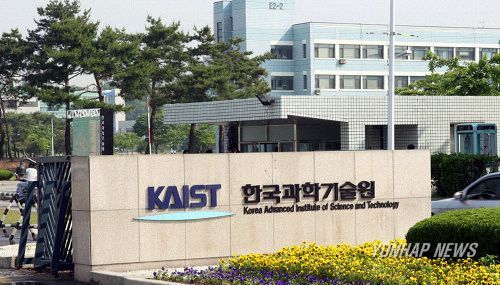
Disciplinary action at the school level is being delayed for a KAIST (Korea Advanced Institute of Science and Technology) professor who was sentenced to prison in the second trial for leaking core autonomous vehicle technology to China.
According to KAIST on the 1st, Professor A (61), who was indicted for violating the Act on the Prevention and Protection of Industrial Technology Leakage, was sentenced to two years in prison in the second trial held last February.
Professor A was selected for the "Thousand Talents Plan" (China's overseas high-level talent recruitment program) in 2017 and was caught by the National Intelligence Service for leaking 72 files, including research materials on autonomous vehicle LIDAR technology, to researchers at local Chinese universities until February 2020.
LIDAR is a core sensor often referred to as the "eyes of autonomous vehicles." Professor A had KAIST researchers upload related research materials, and Chinese university students reportedly used the uploaded data to conduct actual research and publish results.
Professor A was sentenced to two years in prison with a three-year probation in the first trial but appealed, and the second trial handed down a prison sentence. Professor A is currently awaiting the Supreme Court's decision, contesting the ruling.
The first trial court stated, "Since this technology falls within the scope of advanced technology protected by law, Mr. A had a duty to maintain confidentiality," but considering the relatively small personal gain, the execution of the prison sentence was suspended.
However, the second trial court overturned the original ruling and sentenced him to prison, stating, "Mr. A conducted research under the Thousand Talents Plan and gained financial benefits without prior approval from the university president. He also failed to notify the school afterward."
Furthermore, "Even after evidence of technology leakage surfaced, he refused to submit the Thousand Talents Plan contract and concealed the issue by claiming it was a general-purpose technology 'Li-Fi,' not the core autonomous vehicle technology 'LIDAR,' which prevented the school from detecting it during its own review. He also misappropriated BK21 research funds and center operating expenses to purchase LIDAR research equipment, causing damage to the school," the court added.
The second trial court also recognized charges of obstruction of business and fraud, which were acquitted in the first trial, and criticized Professor A for justifying his actions by leveraging his connections and knowledge despite the gains from the Thousand Talents Plan amounting to approximately 1.53 billion KRW.
The school immediately suspended Professor A from his position after the incident but has not taken disciplinary action for nearly four years. Suspension is an administrative measure that halts a professor’s duties and is different from disciplinary action, which determines guilt or innocence.
Regarding this, a KAIST official stated, "Professor A argues that the technology in question is not a core technology but a general-purpose technology 'Li-Fi,' and thus it is not industrial technology leakage," adding, "We have decided to wait until the Supreme Court's final ruling."
© The Asia Business Daily(www.asiae.co.kr). All rights reserved.
![Clutching a Stolen Dior Bag, Saying "I Hate Being Poor but Real"... The Grotesque Con of a "Human Knockoff" [Slate]](https://cwcontent.asiae.co.kr/asiaresize/183/2026021902243444107_1771435474.jpg)















