On the 30th, with the opening of the GTX-A line, the real estate market is heating up significantly.
Just before the opening of GTX A, a 102㎡ unit at Dongtan Station Lotte Castle in Dongtan New Town was traded at 2.2 billion KRW, up 100 million KRW from 2.1 billion KRW in September last year, setting a new record high. This was largely due to the fact that the long-awaited benefit, which had been under construction for several years, was realized, greatly influencing demand. As the first GTX line to open, the practicality of this line is expected to impact other lines scheduled to open in the future.
After the opening of the GTX-A line, the Suseo~Dongtan section, which used to take over an hour by bus, can now be traveled in about 20 minutes. The speed is approximately three times that of a regular subway, resulting in very high satisfaction among actual users. The fare is also planned to be revised further, with room for improvement, raising expectations. The feedback from users who have actually used the service is positive.
A resident of Dongtan, Mr. A, said, “I used to drive this route during my daily commute and was very stressed due to traffic congestion, but now I can travel comfortably without traffic jams, the travel time is reduced, and the cost seems cheaper than fuel expenses, so I am very satisfied.” He added, “In the past, when new roads or subway lines opened, it felt like a slight improvement, but with GTX, I can really feel the time reduction is revolutionary.”
The impact of the GTX-A line opening is expected to have a significant effect on the real estate market. Not only will prices rise due to the opening of the railway network, but improved accessibility to Seoul is expected to attract additional population inflow, making the outlook even more positive. The learning effect of buyers from recent cases of rising house prices can also be anticipated.
According to data from the real estate big data company Asil, the area with the most transactions involving non-resident leasing over the past six months was Hwaseong City in Gyeonggi Province, where Dongtan New Town is located (169 cases). This was followed by Seobuk-gu, Cheonan City, Chungnam (142 cases), Gimhae City, Gyeongnam (139 cases), and Asan City, Chungnam (130 cases). Except for Gimhae City, all these areas have recently attracted attention due to transportation benefits such as GTX.
In particular, Cheonan and Asan are considered beneficiaries of the GTX-C line extension. Unlike the existing planned stop areas where house price increases have been preemptively reflected, these regions were recently announced as additional line extensions, so expectations are even higher.
An industry insider said, “Usually, benefits are reflected in price increases at the announcement, groundbreaking, and completion stages, but in the case of transportation benefits, the impact is greater when they become tangible, enhancing the perceived effect.” He added, “Among them, GTX significantly shortens travel time, so the value of real estate near the stations inevitably rises.”
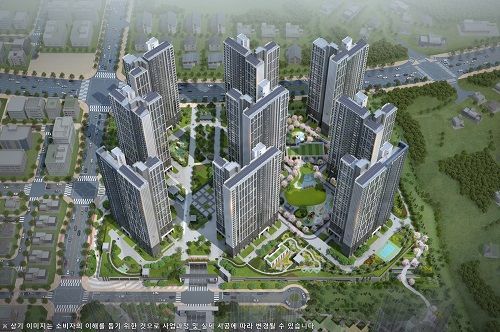
In Asan City, Chungnam, where the GTX-C line extension is planned this month, POSCO E&C is expected to attract much attention with its plan to sell ‘The Sharp Tangjeong Infinity City Phase 2.’ As a follow-up to ‘The Sharp Tangjeong Infinity City’ supplied earlier this year, which recorded an average competition rate of 52.5 to 1 and saw premiums exceeding 100 million KRW in some transactions, the real estate market in the Asan area is already stirring.
Located in Block 3 of the Asan Tangjeong District Urban Development Zone, the complex will consist of 9 buildings ranging from 2 basement floors to a maximum of 35 floors above ground, with units sized 70 to 84㎡, totaling 1,214 households. Of these, 1,050 units will be available for general sale.
The Asan Tangjeong District Urban Development Zone is situated on approximately 536,900㎡ of land in Galsan-ri and Maegok-ri, Asan City, and includes The Sharp Tangjeong Infinity City Phases 1 and 2 (2,354 households), as well as Blocks 1 and 2 of the urban development zone, where about 2,000 households are planned for future supply. The urban development zone will include urban infrastructure such as schools, parks, green spaces, and public offices, and a pedestrian bridge is planned to be newly constructed on the southern side of the zone, improving access to Tangjeong Station.
The location conditions are excellent. The Asan Tangjeong District Urban Development Zone is highly valued as a ‘school-embracing apartment’ with planned facilities including kindergartens, Tangjeong 8 Elementary School (scheduled for March 2027, tentative name), and middle schools. Additionally, the academy district around Tangjeong Station and Isunsin-daero allow convenient access to the Buldang-dong academy district.
In addition to excellent residential conditions, the application of The Sharp brand boasts high product completeness. The complex’s building coverage ratio is 12.86%, providing wide distances between buildings and various landscaping spaces to enhance comfort. The internal design features a predominantly south-facing 4Bay slab-type cross-ventilation structure to maximize lighting and ventilation. Furthermore, ample parking space of 1.32 spaces per household (1,603 spaces for the apartments) is secured to minimize parking issues for residents.
The model house for The Sharp Tangjeong Infinity City Phase 2 is located in Jangjae-ri, Baebang-eup, Asan City, Chungcheongnam-do.
© The Asia Business Daily(www.asiae.co.kr). All rights reserved.
![Clutching a Stolen Dior Bag, Saying "I Hate Being Poor but Real"... The Grotesque Con of a "Human Knockoff" [Slate]](https://cwcontent.asiae.co.kr/asiaresize/183/2026021902243444107_1771435474.jpg)















