Kukgeum Center: "If Middle East Crisis Deepens, Downside Risks to Emerging Markets' Economic Growth Outlook This Year May Increase"
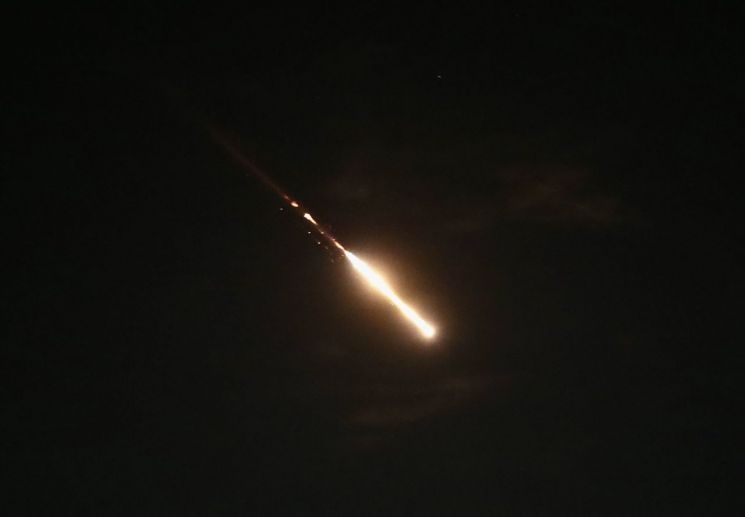
Recent geopolitical instability in the Middle East, heightened by mutual retaliations between Israel and Iran, is analyzed to potentially lower the economic growth outlook for emerging markets this year.
According to the report titled "Assessment of the Impact of Recent Middle East Events on Emerging Economies," published on the 19th by the International Finance Center, if the Middle East situation worsens, there is an evaluation that downside risks to this year’s economic growth forecasts could increase.
Earlier, on the 1st, Israel attacked the Iranian consulate in Syria, which is identified as a backing force of Hamas. Subsequently, on the night of the 13th, Iran launched a large-scale retaliatory airstrike on Israeli mainland using drones and missiles. According to major foreign media, six days later on the 19th (local time), Israel conducted a midnight airstrike on Iranian mainland, continuing the cycle of retaliation.
The report analyzes that if the situation deteriorates, there is a possibility of negative impacts on the real economy and financial markets in four major areas.
First, supply chain disruptions may intensify. The Red Sea accounts for about 30% of global maritime container traffic and 12% of trade volume. The Strait of Hormuz is a critical hub for global trade, with about 30% of maritime crude oil trade passing through it, and 70% of that destined for Asian markets. However, if the logistics crisis originating from the Red Sea continues for months, combined with Iran’s blockade of the Strait of Hormuz and additional Western sanctions on Iran becoming a reality, there is a risk of worsening logistics congestion and supply-demand instability.
Inflationary pressures may also increase. International oil prices have risen by 16% this year, and energy accounts for about 10% (median value) of consumer prices in emerging markets, a higher proportion than in advanced economies such as the United States (6.9%). Due to this vulnerability to price shocks, there is a possibility of delays in monetary easing policies.
There is also a possibility of deterioration in current and fiscal accounts. Emerging markets in Asia and Eastern Europe, such as Thailand (6.3%) and Vietnam (5.9%), generally have a high proportion of energy imports relative to GDP. This raises the risk of worsening current account balances, especially in countries heavily dependent on raw material imports. Additionally, in countries highly reliant on external funding, the continuation of high interest rates and high exchange rates may increase debt repayment burdens, such as rising interest costs.
Risk-averse sentiment may also strengthen. On the 12th, the dollar index surged to 106.26, showing strong appreciation. Since April, as the Israel-Iran conflict intensified, the emerging market currency index depreciated by 1.5% on the 17th, and the emerging market stock index fell by 2.9%. Increased demand for safe-haven assets may lead to foreign investor outflows from emerging markets and higher external capital raising costs.
Nam Kyung-ok, Deputy Senior Research Fellow at the International Finance Center and author of the report, stated, "The recent impact of the Middle East situation on emerging economies is still limited," but added, "If the situation worsens, it is necessary to note that combined with other geopolitical risks such as the Russia-Ukraine war, downside risks to this year’s growth outlook could increase."
Meanwhile, the International Monetary Fund (IMF) on the 16th revised the economic growth forecast for emerging markets upward to 4.2%, up 0.1 percentage points from January’s 4.1%. However, this revision does not reflect the recently deteriorated situation in the Middle East.
© The Asia Business Daily(www.asiae.co.kr). All rights reserved.
![Clutching a Stolen Dior Bag, Saying "I Hate Being Poor but Real"... The Grotesque Con of a "Human Knockoff" [Slate]](https://cwcontent.asiae.co.kr/asiaresize/183/2026021902243444107_1771435474.jpg)















