Consider Next Year's Admission Screening "Must Decide Quickly"
Discussion and Announcement at Central Disaster and Safety Countermeasures Headquarters This Afternoon
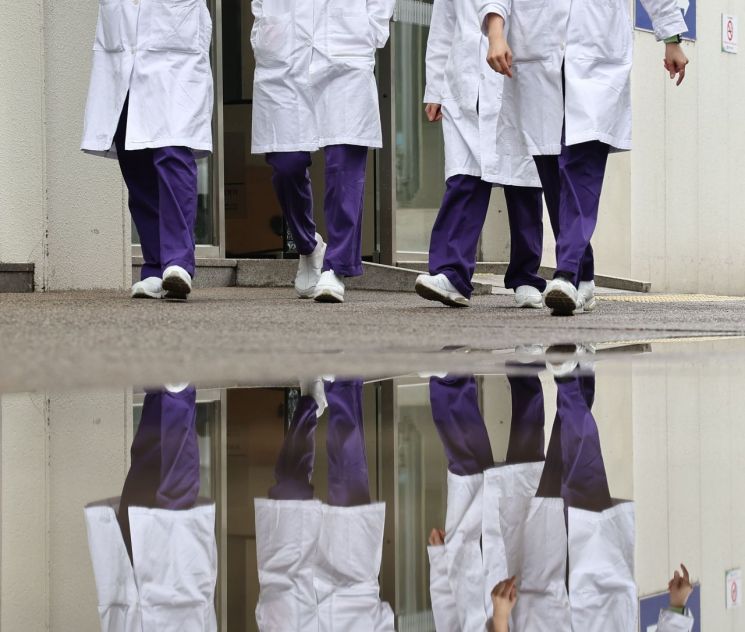
The government will actively accept the request from national university presidents on the 19th to allow adjustment of the medical school enrollment increase scale, and will proceed with the previously upheld reduction of 2,000 seats. This decision is expected to be discussed and announced at the Central Disaster and Safety Countermeasures Headquarters (CDSCH) meeting chaired by Prime Minister Han Duck-soo at the Government Complex Seoul in the afternoon.
A senior official from the Presidential Office told Asia Economy on the same day, "Regarding the increase of 2,000 medical school seats, we can think flexibly without being fixated on the number," adding, "Since the schedule for next year's admission screening is approaching, a quick decision is necessary."
Earlier, the presidents of six key national universities?Kangwon National University, Kyungpook National University, Gyeongsang National University, Chungnam National University, Chungbuk National University, and Jeju National University?sent a proposal to the Ministry of Education the day before, requesting that each university be allowed to autonomously recruit 50-100% of the increased medical school seats for the 2025 academic year. This opinion, asking for autonomy, is interpreted as effectively opening the possibility of reduction.
Regarding this, a Presidential Office official said, "Since the national university presidents with medical schools brought a reasonable proposal, we are reviewing it positively," and added, "By granting autonomy, the purpose of increasing medical school seats can be preserved."
In particular, the official expressed the view that a quick decision is necessary as universities must submit their admission screening implementation plans for next year to the Korea Council for University Education by the end of this month, and time is tight. This is because if the conflict between the medical and government sectors continues without finding a solution, confusion among examinees could only increase.
The Presidential Office official explained, "The deadline for the admission screening implementation plan is approaching rapidly, and now is the time when the scale of medical school seat increase can be adjusted without difficulty, so it must be done quickly (before it is too late)," adding, "It is expected to be decided at the CDSCH."
He continued, "We have repeatedly requested a unified proposal from the medical community, but they either demand 'zero increase' or a complete re-discussion, which cannot be accepted," and added, "At this point, since the national university presidents have brought a reasonable proposal, we view it positively."
New Phase in Stalemated Medical-Government Relations
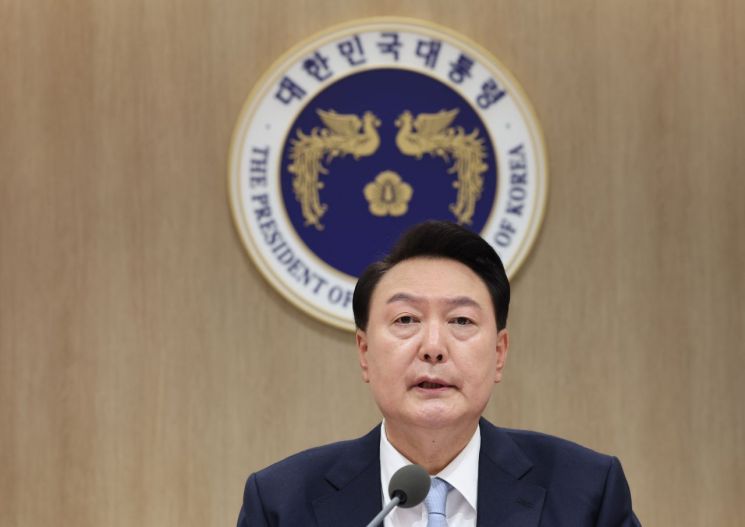 President Yoon Suk-yeol is speaking at the Cabinet meeting held on the 16th at the Yongsan Presidential Office Building in Seoul.
 [Image source=Yonhap News]
With the government's progressive attitude change, it is expected that the stalemated medical-government relations will enter a new phase of change.
Earlier, on the 1st, the Presidential Office expressed for the first time through KBS that the previously firm '2,000' increase in medical school seats could be adjusted. Subsequently, on the 4th, President Yoon Suk-yeol met with Park Dan, the representative of resident doctors, for about 140 minutes and stated, "We will respect the opinions of resident doctors when discussing future medical reform including doctor increases with the medical community." However, after the meeting, Park Dan, the emergency committee chair of the Korean Intern Resident Association, posted negative comments, and the medical-government conflict failed to find a breakthrough. Nevertheless, with the government concretizing the possibility of adjusting medical school seat increases on this day, there is an interpretation that possibilities for compromise and adjustment have opened.
Presidential Medical Reform Special Committee to Launch Next Week
Along with adjusting the medical school seat increase, detailed plans for medical reform will also be prepared. Next week, the government will launch the Presidential Medical Reform Special Committee composed of about 20 members, including representatives from medical professions such as doctors, Korean medicine doctors, pharmacists, nurses, patient organizations, and health and welfare experts, and hold its first meeting.
Since medical reform is not simply a matter of doctors alone, the committee is formed with diverse members to confirm the positions of both medical service providers and consumers and coordinate policies to minimize conflicts. Seats for representatives from the Korean Medical Association and the Korean Intern Resident Association, who oppose the medical school seat increase, are left vacant.
A Presidential Office official said, "The composition of the Medical Reform Special Committee is almost complete," adding, "We have left the resident doctors' seats vacant and continuously requested their attendance, and the committee must be launched soon."
The chairperson of the special committee, who can influence decision-making, will be a health and welfare expert. Since the President's Office, government, and doctors have been in conflict, if a doctor were to chair, the fairness and credibility of the outcomes could be questioned. Therefore, Presidential Office officials will not attend the first meeting, but the Minister of Health and Welfare, responsible for medical policy and medical law revision, and the Minister of Justice will attend.
Regarding the proposal by Lee Jae-myung, leader of the Democratic Party, for a special committee involving the ruling and opposition parties, the government, the medical community, and civil society, a Presidential Office official said, "For legal matters and legislative issues discussed in the Medical Reform Special Committee, discussions with the National Assembly are naturally necessary," adding, "Since the government is already promoting the Medical Reform Special Committee, it will proceed as planned."
Prime Minister Han Duck-soo Hints at Adjustment of Increase in Afternoon Briefing
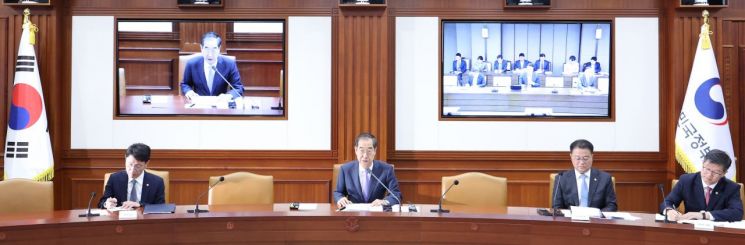 Prime Minister Han Duck-soo is speaking at the Ministerial Meeting on State Affairs held at the Government Seoul Office Building on the morning of the 18th.
 [Image source=Yonhap News]
Additionally, Prime Minister Han will hold a live joint briefing with related ministries at around 3 p.m. in the Government Complex Seoul joint briefing room after the CDSCH meeting ends at 2 p.m. that day, titled 'Special Briefing on Medical School Seat Increase.' A government official said, "Since the national university presidents requested that universities be allowed to autonomously adjust 50-100% of the increased medical school seats, this will be discussed as the most important agenda at the CDSCH," adding, "Although we cannot predict the conclusion, the atmosphere is positive."
The official added, "The government is unlikely to specify the exact percentage of students each university can recruit, but will review allowing universities to set their quotas according to their circumstances." The government plans to hold a briefing and announce the results immediately after the CDSCH meeting ends at 2 p.m. that day.
© The Asia Business Daily(www.asiae.co.kr). All rights reserved.
![Clutching a Stolen Dior Bag, Saying "I Hate Being Poor but Real"... The Grotesque Con of a "Human Knockoff" [Slate]](https://cwcontent.asiae.co.kr/asiaresize/183/2026021902243444107_1771435474.jpg)

















