Opening of Former Executive Residences of Joseon Savings Bank Ahead of Restoration
A portion of the site of Seonwonjeon (璿源殿) in Deoksugung Palace, where the royal portraits (Eojin, 御眞) of Joseon kings are kept, will be temporarily opened to the public. The Cultural Heritage Administration's Office of Palaces and Royal Tombs announced on the 18th that from the 26th until August 31, part of the Seonwonjeon area, including the exterior of the Joseon Savings Bank executive residence, will be accessible.
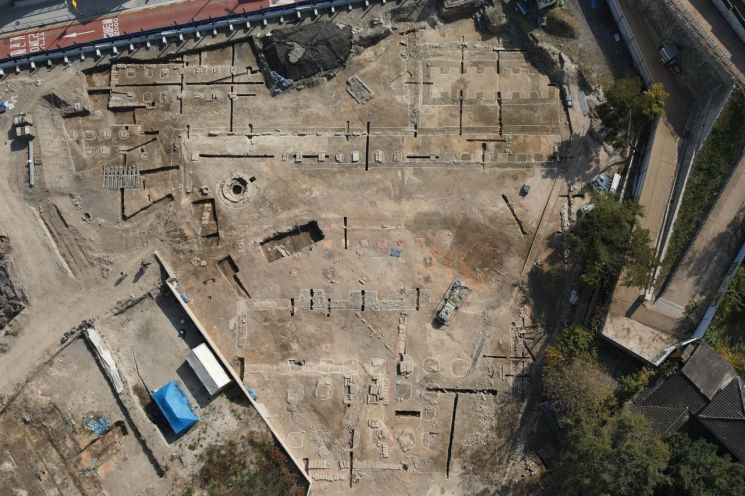
Seonwonjeon, built in 1897, was considered a sacred space because it housed the royal portraits. It was destroyed by fire in October 1900 and rebuilt the following year on the site north of the Uigeochung, where the former Gyeonggi Girls' High School stood, near the U.S. legation. However, after Emperor Gojong passed away in 1919, it was demolished by the Japanese colonial government. The site was later developed with the Joseon Savings Bank residence and Kyungsung First Public Girls' High School.
The area to be opened this time was returned in 2011 through a land exchange with the United States. Restoration and maintenance of Deoksugung Palace are planned to continue until early 2030 according to the basic restoration plan.
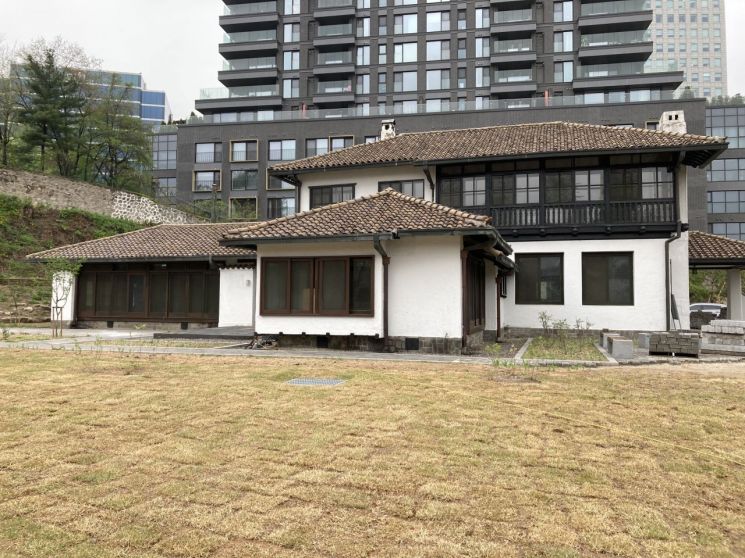
Before the full-scale construction begins, the Office of Palaces and Royal Tombs will temporarily open the Joseon Savings Bank executive residence and the Seonwonjeon excavation site. An official stated, "Visitors will be able to see old traces found at the excavation site, such as the flower stairs (Hwagye, 花階), which are tiered steps planted with flowers," and added, "The residence building, constructed in 1938, is also noteworthy."
On the day before the opening, the 25th, an 'Art Fence' created by artist Lee Myung-ho will be unveiled. It is a decorative barrier installed at the construction site, characterized by its artistic design. The significance of the installation will be explained to Cultural Heritage Administration Commissioner Choi Eung-cheon, U.S. Ambassador to Korea Philip Goldberg, and others.
© The Asia Business Daily(www.asiae.co.kr). All rights reserved.
![Clutching a Stolen Dior Bag, Saying "I Hate Being Poor but Real"... The Grotesque Con of a "Human Knockoff" [Slate]](https://cwcontent.asiae.co.kr/asiaresize/183/2026021902243444107_1771435474.jpg)
















