President Joe Biden, ahead of the U.S. presidential election this November, has officially announced plans to raise tariffs on Chinese steel, delivering strong remarks. Following former President Donald Trump, the Republican presidential candidate, Biden has also pulled out the large-scale tariff card, leading to analyses that no matter who wins, U.S.-China trade conflicts are bound to intensify.
Official Announcement of Tariff Increase on Chinese Steel
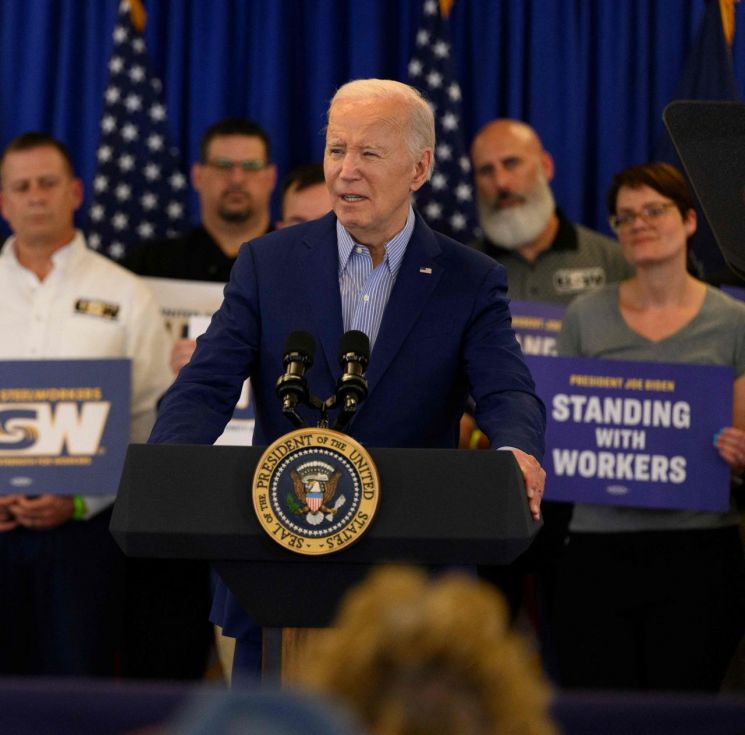
On the 17th (local time), President Biden met with the United Steelworkers (USW) in Pittsburgh, Pennsylvania, a battleground state, and officially announced plans to raise tariffs on Chinese goods, stating, “China is engaging in unfair practices, not competition.”
He pointed out that the massive subsidies provided by Chinese authorities to their steel companies have caused global overproduction and dumping sales, saying, "We want fair competition with China, not conflict." He also strongly criticized, saying, "They are xenophobic toward foreigners" and "They have real problems."
Earlier, President Biden instructed the U.S. Trade Representative (USTR) to consider increasing tariffs on Chinese steel and aluminum by up to three times based on Section 301 of the Trade Act. A senior White House official confirmed during a briefing that "the review results will come out soon." If implemented, tariffs on Chinese steel and aluminum, currently at about 7.5%, would rise to 25%.
Gina Raimondo, Chair of the White House National Economic Council, also emphasized the need for tariff increases during the briefing, stating, "China’s overproduction poses a serious threat to the U.S. steel and aluminum industries." The White House has also launched investigations into Chinese shipbuilding, shipping, and logistics sectors following steel.
Why Did Biden Pull Out the Tariff Card?
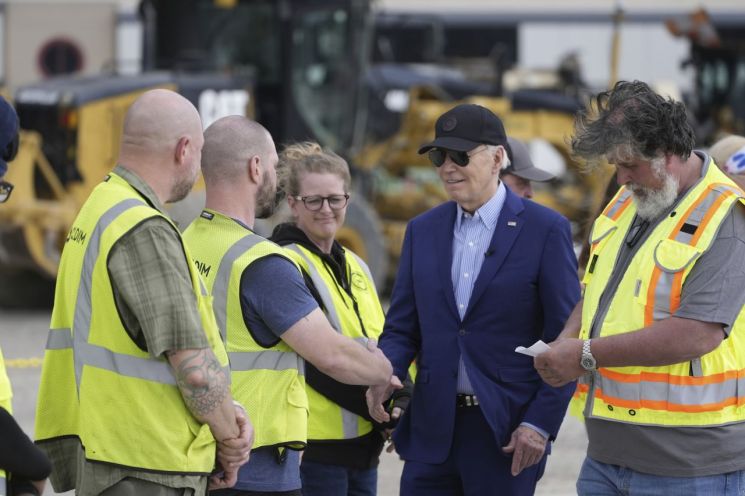
The background behind the Biden administration, which once showed a negative stance toward the high tariffs on China imposed by the Trump administration, pulling out such a large-scale tariff card lies in the Rust Belt vote. Analyses suggest that the votes of workers in key battleground states centered on the Rust Belt will be a major variable in this election, prompting a competition of pledges targeting this demographic.
In particular, Pennsylvania and Michigan, battleground states within the Rust Belt, are considered essential regions for President Biden to secure for re-election. However, unlike the 2020 election when he had a comfortable lead, recent polls show him slightly trailing former President Trump despite endorsements from the United Auto Workers and steel unions. A significant portion of union members in this region, facing threats to jobs and livelihoods, have shifted their support back to Trump, who has taken a hardline stance on China with tariffs around 60%.
CNN reported, "Former President Trump has made tariffs on China a core feature of his global economic strategy," and analyzed that "President Biden appears to be pushing tariff increases under the pretext of protecting American workers to escape criticism that he is weaker than Trump on China issues."
Yahoo Finance also noted, "President Biden implicitly acknowledged that Trump’s 'America First' campaign strategy has some appeal. What Biden is doing now is somewhat Trump-like," and diagnosed that "Biden’s official announcement of new tariffs in Pennsylvania, a key battleground state, is no coincidence." Bloomberg highlighted Biden’s use of the term 'xenophobic' toward China, calling it "the harshest criticism Biden has ever directed at the world’s second-largest economy (China)."
President Biden’s repeated declaration in front of steel union members that he would block Nippon Steel’s acquisition of U.S. Steel is also a move aimed at winning Rust Belt workers’ votes. He emphasized, "U.S. Steel must remain a completely American company." U.S. Steel, headquartered in Pittsburgh, overwhelmingly approved the merger with Nippon Steel at a recent special shareholders meeting, but the deal still requires approval from the U.S. Department of Justice and the Committee on Foreign Investment in the United States. Former President Trump had also clearly opposed the merger, vowing to block it unconditionally.
U.S.-China Trade Conflict Likely to Intensify
The U.S. steel industry immediately welcomed the Biden administration’s tariff measures against China. The American Iron and Steel Institute stated in a press release, "China, the biggest cause of global steel overproduction, is engaging in broad trade practices that harm the entire U.S. steel industry," and "we applaud the tariff increase measures."
However, these tariff measures not only raise concerns about escalating trade conflicts but could also negatively impact President Biden’s efforts to restore U.S.-China relations. Ahead of the election, Biden needs to prevent the bilateral relationship from deteriorating to its worst state. The phone call with Chinese President Xi Jinping two weeks ago was conducted against this backdrop. When asked whether the steel tariffs would damage relations with President Xi, Biden flatly replied, "No."
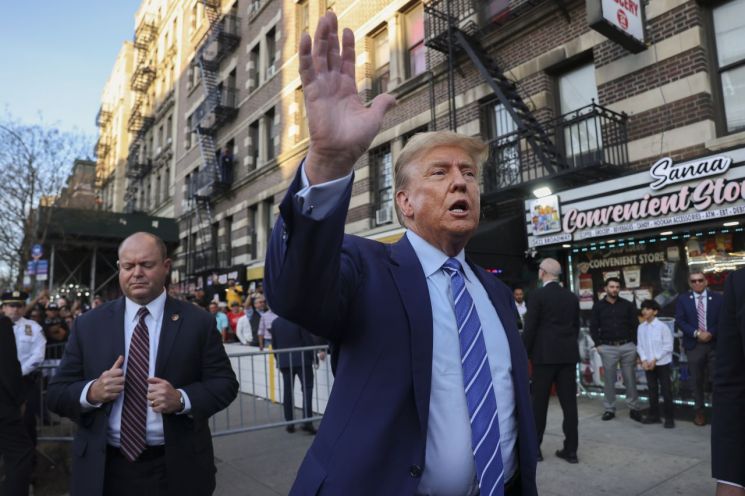
The Wall Street Journal (WSJ) noted that this move came at a complex political and diplomatic moment for the White House, stating, "This tariff increase will erode the goodwill built through months of careful diplomacy between the two countries." Yahoo Finance predicted that "Former President Trump will not let Biden steal his crown as the 'tariff king,'" and anticipated that the two presidential candidates’ attacks on China could intensify ahead of the November election.
© The Asia Business Daily(www.asiae.co.kr). All rights reserved.
![Clutching a Stolen Dior Bag, Saying "I Hate Being Poor but Real"... The Grotesque Con of a "Human Knockoff" [Slate]](https://cwcontent.asiae.co.kr/asiaresize/183/2026021902243444107_1771435474.jpg)

















