Beautiful Scenery of the Canary Islands
Protests Erupt Against Rapid Development
The Canary Islands are one of Spain's 17 autonomous communities, consisting of seven major islands in the Atlantic Ocean. They are located 1,050 km from the southern mainland of Spain (Andalusia) and 115 km from the west coast of Africa. The total population is approximately 2.22 million. Due to its mild climate and beautiful scenery year-round, it is highly regarded as a tourist and vacation resort destination for Europeans from countries such as the United Kingdom, Germany, and the Netherlands. As a result, many tourists from various regions across Europe visit throughout the year.
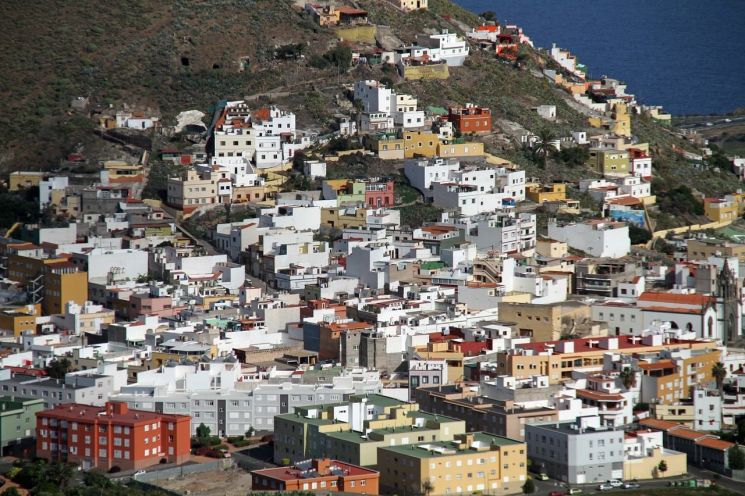
Recently, slogans and protests such as "The Canary Islands have limits" and "The Canaries are tired" have become frequent. In particular, non-governmental organizations are protesting in front of two new hotels on Tenerife, the most developed of the seven islands, opposing the construction of these hotels. They are demanding greater say for local residents regarding developments that impact the environment. Some members have even begun indefinite hunger strikes, stating, "Our island is a treasure that must be protected."
On the 16th, AFP reported that anti-tourism movements are becoming active in Spain, the second most visited country in the world. In the case of the Canaries, 16 million visitors were attracted last year, which is more than seven times the total population (2.2 million). Despite this, unchecked development is progressing, leading local residents and NGOs to call it a "suicidal growth model" and say it is "unsustainable given the limited resources."
Similar anti-tourism movements have also emerged in other parts of Spain and are actively operating on social media. In the southern port city of Malaga on the Costa del Sol, stickers with unfriendly slogans such as "This was my home" and "Go away" have been posted. In Barcelona and the Balearic Islands, activists have erected fake signs at famous beach entrances warning in English of dangers like "Falling Rocks" or "Jellyfish Hazard." Local residents complain that the increase in listings on short-term rental platforms like Airbnb has worsened housing shortages and caused rent to skyrocket, especially in city centers.
The northern beach city of San Sebasti?n last month limited tourist group sizes in the city center to 25 people and banned the use of loudspeakers during guided tours. The southern city of Seville is considering charging non-residents an entrance fee to the landmark Plaza de Espa?a, and Barcelona has removed popular bus routes for tourists from Google Maps to provide more space for locals. Balancing the economic benefits of tourism with the interests of local residents is not easy. Isabel Rodr?guez, Minister of Housing, recently said, "Measures are needed to limit the number of tourist apartments," while also acknowledging that "the government recognizes the importance of the tourism sector, which accounts for 12.8% of Spain's economic activity."
© The Asia Business Daily(www.asiae.co.kr). All rights reserved.
![Clutching a Stolen Dior Bag, Saying "I Hate Being Poor but Real"... The Grotesque Con of a "Human Knockoff" [Slate]](https://cwcontent.asiae.co.kr/asiaresize/183/2026021902243444107_1771435474.jpg)















