105th Anniversary of the Massacre Marks Opening on the 15th
Total Floor Area 5414㎡... A Comprehensive View of the Independence Movement History
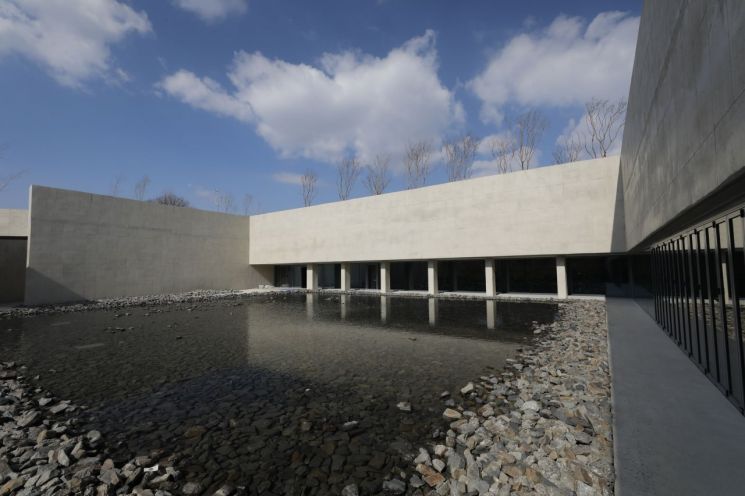
On the 105th anniversary of the April 15, 1919 Jeam-ri and Gojuri Massacre, the 'Hwaseong City Independence Movement Memorial Hall' officially opened on the 15th to promote the independence movement in the Hwaseong area of Gyeonggi Province and convey its historical significance.
The Jeam-ri and Gojuri Massacre occurred on April 15 of the same year, shortly after the March 1st Movement, at Jeam-ri Church in Hyangnam-myeon, Suwon-gun (now Hyangnam-eup, Hwaseong City). It was a massacre led by Lieutenant Torio Arita of the Japanese Imperial Army Military Police. As a result of this incident, 29 people died, including 23 residents of Jeam-ri and 6 residents of Gojuri, and about 30 private houses were burned down.
The memorial hall project expanded the Jeam-ri March 1st Movement Martyrs Memorial Hall, which had been operating since 2001 to honor the massacre victims. The new memorial hall was built on a site of 5414㎡ with one basement floor and one above-ground floor at 34 Jeam-Gojuro, Hyangnam-eup, the site of the massacre. It was developed into a complex cultural park with a historical and cultural park covering 37,744㎡.
The exhibition rooms are composed of three sections: permanent, special, and children's exhibition halls, allowing visitors to view the history of Hwaseong's independence movement at a glance. The permanent exhibition hall focuses on the history of Hwaseong's independence movement from the opening of the port to liberation, while the special exhibition hall selects various themes related to Hwaseong's independence movement to provide citizens with opportunities to view exhibitions. General admission is available from the 16th, and admission is free.
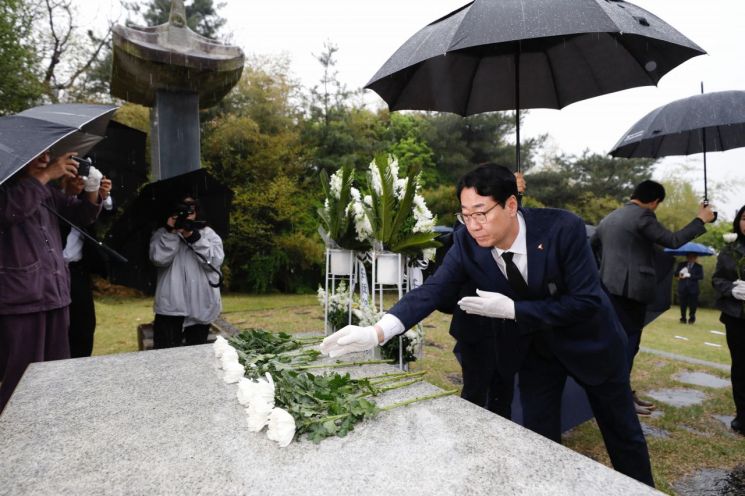 Jung Myung-geun, Mayor of Hwaseong City, is laying flowers at the martyr's cemetery during the Jeam-ri and Gojuri Memorial Ceremony held on the 15th.
 [Photo by Hwaseong City]
At the opening ceremony, Hwaseong Mayor Jeong Myeong-geun said, "The Hwaseong area was the site where the March 1st Movement was most fiercely carried out," adding, "The memorial hall is the starting point of a mission to not forget and remember our roots."
Meanwhile, Hwaseong City held the 'April 15 Jeam-ri and Gojuri Memorial Ceremony' on the same day. About 80 people attended the ceremony, including Mayor Jeong, Yoon Dae-seong, Chairman of the Hwaseong Branch of the Liberation Association, Kim Kyung-hee, Chairperson of the Hwaseong City Council, families of Hwaseong independence patriots, members of the National Assembly, and provincial and city council members.
© The Asia Business Daily(www.asiae.co.kr). All rights reserved.
![Clutching a Stolen Dior Bag, Saying "I Hate Being Poor but Real"... The Grotesque Con of a "Human Knockoff" [Slate]](https://cwcontent.asiae.co.kr/asiaresize/183/2026021902243444107_1771435474.jpg)
















