Frequently Used for AI Training of K-Content Overseas
Proactive Response to Copyright Issues with English Versions
The Ministry of Culture, Sports and Tourism announced on the 15th that it will distribute the English version of the "Generative Artificial Intelligence (AI) Copyright Guide," which was released last December, worldwide. It plans to distribute it at international organization meetings and global events to raise awareness.
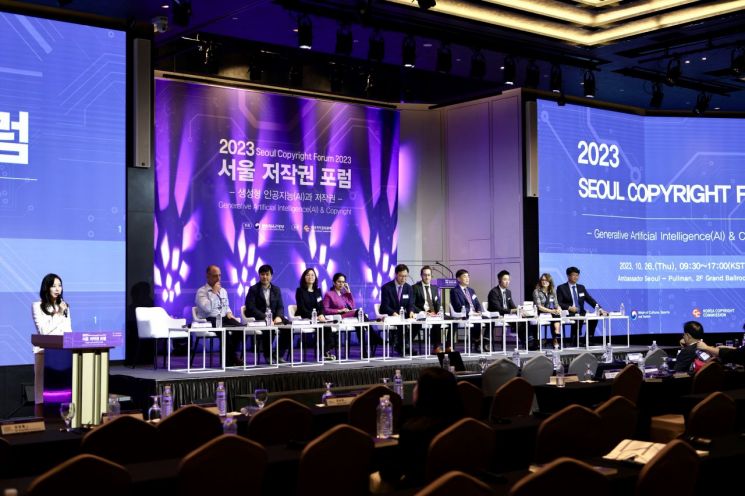
The starting point is the World Intellectual Property Organization (WIPO) Standing Committee on Copyright and Related Rights (SCCR) meeting held on the same day. Key contents will be introduced to major member countries such as the United States, the European Union (EU), and Japan.
The Ministry of Culture, Sports and Tourism created the English version because K-content is frequently used for overseas AI training. An official explained, "There has been an increase in cases where Hallyu fans create content similar to K-content using generative AI," adding, "We plan to proactively respond to copyright issues related to AI."
The Generative AI Copyright Guide is composed of four main sections: precautions for AI business operators, preventive measures copyright holders can take, precautions for AI users, and guidance on copyright registration for generative AI outputs.
According to the guide, AI business operators must secure lawful usage rights through appropriate compensation or other methods. Additionally, when providing services, they must ensure that AI outputs identical or similar to existing works are not produced. AI users should also be careful that the data they input?such as text, images, or audio?to create AI outputs does not infringe or induce infringement of others' copyrights.
Copyright holders are also required to make considerable efforts. In particular, if they do not want their works to be used for AI training, they should clearly express their opposition in an appropriate manner, specify related terms and conditions to prevent such use, or implement technical measures such as robot exclusion standards.
© The Asia Business Daily(www.asiae.co.kr). All rights reserved.
![Clutching a Stolen Dior Bag, Saying "I Hate Being Poor but Real"... The Grotesque Con of a "Human Knockoff" [Slate]](https://cwcontent.asiae.co.kr/asiaresize/183/2026021902243444107_1771435474.jpg)















