If you receive the prize money as a lump sum, 50-60% is withheld as tax
To avoid withholding tax, some opt for 'installment payments' over about 30 years
A lottery jackpot winner of over 1.75 trillion won has emerged in the United States. This is the eighth largest jackpot in U.S. history. However, it is unlikely that the lucky winner will receive this enormous amount in a lump sum. Mega lotteries like Powerball offer installment payments over several decades as a measure to minimize taxes.
According to local U.S. media reports including Oregon Public Broadcasting (OPB) on the 7th (local time), a Powerball lottery ticket sold in Oregon in the western United States produced a winner of $1.3 billion (approximately 1.759 trillion won). The jackpot ranks as the 8th largest in U.S. lottery history.
Powerball jackpots roll over to the next month and increase if there is no first-place winner. The lucky winner finally hit the jackpot on the 41st drawing.
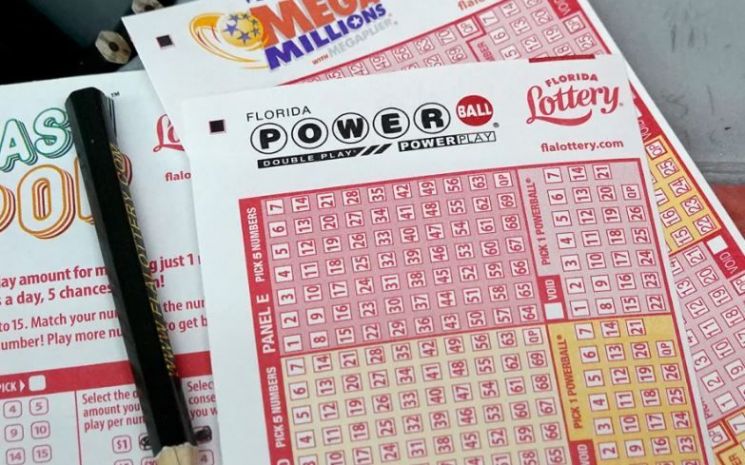
The winning numbers were reported to be white balls 22, 27, 44, 52, 69, and the red ball 9. To win the Powerball jackpot, players must match 5 numbers from white balls numbered 1 to 69 and 1 number from red balls numbered 1 to 26. The red ball, which plays a key role in winning first place, is called the "Powerball," the same as the lottery’s name.
The reason for the trillion-won level jackpot is that U.S. lottery companies recently changed the payout odds. The odds of winning the Powerball jackpot were 1 in 175.2 million in 2015, but now they have drastically decreased to 1 in 292.2 million. This is a much lower probability than the 1st prize odds of Korea’s Lotto (1 in 8,149,220).
Because of this, first-place winners rarely appear, causing the jackpot to accumulate continuously, resulting in winners taking home amounts reaching tens of billions of dollars.
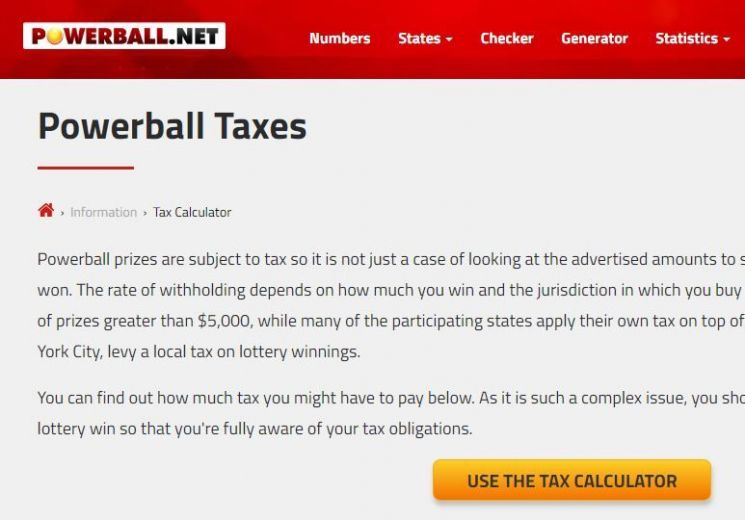 Powerball Tax Calculator. Due to the astronomical jackpot, if you do not make full use of various deduction benefits, 50 to 60% of the total amount can quickly disappear.
 [Image source=Powerball official website]
However, winners cannot receive this huge amount all at once. In the case of this Powerball jackpot winner, the prize can be paid out in installments over a maximum of 29 to 30 years. The reason for supporting installment payments is taxes.
If the first-place winner chooses to receive the Powerball prize as a lump sum, the actual payout would be only $608.9 million (approximately 823.8 billion won). The amount is almost halved.
In the U.S., when receiving prizes over $5,000 (approximately 6.75 million won), 24% is withheld by the federal government as withholding tax. Moreover, lottery winnings are considered income, meaning federal income tax must also be paid at the highest rate of 37%.
Including state taxes, it is not uncommon for 50 to 60% of the winnings to disappear within a year. For this reason, the official Powerball website operates a "Powerball Tax Calculator" program to help winners maximize their tax benefits.
Meanwhile, Powerball tickets can be purchased for $2 (approximately 2,700 won) and are available in 45 states across the U.S.
© The Asia Business Daily(www.asiae.co.kr). All rights reserved.
![Clutching a Stolen Dior Bag, Saying "I Hate Being Poor but Real"... The Grotesque Con of a "Human Knockoff" [Slate]](https://cwcontent.asiae.co.kr/asiaresize/183/2026021902243444107_1771435474.jpg)
















