Attracting with Half Tuition and Desired Location Training
Illegal Training Vehicles Pose Safety Risks and Uninsured Concerns
Recently, visiting road training academies targeting 'jangnongmyeonho' drivers, who are inexperienced in driving, have been thriving. They are popular because they offer training at desired locations for less than half the tuition fee of professional driving academies, but all of them are illegal businesses. Since they do not use legitimate training vehicles, most lack safety braking devices and are not insured, requiring special caution.
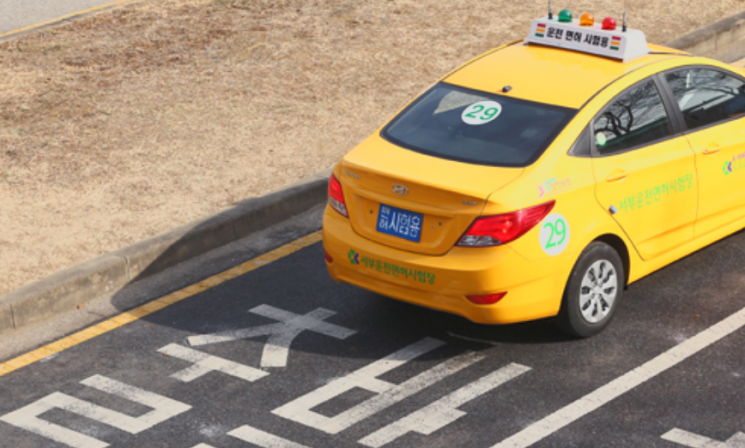
On the 5th, searching for 'car road training' on portal sites and social networking services (SNS) revealed about 50 businesses. When inquiring about lesson fees from three companies, the average hourly tuition fee was 20,000 to 30,000 KRW. For 10 hours, paying in the high 200,000 KRW to low 300,000 KRW range allows an instructor to be dispatched to the driver's desired location. Considering that the average hourly tuition fee at professional driving academies in Seoul is about 60,000 KRW, this is more than half cheaper.
A representative from one company promoted, "If it's your own car, expect around the high 200,000 KRW range; for a mid-sized car, around the low 300,000 KRW range," adding, "Since professional driving academies cost about 600,000 KRW, many people in their 20s seek our service."
However, upon verification, these were illegal businesses without approval from the National Police Agency. The business registration numbers of five visiting road training companies were registered as e-commerce retail businesses, not driving academies. According to the Road Traffic Act, professional driving academies must have a training site of 2,300㎡ and own training vehicles equipped with safety devices to receive approval from the National Police Agency. Instructors who provide training without academy registration from the police can face imprisonment of up to two years or fines up to 5 million KRW.
Since illegal road training companies do not meet these conditions, there is a risk of major accidents during actual training. Professional training vehicles are equipped with auxiliary brakes on the lower passenger seat, but visiting driving training using personal cars cannot perform emergency braking in dangerous situations.
Another issue is that trainees bear full responsibility in case of accidents. Since they are not enrolled in automobile insurance for trainees, proper insurance claims cannot be made in case of accidents. Some companies advertise on their websites that they have automobile insurance, but the police explained that most have general automobile insurance, not specialized insurance for trainees.
A police official stated, "According to the Road Traffic Act, professional driving academies must have insurance that fully compensates for damages caused by trainees' negligence during training," adding, "Some companies advertise that they have automobile insurance, but most have added short-term driver special contracts that change the driver scope without limitation to general automobile insurance, not trainee-specific insurance."
The police have launched a large-scale crackdown plan as illegal road training has become rampant. From April 4 to May 31, the National Police Agency plans to continue special crackdowns targeting the masterminds who systematically manage illegal road training for three months.
The professional driving academy industry points out that fundamental measures such as strengthening the criteria for obtaining a driver's license are necessary. Since the driver's license test was simplified in 2011 and mandatory education hours were drastically reduced from 60 to 13 hours, the number of novice drivers struggling with driving after obtaining a license has greatly increased. Excluding 3 hours of classroom education from the mandatory education time, the actual time to drive a car on the premises and road is only 10 hours.
An Juseok, Secretary General of the National Federation of Professional Driving Academies, said, "The most fundamental reason illegal businesses thrive is that the driving training time was reduced to 10 hours," adding, "Since 10 hours is not enough to learn to drive, even after obtaining a license, drivers repeatedly need road training. Unless the license acquisition criteria are strengthened as before, it seems difficult to eradicate illegal road training."
© The Asia Business Daily(www.asiae.co.kr). All rights reserved.
![Clutching a Stolen Dior Bag, Saying "I Hate Being Poor but Real"... The Grotesque Con of a "Human Knockoff" [Slate]](https://cwcontent.asiae.co.kr/asiaresize/183/2026021902243444107_1771435474.jpg)















