JP Morgan, Analysis of Core Inflation in Developed Countries
3% in Second Half of Last Year → 3.5% in First Quarter of This Year
Analysis has emerged that the core inflation rates in major advanced countries such as the United States and Europe expanded in the first quarter of this year. Although inflation in major countries has significantly slowed down from its peak, concerns have been raised that central banks in each country face 'last mile' risks?referring to the final stretch just before reaching their targets?as the downward trend halts or slightly rebounds ahead of interest rate cuts within the year.
On the 31st of last month (local time), the US investment bank (IB) JP Morgan estimated that the core inflation rate in major advanced countries rose from an annualized 3% in the second half of last year to 3.5% in the first quarter of this year (seasonally adjusted). Core inflation excludes volatile food and energy prices and reflects the underlying trend of inflation.
By country, the US core inflation jumped from 3.2% in the second half of last year to 4.1% in the first quarter of this year. The Eurozone (20 countries using the euro) rose from 2.5% to 3.2% during the same period, and the UK increased from 3% to 3.2%. China’s rate went up from 0.6% to 1.2%.
JP Morgan analyzed, "The upward trend in service inflation continues, and commodity prices, which fell last year, are rising again," adding, "Economists’ and central banks’ forecasts that inflation will continue to slow depend on inflationary forces that have yet to be confirmed, such as global labor costs, short-term inflation expectations, and commodity market signals." Recent inflation trends suggest a risk of prices rising again, making it premature to assume central banks will ease monetary policy.
While the US inflation rate is generally slowing, its path is 'bumpy.' Consumer Price Index (CPI) increases in January and February both exceeded expert expectations, raising market concerns. In February, core CPI rose 3.8% year-on-year, surpassing the forecast of 3.7%. Fortunately, the Federal Reserve’s (Fed) closely watched February Personal Consumption Expenditures (PCE) price index increased 2.5% year-on-year, matching expert forecasts (2.5%) and rising only 0.1 percentage points from the previous month (2.4%).
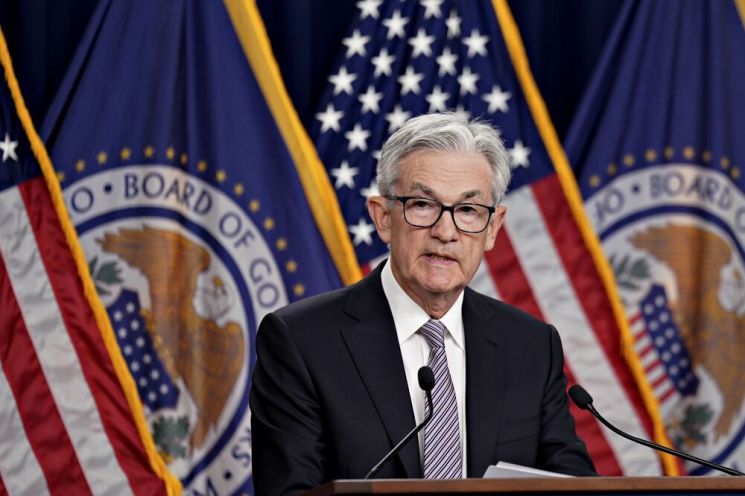
However, the Fed maintains a cautious stance, stating that more evidence of sustained inflation slowdown is needed before cutting interest rates. Fed Chair Jerome Powell said on the 29th of last month regarding February inflation, "It’s good that the numbers came in as expected," but added, "There is no need to rush into rate cuts."
The Wall Street Journal (WSJ) pointed out that the robust US economy and employment make it difficult to steadily bring inflation back to the Fed’s 2% target. The Atlanta Federal Reserve Bank raised its US economic growth forecast for the first quarter of this year from 2.1% to 2.3%, supported by strong consumer spending. According to the US Department of Commerce, inflation-adjusted consumer spending in February increased at an annualized rate of 5%.
Paul Ashworth, an economist at Capital Economics, analyzed, "Unexpectedly strong real consumption means central banks are unlikely to rush into rate cuts."
Although the market consensus is that the Fed will cut rates in June, some investors have begun to withdraw their bets on June. According to the Chicago Mercantile Exchange (CME) FedWatch, the federal funds futures market on that day priced in about a 60% chance that the Fed will cut rates by 0.25 percentage points at the June Federal Open Market Committee (FOMC) meeting, down from the 75% range a week earlier.
In the Eurozone, where consensus on a June rate cut has formed, recent improvements in business activity have been confirmed, prompting analysis that last mile risks should be guarded against. The Eurozone wage growth rate has recorded an annualized 4% since November last year, which could stimulate service inflation. The Eurozone’s March inflation rate will be released on the 3rd.
The WSJ stated, "Inflation has proven to be more persistent than expected in the US and Europe, becoming a headache for central banks," and warned, "There are even concerns that inflation could fall and then surge again, as it did in the 1970s."
The Fed is most concerned about the possibility of inflation rebounding if interest rates are cut prematurely. In the past, the Fed repeatedly raised and lowered benchmark rates in the 1970s, fueling inflation, and in the 1980s, it raised rates as high as 20% to control inflation.
© The Asia Business Daily(www.asiae.co.kr). All rights reserved.
![Clutching a Stolen Dior Bag, Saying "I Hate Being Poor but Real"... The Grotesque Con of a "Human Knockoff" [Slate]](https://cwcontent.asiae.co.kr/asiaresize/183/2026021902243444107_1771435474.jpg)















